
Sports
World Growth Forums Magazine

Keynote Speech by Dr Alfredo Sfeir-Younis _ WGF-GBIF Thailand 2024
What Is the Ryder Cup?
What Were the Ryder Cup 2025 Scores & Results?
On a tense afternoon at New York’s Bethpage Black, Team Europe edged the United States 15–13 to win the Ryder Cup on 28 September 2025. What seemed like an easy European cruise turned into a nerve-shaking finale as the U.S. mounted a furious fightback on the final day. In the end, it took a six-foot birdie putt from Shane Lowry and a halved match from Tyrrell Hatton to finally seal the victory.
The Ryder Cup is never just about numbers. It is about pride, camaraderie, and pressure – three elements that turned Bethpage into one of the most unforgettable battlegrounds in the tournament’s rich history.
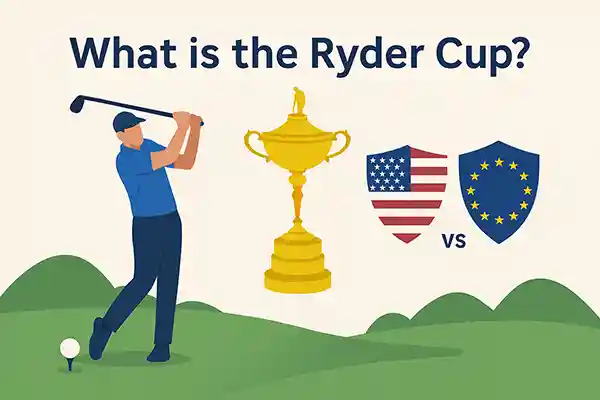
Image 1: The Ryder Cup – where golf transforms from an individual pursuit into a team’s greatest test.
Click Here to Read WGF Blogs from World Leaders…
What Is the Story of the Ryder Cup?
The Ryder Cup began in 1927 as a friendly match between golfers from the United States and Great Britain. It was a modest start, built on the idea that golf, often seen as an individual sport, could also become a contest of nations. For decades, the Americans dominated, and the matches became predictable. To restore balance, the competition was expanded in 1979 to include golfers from all of Europe. That change transformed the Ryder Cup into the fiercely competitive event we know today.
From the Miracle at Medinah in 2012 to Jack Nicklaus’s famous concession in 1969, the Ryder Cup has grown into something far larger than golf alone. It is a story of rivalries, redemption, and shared history – one where every two years, old wounds are reopened and new legends are written.
The Ryder Cup is always structured as a three-day event: foursomes and fourballs are played on the first two days, and the singles are contested on the third. Traditionally, this means matches are staged on Friday, Saturday, and Sunday, a rhythm followed in 2025 as well, when the competition ran from 26th to 28th September at Bethpage Black.
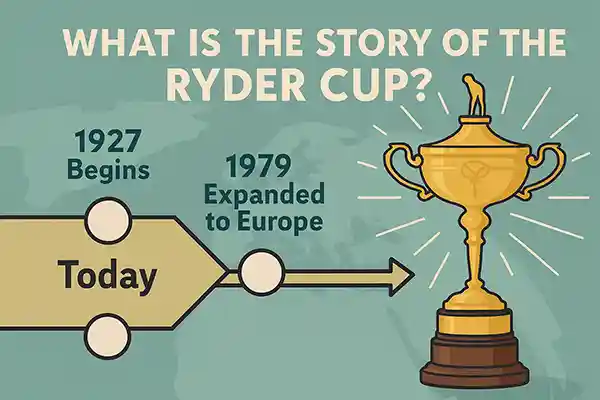
Image 2: From humble beginnings in 1927 to Europe’s modern dominance, the Ryder Cup’s story is a saga of rivalry and reinvention.
Click Here to Read What Is Behind Nvidia’s $5 Billion Lifeline to Intel…
What Is the Story of the 2025 Ryder Cup?
At Bethpage Black this September, Europe seemed to have everything under control. The Ryder Cup this year took place from 26th to 28th September 2025, and over the first two days their pairings in foursomes and fourballs clicked perfectly. Rory McIlroy, Tommy Fleetwood, and Jon Rahm led from the front, and Captain Luke Donald’s choices paid off. By Saturday night, Europe led 11½ to 4½, leaving American fans anxious and subdued.
But Sunday changed the mood. Justin Thomas and Cameron Young both won their matches by a single hole, injecting life into the home crowd. Scottie Scheffler defeated McIlroy in a clash between the top two players in the world rankings, and suddenly Europe’s margin looked fragile. Xander Schauffele and J.J. Spaun piled on more American points, making the galleries roar with belief.
It came down to nerves and resolve. Shane Lowry stood on the 18th green with a six-foot putt to tie his match. He sank it, raising his arms as Europe reached the 14 points needed to retain the Cup. Minutes later, Tyrrell Hatton halved his match with Collin Morikawa, pushing Europe to the 14½ mark and securing outright victory. The celebrations that followed were loud, emotional, and cathartic – Europe had survived the storm.
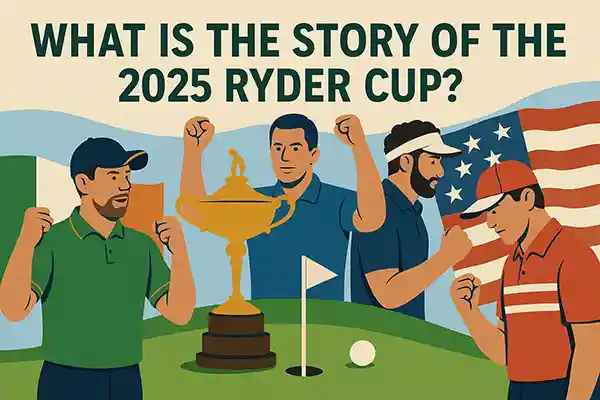
Image 3: Bethpage Black 2025 – a weekend of control, chaos, and ultimately, Europe’s triumph on American soil.
Click Here to Read What Is Google…
Did You Know?
Golf
- The word ‘golf’ is thought to come from the Dutch word kolf, meaning ‘club’
- Unlike most sports, golf is one of the few played on a largely natural terrain
- One of golf’s rarest feats, the albatross (double eagle), is estimated at roughly 1 in a million for amateurs
Did You Know?
Europe Ryder Cup Team
- Seve Ballesteros is often credited with inspiring Europe’s modern dominance
- Rory McIlroy has now played in eight Ryder Cups (2010, 2012, 2014, 2016, 2018, 2021, 2023, 2025)
- Europe has won 11 of the last 15 Ryder Cups since 1995
Did You Know?
Ryder Cup
- The Cup is only 17 inches tall and weighs four pounds
- It is named after Samuel Ryder, an English seed merchant who donated the original trophy
- The Ryder Cup has been tied only twice, in 1969 and 1989
Did You Know?
U.S. Ryder Cup Team
- The U.S. has not won on European soil since 1993
- Tiger Woods has played in eight Ryder Cups but has a losing record
- Arnold Palmer was once nicknamed ‘The King of the Ryder Cup’ for his leadership and charisma
Click Here to Read What Is NATO…
Ryder Cup In Numbers
• 15–13: Final score, Europe vs. U.S., 2025
• 11 of 15: Europe’s victories since 1995
• 3–1: Friday foursomes score that set the tone
• 32 years: U.S. winless streak on European soil – 1993 to 2025
Click Here to Watch Keynote Speeches and Interviews of World Leaders at WGF YouTube…
Historical Note
The Ryder Cup’s history is defined not just by scores and trophies but by moments of character that have become part of sporting folklore. Perhaps the most enduring of these is The Concession of 1969, an act that transcended competition.
It happened at Royal Birkdale in England. The match between Jack Nicklaus, already the golden boy of American golf, and Britain’s Tony Jacklin had come down to the final hole. With the pressure of the entire Ryder Cup resting on a short putt, Jacklin faced a putt of barely two feet. Missing it would mean the United States retained the Cup. Holing it would mean the two sides tied, a result never seen before.
Before Jacklin could line up the putt, Nicklaus bent down, picked up his opponent’s marker, and said simply, “That’s good.” In that instant, he conceded the putt, ending the match – and the Ryder Cup itself – in a tie at 16–16.
The galleries gasped. U.S. captain Sam Snead was furious, believing his team had been denied a hard-fought victory. But Nicklaus defended his decision with words that have become immortal: “I didn’t think Tony would miss, but I didn’t want to give him the chance. I think it was the right way to end it.”
That small gesture echoed far beyond the scoreboard. It symbolized the essence of the Ryder Cup – intense competition, yes, but also respect, honor, and sportsmanship. More than half a century later, The Concession remains the Ryder Cup’s moral compass, often recalled whenever tempers flare or controversies arise. It is a reminder that even in the fiercest rivalry, grace under pressure can define a legacy.
Click Here to Read What Is the Trump–Putin Alaska Summit About…
What Is a Birdie Putt?
A birdie putt is a stroke that allows a golfer to finish a hole in one shot fewer than par. In Lowry’s case, his birdie putt on the 18th green of Bethpage meant not only winning the hole but saving Europe’s hopes at the very moment when U.S. momentum threatened to overwhelm them. Sometimes a single putt can carry the weight of a continent.
Click Here to Watch WGF News on World Leaders at WGF TV…
What Is a Halved Match?
A halved match occurs when both sides finish 18 holes with the same score. No one wins, but each team earns half a point. Tyrrell Hatton’s halved match with Morikawa did not look dramatic on paper, yet it delivered the decisive half-point that took Europe beyond reach.
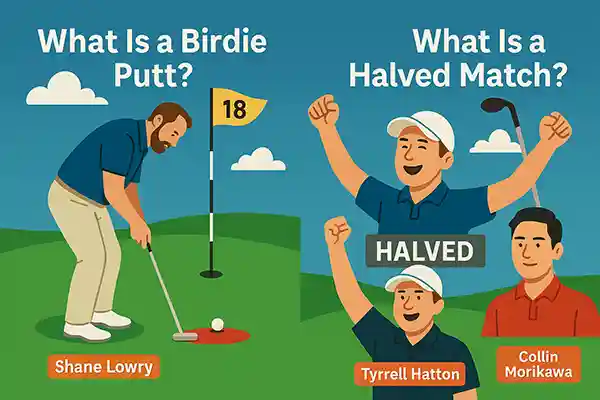
Image 4: One birdie, one halved match – together they shifted the destiny of the Ryder Cup.
Click Here to Read What Is A Ceasefire Agreement…
What Are the Various Terminologies Used in Golf?
Golf has a language of its own, and for newcomers it can feel like a puzzle. These terms capture not only numbers but also the drama, tension, and artistry of every hole. Knowing them helps make sense of the Ryder Cup’s intensity – why a single birdie can ignite cheers, or why a halved match can decide an entire contest.
Par – The standard number of strokes a skilled golfer is expected to take to complete a hole. It serves as the benchmark against which all scores are measured.
Birdie – Completing a hole in one stroke fewer than par, often celebrated with roars from the gallery.
Eagle – Two strokes under par; rare, dramatic, and often a momentum shifter in big tournaments.
Albatross (Double Eagle) – Three strokes under par on a single hole. This is one of the rarest feats in golf and almost mythical when achieved.
Bogey – Finishing a hole in one stroke over par, a small misstep that can grow costly under pressure.
Double Bogey (or worse) – Two or more strokes above par, usually a hole to forget for professionals.
Dormie – In match play, when a player is ahead by as many holes as remain, meaning the worst they can do is tie.
All Square (A/S) – A match that is tied after a given number of holes, symbolizing perfect balance between rivals.
4&3 – A result in match play where one side is four holes up with only three to play, ending the contest early.
2&1 – A match play result where the winner is two holes ahead with only one left, sealing the victory before the 18th hole.
Concession – When a player allows an opponent to pick up their ball and take the hole without playing it out, usually for a very short putt. Jack Nicklaus’s concession to Tony Jacklin in 1969 remains one of the Ryder Cup’s most famous acts of sportsmanship.
Mulligan – An informal term, not used in professional play, meaning a do-over of a poor shot. It’s part of casual golf lore.
Click Here to Read What Is De-Dollarisation…
What Were the Final Scores and Who Clinched the Win?
The final tally was Europe 15, U.S. 13. The pivotal moments belonged to Shane Lowry, who ensured Europe retained the Cup, and Tyrrell Hatton, whose half-point secured the outright win. Viktor Hovland’s withdrawal earlier in the day meant his match was declared tied, adding another half-point to each side.
Click Here to Read What Is the Hiroshima Atomic Bombing’s Legacy – 80 Years Later…
How Do You Win the Ryder Cup?
The Ryder Cup is unlike any other golf tournament because it is not about individual players shooting the lowest overall score – it is about team match play, where every contest contributes to the collective total.
Over three days, 28 matches were played: four sessions of foursomes and fourballs on Friday and Saturday, and 12 singles matches on Sunday. Each match carries exactly one point, no matter how dramatic or one-sided the result. If the two sides finish a match tied after 18 holes, the point is split, with each team earning half.
That adds up to 28 points, meaning a team needs 14½ points to win the Ryder Cup outright. If the final score is tied 14–14, the team that held the Cup previously retains it. This rule was introduced after the competition was expanded in 1979 to include all of Europe rather than just Great Britain and Ireland, ensuring the Ryder Cup would have a definitive framework for victory and defense.
This system creates constant tension: a single short putt on the 18th green can swing half a point, which in turn can swing the fate of the Cup. It’s why Ryder Cup Sundays often produce scenes of extraordinary drama, from tears of joy to shattered nerves. Every hole matters, because the margins between triumph and heartbreak are razor-thin.
Click Here to Read What Is the Russian Volcano Eruption After 500 Years…
What Are Foursomes?
Foursomes are one of the purest tests of teamwork in golf, and they are a central part of the Ryder Cup format. In this style of play, two players form a partnership but share just one golf ball, taking alternate shots until the hole is complete. If one player drives off the tee, the partner must play the second shot, and they continue alternating until the ball drops into the cup. Even the responsibility of teeing off alternates hole by hole.
The pressure in foursomes is unique. A poor drive into the rough does not only punish the individual – it forces the partner to attempt a recovery from an awkward lie. That is why precision, patience, and above all, trust are vital. The chemistry between partners can make or break a pairing, and successful captains are often remembered as much for their inspired foursome pairings as for their motivational speeches.
At Bethpage in 2025, Europe’s command in the foursomes set the tone for their eventual victory. Pairings like Fleetwood and McIlroy or Hatton and Rahm worked seamlessly, combining accuracy with bold shot-making. Meanwhile, American duos sometimes struggled to find the same rhythm, and those early losses left them chasing throughout the weekend.
In many ways, foursomes reveal the essence of the Ryder Cup. Unlike regular tournaments where golfers play alone, here every decision, every mistake, and every triumph is shared. It is golf at its most cooperative, and at its most unforgiving.
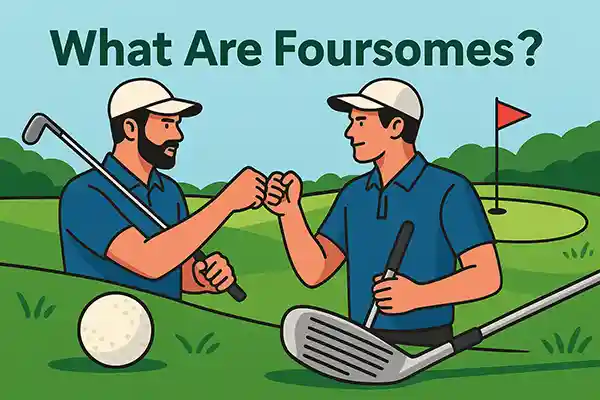
Image 5: Foursomes reveal the soul of the Ryder Cup: precision, trust, and shared responsibility.
Click Here to Read What Is Coral Bleaching…
What Are Fourballs?
Fourballs are the more aggressive and fast-paced cousin of foursomes, and they inject a different kind of energy into the Ryder Cup. In this format, each of the four players in the match plays their own ball throughout the hole. At the end, the lowest score from each pair is taken as that team’s result for the hole.
This structure allows golfers to play with greater freedom. If one partner takes a risky shot and ends up in trouble, the other can still play safely and secure a steady score. The format encourages boldness, birdie hunts, and sometimes spectacular recoveries, because a single hot hand in a partnership can carry the entire duo.
Yet, despite the apparent independence, fourballs still demand strategy and chemistry. Captains must choose pairs who complement each other – an aggressive, attacking player matched with a steady, reliable one can be the perfect balance. Too much similarity, and both players may take the same risks or play too cautiously, leaving gaps for the opposition to exploit.
At Bethpage in 2025, Europe used fourballs to devastating effect. Pairings like Fleetwood and Rose and Lowry and McIlroy thrived, stacking up points and extending the lead by Saturday night. The Americans, meanwhile, struggled to turn promising positions into victories, halving matches they desperately needed to win. By the time Sunday’s singles arrived, Europe’s fourball success had created a cushion that proved decisive, even as the U.S. rallied.
Fourballs, then, are about seizing opportunities and piling on pressure. They often produce fireworks on the course and can shift the momentum of an entire Ryder Cup in just a few matches.
Click Here to Read What Is Botox…
What Is the Scoring Shorthand Used in Golf?
These results apply to match play scoring in the Ryder Cup.
- 4&3 means a team is four holes up with only three left – match over
- 2&1 means a two-hole lead with one hole remaining
- A/S means ‘all square’, or tied
These terms carry both technical precision and emotional weight.
Click Here to Read What Is Giorgio Armani’s Legacy…
What Were the Pivotal Sunday Singles?
The Americans claimed victories through Thomas, Young, Schauffele, Scheffler, and Spaun, while Europe struggled to keep momentum. Lowry’s draw and Hatton’s halved match became Europe’s saving graces. Each match told its own story, but together they created one of the tensest Sundays in Ryder Cup history.
Click Here to Read What Is China’s Military Parade with Putin and Kim…
Who Were the Standout Performers?
Tommy Fleetwood emerged as Europe’s talisman, winning four of his five matches. Tyrrell Hatton remained unbeaten. For the U.S., Xander Schauffele and Cameron Young stood tall, their records shining even in defeat. But in the Ryder Cup, individual brilliance always plays second fiddle to the collective outcome.
Click Here to Read What Is the Game of Football…
Why Did the U.S. Fightback Fall Short?
On Sunday at Bethpage Black, the Americans finally showed the fire their fans had been waiting for. Justin Thomas and Cameron Young won tight matches, Scottie Scheffler outlasted Rory McIlroy, and Xander Schauffele overwhelmed Jon Rahm. In total, Team U.S. captured six of the singles contests, a stirring reminder of their raw talent and fighting spirit. For a few hours, the atmosphere shifted: what had looked like a European procession began to feel like a genuine American comeback.
Yet, as the tension rose, the early damage of Friday and Saturday proved decisive. Europe’s dominance in the foursomes and fourballs had built a cushion that even a heroic singles charge could not erase. Where the U.S. often looked like a collection of brilliant individuals, Europe looked like a team – partners who trusted each other, celebrated together, and thrived in formats that demand unity.
The Americans also suffered from inconsistency. While a few stars delivered, others faltered, and in match play, even half-points conceded can weigh heavily. Lowry’s halved match against Henley and Hatton’s half with Morikawa were just as valuable as victories, and together they shut the door on an American miracle.
The lesson of 2025 was the same one that has echoed through Ryder Cup history: rankings and reputations may count in individual tournaments, but in this arena, chemistry outweighs pedigree. Europe won not because they had more world No. 1s, but because they had a stronger bond.
Click Here to Read What Is A Data Breach…
What Is Bethpage Black & Why Is It So Demanding?
Bethpage Black is more than just a golf course – it is a warning disguised as a sporting arena. At the first tee, a famous sign greets players: “The Black Course is an extremely difficult course which we recommend only for highly skilled golfers.” Few venues announce themselves with such blunt honesty.
The difficulty lies in its design. The fairways are notoriously narrow, punishing even slight misses from the tee. The rough is thick and tangled, turning what looks like a routine recovery shot into a desperate scramble. Bunkers are cut deep and placed exactly where nerves are most likely to betray a player. The greens are fast, undulating, and unwelcoming, demanding absolute precision with every putt.
For everyday golfers, Bethpage Black is a test of survival. For Ryder Cup professionals, it becomes something more – a crucible where pressure multiplies. Every drive, every approach, and every putt carries not just the weight of the hole but of teammates, captains, and millions of fans watching around the world.
In 2025, those conditions amplified the drama. Europe, composed and methodical, embraced the challenge, using the course’s severity to their advantage. The Americans, on home soil, were expected to thrive in the cauldron, yet at times they looked unsettled by the relentless demands of Bethpage. When momentum shifted on Sunday, the course seemed to close in, magnifying the stress of every shot.
Bethpage Black has hosted U.S. Opens and PGA Championships, but in Ryder Cup mode it revealed its truest character: not simply a golf course, but an unforgiving stage that exposes not just skill, but mental steel.
Click Here to Read What Is a Blood Moon…
Where Is the Next Ryder Cup (2027) & Why the Hype Already?
The next contest will take place at Adare Manor in County Limerick, Ireland, from September 17–19, 2027. It will be Ireland’s first Ryder Cup since 2006, and anticipation is already building. Owned by businessman JP McManus, redesigned by architect Tom Fazio, and steeped in Irish pride, it promises a festival atmosphere. For Shane Lowry and Rory McIlroy, it will be as close to home as Ryder Cup golf can get.
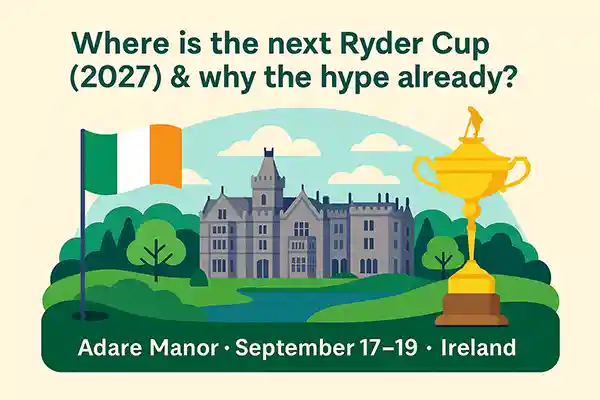
Image 6: Adare Manor 2027 awaits – a return to Ireland, where history and home pride will set the stage.
Click Here to Read What Is SpaceX…
How Do Captains’ Picks & Pairings Shape Outcomes?
The role of a Ryder Cup captain goes far beyond pep talks and wardrobe choices. Captains shape the destiny of the contest through two critical decisions: who makes the team and who plays with whom. Every Ryder Cup features six automatic qualifiers from ranking points, but the other six are ‘captain’s picks’. These are the judgment calls that can turn into masterstrokes – or backfire under pressure.
In 2025, Europe’s Luke Donald treated his picks as carefully placed pieces in a puzzle. He blended rookies like Ludvig Åberg with steady veterans like Justin Rose, ensuring that each pairing balanced raw energy with calm experience. His combinations – Fleetwood with Rose, McIlroy with Lowry, Hatton with Rahm – were not just about skill but about temperament. The results showed: Europe dominated foursomes and fourballs, creating the platform for their eventual win.
By contrast, U.S. captain Keegan Bradley faced a tougher road. His choices included familiar names – Justin Thomas, Patrick Cantlay, Collin Morikawa – but he struggled to find the chemistry that makes Ryder Cup pairings thrive. Too often, American duos looked like two great golfers playing side by side rather than a true team sharing one heartbeat. The lack of synergy was especially evident in foursomes, where trust is everything.
The difference between the two captains’ strategies revealed a deeper truth about the Ryder Cup: it is not just about having the best twelve golfers. It is about creating pairs that complement each other’s strengths, cover weaknesses, and remain resilient when mistakes inevitably happen. A captain’s pick can inspire a rookie to play beyond their years or pair two stars whose games amplify one another.
In 2025, Donald’s blueprint worked to perfection. Bradley’s did not. And that, as much as any putt or drive, explained why Europe celebrated and the United States fell short.
Click Here to Read What Is Nepal’s Gen Z Anti-Graft Uprising…
What Is the All-Time Record & ‘Home/Away’ Pattern?
The Ryder Cup has always been a tale of shifting balance, and the numbers tell part of that story. Since the competition was reshaped in 1979 to include all of Europe, Team Europe has won 12 times, the United States 9, with one tie. What once seemed like an American showcase has transformed into one of the most evenly matched rivalries in world sport.
Yet statistics alone don’t capture the true drama. What really defines the Ryder Cup is geography. Winning at home is difficult enough, with the weight of expectation and the demands of partisan crowds. Winning away, however, is almost mythical. Host nations set up the course to favor their players’ strengths, fans roar for every mistake by the opposition, and the psychological burden can weigh heavier than the clubs in a golfer’s bag.
For Europe, away wins have been precious milestones. Their triumph at Bethpage in 2025 was their first on American soil in more than a decade, a reminder of just how rare such victories are. For the United States, the challenge is the opposite: they have not lifted the Cup in Europe since 1993, a drought that gnaws at their pride every two years.
This home-and-away pattern has become part of the Ryder Cup’s mythos. It ensures that every edition is not simply about form or rankings but about history itself. When a team breaks the pattern, as Europe did in New York this year, the win resonates more deeply, carving out a place in Ryder Cup legend.
Click Here to Read What Is the Ballon d’Or…
WGF Take – Who Thought a Sport Considered Individual Could Be Won by Team Chemistry?
The Ryder Cup once again proved that golf’s greatest drama comes not from solitary brilliance but from collective belief. The U.S. had more top-ranked players, but Europe had trust, balance, and unity. That chemistry turned into points when it mattered most.
For Europe, this victory on American soil is a testament to a system that builds team identity across generations. For the U.S., the lesson is clear: no matter how many world No. 1s you have, Ryder Cups are won not by rankings but by relationships.
Europe’s Ryder Cup win at Bethpage Black wasn’t just about putts and pairings – it was about trust and chemistry. The Americans had firepower but not unity, and it showed when pressure mounted. Europe’s culture of camaraderie, built across decades, once again proved decisive. If Team U.S. wants to reclaim dominance, they’ll need more than world rankings – they’ll need to rediscover belief in each other.
In the end, the Ryder Cup reminds us: golf may be an individual sport, but its greatest theater is found in the power of the team. Eventually, the Ryder Cup is less about clubs and balls than about spirit – and once again, Europe showed they have more of it when it counts.
Follow World Growth Forums on the following for more updates…