
International

World Growth Forums Magazine

Keynote Speech by Dr Alfredo Sfeir-Younis _ WGF-GBIF Thailand 2024
What Is the Russian Volcano Eruption After 500 Years?
A Wake-Up Call Beneath the Ice
In a startling geological event, Russia’s Krasheninnikov Volcano in the Kamchatka Peninsula erupted for the first time in over half a millennium – possibly 600 years. The eruption, which began overnight on August 3, 2025, sent an ash plume 6 kilometers into the sky. Scientists believe it may be linked to the recent massive 8.8 magnitude earthquake that shook Russia’s Far East last week. While there’s no immediate threat to human settlements, the eruption serves as a powerful reminder of the volatile forces beneath the Earth’s surface.
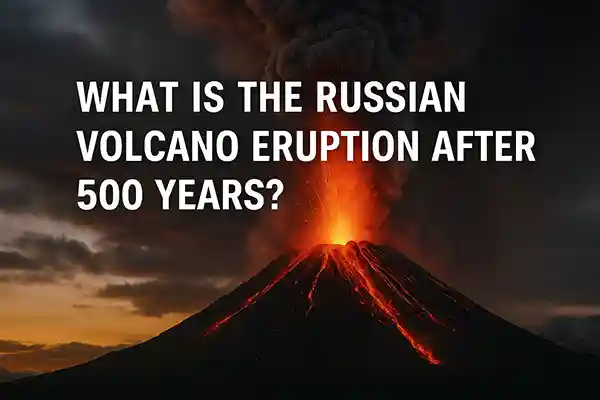
Image 1: A centuries-old silence shattered – Russia’s Krasheninnikov Volcano awakens in a fiery spectacle after over 500 years.
Click Here to Know More About WGF Felicitations…
When and Where Did the Eruption Happen?
The eruption occurred overnight on August 3 in the remote Kamchatka Peninsula, a region known for its rugged volcanic terrain. Specifically, it was the Krasheninnikov Volcano – a long-dormant giant – that burst back to life. The volcano spewed an ash plume reaching up to 6,000 meters (3.7 miles) into the sky. The ash cloud drifted eastward toward the Pacific Ocean, away from populated areas.
Russia’s Ministry for Emergency Situations confirmed the event early Sunday morning, noting that no towns or villages were in danger due to the direction of the ash movement. However, they raised the aviation threat to orange alert, signaling a high risk to nearby air traffic.
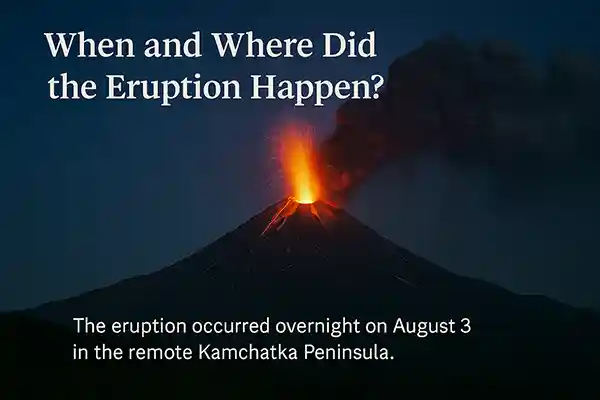
Image 2: The eruption struck overnight on August 3 in the remote Kamchatka Peninsula, changing the region’s geological status overnight.
Click Here to Read What Is A Ceasefire Agreement…
Why Is This Eruption So Historic?
What makes this eruption extraordinary is its timing – not just in the middle of ongoing seismic activity, but after centuries of dormancy. This is Krasheninnikov’s first confirmed eruption in about 600 years, with its last lava activity dated to around 1463 (±40 years), according to the Institute of Volcanology and Seismology.
It marks a significant milestone in volcanic research, as such long dormancy periods often lead to the assumption that a volcano is extinct or no longer hazardous. This eruption defies that assumption, and challenges current predictive models.
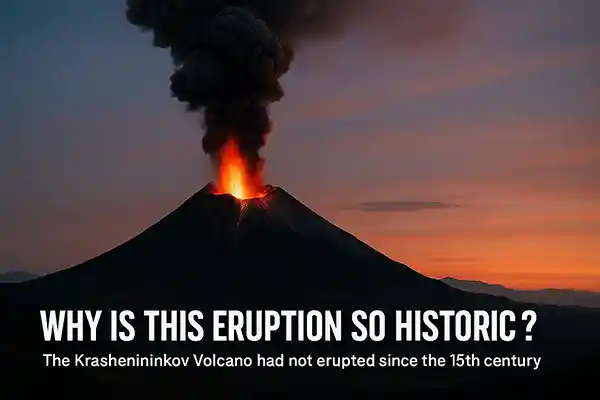
Image 3: This is the first recorded eruption of the Krasheninnikov Volcano since the 15th century – making it a rare geological milestone.
Click Here to Read More under WGF What Is Series…
What Is the Krasheninnikov Volcano?
Krasheninnikov is a stratovolcano standing at 1,856 meters in the central Kamchatka Peninsula. Unlike the frequently active Klyuchevskoy Volcano, Krasheninnikov has been historically quiet – so much so that its very categorization as an ‘active’ volcano was debated.
Named after the Russian explorer Stepan Krasheninnikov, who documented Kamchatka’s landscapes in the 18th century, the volcano lies in a remote and largely uninhabited region, making it ideal for geological study but challenging for real-time monitoring.
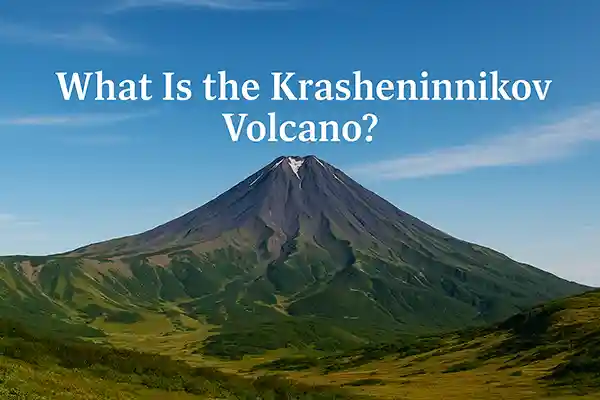
Image 4: Towering at 1,856 meters, Krasheninnikov had long been dormant – until seismic forces deep below reignited it.
Click Here to Read WGF Blogs from World Leaders…
What Are the Immediate Effects of the Eruption?
The most visible impact so far has been the ash cloud, which may interfere with aviation routes over the Pacific. The orange aviation code issued means that flights in the region must take caution and may be rerouted to avoid reduced visibility and engine risk.
Fortunately, no evacuation orders have been issued, as the path of the ash cloud does not intersect with residential zones. However, the psychological impact on the region – already shaken by a series of strong earthquakes – is considerable.
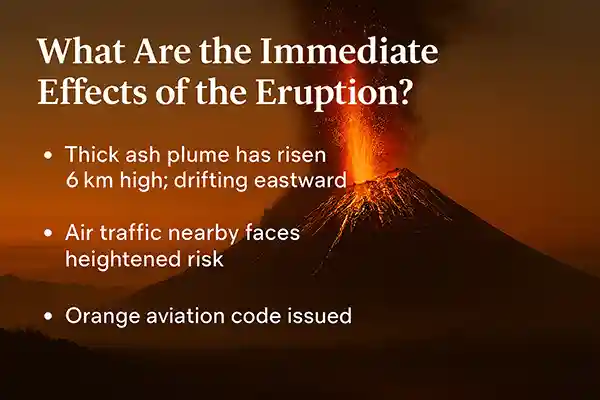
Image 5: Ash plumes and aviation alerts followed the eruption, though human settlements were spared immediate danger.
Click Here to Watch Keynote Speeches and Interviews of World Leaders at WGF YouTube…
How Are Scientists Responding?
Russian scientists and emergency services were already on high alert following last week’s 8.8 magnitude earthquake, one of the strongest in the country’s history. Experts from the Kamchatka Volcanic Eruption Response Team (KVERT) have been monitoring seismic and volcanic activity in the region.
Dr. Olga Girina, head of KVERT, emphasized that the eruption could be linked to the intense tectonic shifts caused by the earlier earthquake. She added that strong aftershocks were expected for weeks, and this may have destabilized the magma chambers beneath dormant volcanoes.
Volcanologists are also keeping a close eye on Klyuchevskoy, Kamchatka’s most active volcano, which erupted shortly after the massive quake.
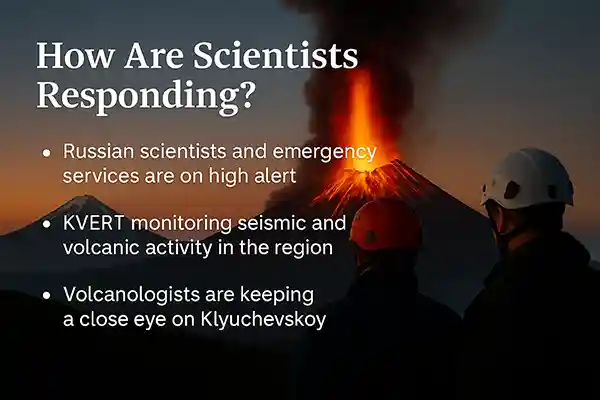
Image 6: Russian scientists and KVERT teams ramp up monitoring efforts, keeping a close watch on Kamchatka’s volatile terrain.
Click Here to Watch WGF News on World Leaders at WGF TV…
Is This Linked to Other Global Volcanic or Seismic Activity?
Yes, and possibly in more ways than one. The Pacific Ring of Fire, which encircles much of the Pacific Ocean including Kamchatka, is home to 90% of the world’s earthquakes and many of its active volcanoes.
The eruption in Russia follows other significant global seismic events, such as those near Japan, Chile, and even the recent tsunami warnings in the South Pacific. Although direct causality between global events is hard to prove, these interconnected geological zones often experience cascading effects, especially after a major tectonic shift like the one seen last week.
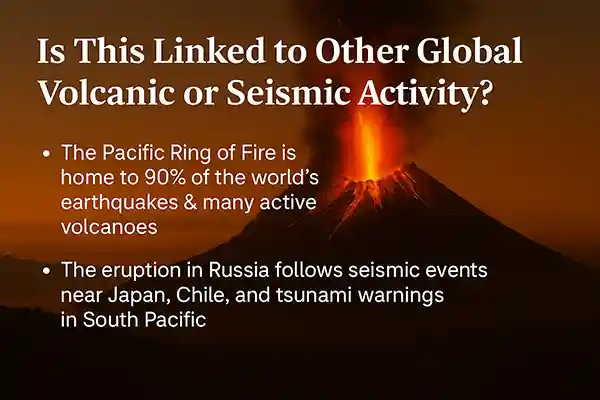
Image 7: From Kamchatka to Chile – this eruption forms part of a broader seismic pattern shaking the Pacific Ring of Fire.
Click Here to Read What Is NATO…
What Could Be the Long-Term Impact?
In the short term, the impact on people is minimal due to Kamchatka’s sparse population. However, the aviation industry must stay vigilant. Prolonged ash emissions could affect international flight paths over the North Pacific, just as past eruptions have grounded flights across Europe and Asia.
In the long term, this event could reshape how scientists monitor dormant volcanoes. With improved remote sensing and AI-based prediction models, events like this might eventually be forecasted with greater accuracy.
Additionally, this eruption serves as a case study for earthquake-volcano relationships – an area of research that could influence early warning systems in tectonically active regions across the globe.
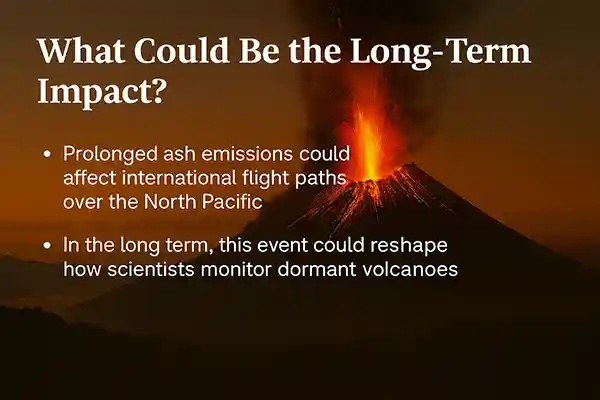
Image 8: More than just ash and lava – this eruption may reshape how scientists study dormant volcanoes and prepare for the next big one.
Click Here to Read What Is Indian Premier League…
WGF Take – Man Must Learn to Respect Nature, and Learn to Understand It Better
The eruption of Krasheninnikov isn’t just a rare geological event – it’s a vivid demonstration of how little we control, or even fully understand, the forces beneath our feet. In a region shaped by fire and ice, the line between dormancy and disaster can vanish without notice.
This eruption – seemingly born from an earthquake – should serve as a wake-up call for global preparedness. As climate change, tectonic pressure, and population growth intersect, such natural events could have amplified human consequences in other parts of the world.
For now, the remote Kamchatka Peninsula gives Earth a quiet stage to roar. But we’d do well to listen carefully – because nature doesn’t repeat warnings. It erupts.
This eruption – dormant for 500 or 600 years – is not just a news story; it’s a profound reminder of how powerful and unpredictable nature can be. In a time when technological advancement often gives us a false sense of control, events like this are humbling. A volcano sleeping for centuries has awakened not because of any human activity, but likely because of a deep tectonic shift far beneath the Earth’s crust – one that even our most advanced instruments barely predicted.
We often consider natural disasters in isolation – a flood here, a quake there, a volcano erupting somewhere remote. But what’s unfolding in Kamchatka is a powerful example of how Earth’s systems are interconnected. The massive 8.8 magnitude earthquake last week may have disturbed subterranean conditions enough to awaken not one, but two volcanoes – Krasheninnikov and Klyuchevskoy. This kind of seismic-volcanic domino effect challenges the way we think about Earth’s behavior.
It’s easy to dismiss such events because they seem geographically distant or temporarily contained. But that would be a mistake. The Pacific Ring of Fire, where this is happening, is the same zone that affects densely populated areas in Japan, the Philippines, the west coasts of the Americas, and even New Zealand. An awakening in one part could signal instability elsewhere.
The lesson here is twofold:
First, respect nature. Dormancy does not mean death, and silence does not mean safety. The Krasheninnikov eruption is a timely lesson in humility.
Second, invest in understanding. We must support global scientific efforts in volcanology, earthquake monitoring, and climate-linked geoscience. Every eruption, every tremor is a data point – a clue to a puzzle we are far from solving.
At WGF, we believe that global awareness of such events should not be confined to scientific journals or remote news tickers. These stories need to be told in a way that reaches everyone – because the Earth belongs to all of us, and it’s speaking. Loudly.
Are we listening?
Follow World Growth Forums on the following for more updates…