
Automotive

World Growth Forums Magazine

Keynote Speech by Dr Alfredo Sfeir-Younis _ WGF-GBIF Thailand 2024
What Is Tesla’s New ‘Affordable’ Model 3 & Model Y?
A Real Reset or a Rebrand in Disguise?
On October 7, 2025 (U.S. time) – October 8 in India – Tesla unveiled what it called ‘affordable’ versions of its two most popular electric vehicles – the Model 3 Standard and Model Y Standard. Both trims arrive just after the $7,500 federal EV tax credit expired on Sept 30, 2025 – a subsidy that had helped many Americans justify their EV purchases.
The move comes as Tesla faces rising competition from China’s BYD and South Korea’s Hyundai and Kia, all of which are racing to capture the mid-range EV market. Yet, while Tesla calls it a step toward accessibility, many argue that these new ‘Standard’ models are less a revolution and more a repackaged compromise.
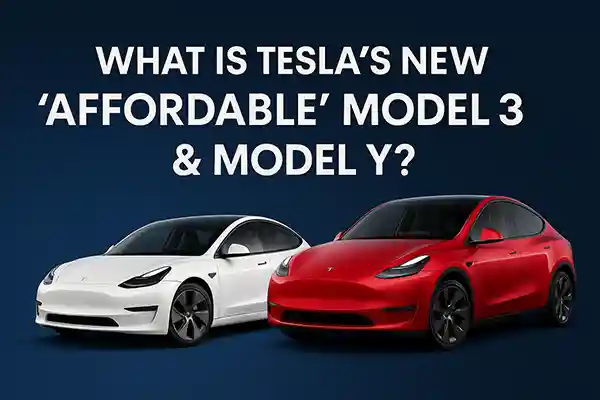
Image 1: Tesla’s ‘Standard’ trims mark a pivotal moment – where affordability meets ambition in the evolving global EV race.
Click Here to Read WGF Blogs from World Leaders…
What Is the Story of Tesla’s New ‘Affordable’ Models?
Tesla’s latest move is a response to shifting winds in the electric vehicle market. For months, industry watchers expected Musk to announce a game-changing $30,000 EV that would finally bring Tesla within reach of middle-class buyers.
Instead, the company introduced trimmed-down versions of its bestsellers – the Model 3 and Model Y – priced at $38,630 and $41,630, respectively. (In the U.S. auto market, this figure includes destination and order fees – the standard delivery and processing costs added to the base vehicle price.) Each is about $5,000–$5,500 cheaper than the Premium versions but lacks several luxury features: cloth interiors instead of microsuede, seven speakers instead of fifteen, no rear seat heating, no Autosteer, and slower acceleration.
Both cars still promise over 300 miles (about 480 km) of range and respectable performance, but analysts view them as a stopgap measure rather than a market disruptor. Shares of Tesla fell by 4 percent within hours of the announcement, reflecting investor disappointment that the company didn’t go further on pricing.
The goal, however, seems clear: Tesla wants to keep factories busy after the loss of the tax credit and to hold its ground against a wave of more affordable EVs rolling out globally. Deliveries are scheduled to begin between November and December 2025 for the Model Y Standard and between December 2025 and January 2026 for the Model 3 Standard, depending on location.
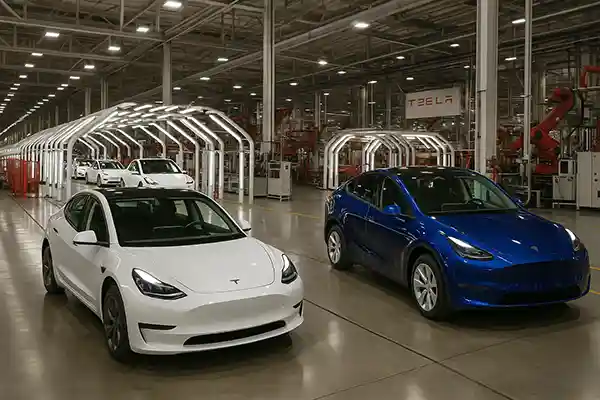
Image 2: The latest Model 3 and Model Y aim to balance scale with simplicity – a strategic move to retain momentum after the tax-credit era.
Click Here to Read What Is Behind Nvidia’s $5 Billion Lifeline to Intel…
What Is the Story of Tesla?
In 2003, a small Silicon Valley start-up set out to do something the world laughed at – build an electric car that wasn’t slow, boring, or impractical. The founders, Martin Eberhard and Marc Tarpenning, dreamed of proving that battery-powered cars could be as thrilling as gasoline ones.
Then came a young South African–born entrepreneur named Elon Musk. Fresh from selling PayPal to eBay for $1.5 billion, Musk invested $6.5 million into the fledgling company, becoming its largest shareholder and later its CEO. With that move, Tesla’s story shifted from a tech experiment to a vision for the future.
The early years were brutal. The first car, the Tesla Roadster, launched in 2008 using a modified Lotus Elise chassis. It could sprint from 0–60 mph in under four seconds – but behind the speed lay sleepless nights, blown budgets, and near bankruptcy. Tesla was down to a few weeks of cash when Daimler (Mercedes-Benz’s parent company) unexpectedly invested $50 million, saving the start-up from collapse.
That same year, Musk took the helm as CEO. His approach was radical: sell high-performance EVs first, then use the profits to fund affordable ones. It was a reverse playbook – luxury before mass market – and it worked. The Model S in 2012 stunned critics, winning ‘Car of the Year’ awards and proving that electric could be elegant.
Next came Model X, Model 3, and Model Y, each expanding Tesla’s reach. But success came at a price. The company battled production bottlenecks, quality controversies, and Musk’s unpredictable tweets, which sometimes wiped billions from its market value overnight. Through it all, Tesla kept scaling, building massive Gigafactories that redefined global manufacturing and creating a Supercharger network that made long-distance EV travel possible.
By the mid-2020s, Tesla had transformed from underdog to industry leader, its logo as recognizable as Apple’s. Yet its greatest challenge now may be philosophical: how to transition from a symbol of innovation and exclusivity to one of accessibility and trust.
Musk once said, “We don’t make slow cars.”
Today, the question is – can Tesla make affordable ones without slowing down its legacy of daring?
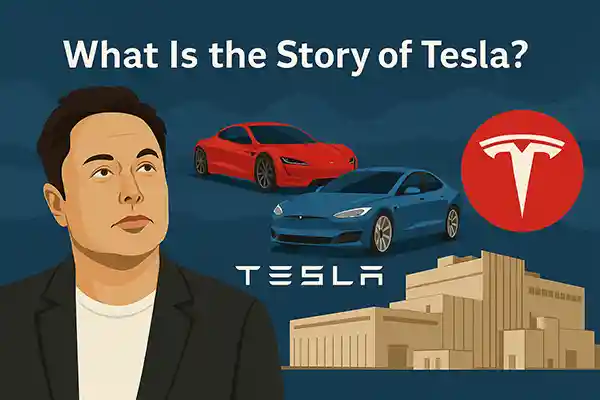
Image 3: From the first Roadster to today’s lineup, Tesla’s journey mirrors the evolution of electric dreams – bold, risky, and relentlessly transformative.
Click Here to Read What Is a Blood Moon…
Did You Know?
Tesla:
- Tesla’s first car, the Roadster (2008), used a modified Lotus Elise chassis
- Tesla’s ‘Gigafactory’ in Nevada covers over 4 million square feet – among the world’s largest buildings by footprint
- The company’s name pays tribute to inventor Nikola Tesla, who pioneered alternating current (AC) electricity
Did You Know?
Elon Musk:
- Before Tesla, Musk co-founded PayPal, which he sold to eBay for $1.5 billion in 2002
- Musk also runs SpaceX, Neuralink, and The Boring Company – all aimed at future technologies
- His Twitter (now X) takeover in 2022 remains one of the most controversial business moves of the decade
Click Here to Read What Is NATO…
Tesla in Numbers
• 8 Million+: Tesla produced its 8 millionth vehicle (June 6, 2025), marking a major production milestone
• 48.9% & 21.4%: Nearly 48.9% of Tesla’s total revenue in 2024 came from the United States, while about 21.4% came from China, its second-largest market
• 70,000+: Tesla’s Supercharger network now includes more than 70,000 charging connectors (stalls) across over 50 countries, making it one of the most extensive EV charging infrastructures in the world
• 4.5%: Following the announcement of its ‘Standard’ models, Tesla’s stock (TSLA) dropped around 4.5 percent, reflecting market skepticism over the new pricing strategy
• $1.4–$1.5 trillion: Despite short-term dips, Tesla remains among the world’s most valuable automakers, with a market capitalization hovering near $1.4–$1.5 trillion as of October 2025
Click Here to Watch Keynote Speeches and Interviews of World Leaders at WGF YouTube…
Historical Note
Long before Elon Musk’s Tesla promised to reinvent mobility, another visionary – Henry Ford – did something equally audacious. In 1908, Ford introduced the Model T, a car that changed the world not because it was the fastest or the most luxurious, but because it was the first automobile ordinary people could afford.
At the dawn of the 20th century, cars were playthings for the wealthy. Each was hand-built, expensive, and unreliable. Ford’s genius was not just engineering – it was industrial imagination. By perfecting the moving assembly line, he slashed production time from 12 hours to just 90 minutes, cutting costs so dramatically that the Model T’s price fell from $850 in 1908 to $260 by 1925. Suddenly, the car wasn’t a status symbol; it was a social equalizer.
The Model T transformed the American landscape – roads expanded, suburbs sprouted, and the weekend road trip was born. Owning a car no longer meant privilege; it meant freedom. Ford’s creation turned the automobile from a machine into a movement.
A century later, Tesla stands at a similar crossroads – but from the opposite direction. It already leads in technology, design, and innovation. What it lacks is Ford’s affordability breakthrough. Musk’s ‘Standard’ Model 3 and Model Y aim to echo that moment when mobility became mainstream.
The question history poses is tantalizing:
Will Elon Musk become the Henry Ford of the electric age, making clean transport accessible to millions – or will Tesla’s legacy remain that of a luxury pioneer that couldn’t quite finish the revolution it began?
Click Here to Read What Is the Trump–Putin Alaska Summit About…
What Is the U.S. Federal EV Tax Credit?
The U.S. federal electric vehicle (EV) tax credit was introduced to encourage drivers to switch from gasoline to cleaner energy. Buyers of qualifying EVs received a tax credit of up to $7,500, depending on battery size and income eligibility.
This incentive helped Tesla dominate early EV adoption in the U.S. But with the expiration of the credit for most Tesla models in September 2025, the company suddenly found its vehicles less price-competitive compared to hybrids and newer budget EVs.
The loss of the credit came at a sensitive time – just as global automakers were slashing prices. Tesla’s ‘Standard’ trims are thus not just new models, but a strategic cushion against the impact of losing that government support.
Click Here to Watch WGF News on World Leaders at WGF TV…
What Is an EV?
An Electric Vehicle (EV) is a type of automobile that runs entirely or primarily on electricity rather than petrol or diesel. Instead of a combustion engine burning fuel, an EV uses one or more electric motors powered by energy stored in a rechargeable battery pack. When the driver presses the accelerator, electricity flows from the battery to the motor, instantly producing torque and motion – a process both silent and efficient.
Unlike traditional engines, which convert only about 25–30% of fuel energy into movement, an EV can convert over 80% of electrical energy into wheel power. This makes it one of the most energy-efficient transportation technologies available today.
EVs come in several types:
- Battery Electric Vehicles (BEVs)
- Plug-in Hybrid Electric Vehicles (PHEVs)
- Hybrid Electric Vehicles (HEVs)
Inside an EV, there’s no gearbox, exhaust, or spark plugs. The battery pack, inverter, and electric motor replace the engine block, fuel tank, and transmission found in conventional cars. Maintenance is simpler because EVs have fewer moving parts and no oil changes are required.
Environmentally, EVs emit zero tailpipe emissions, helping reduce urban pollution and dependence on fossil fuels. However, challenges remain:
- Battery production is resource-intensive and depends on rare minerals like lithium and cobalt
- Charging infrastructure still varies widely between countries
- Range anxiety – the fear of running out of charge – continues to affect buying confidence
As the world moves toward net-zero carbon goals, EVs stand at the heart of the global energy transition. Tesla’s rise and its new ‘Standard’ models represent one crucial phase in this larger story – the race to make electric mobility not just sustainable, but attainable for everyone.
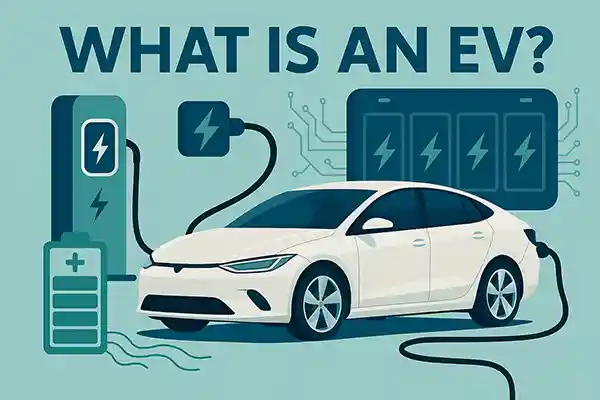
Image 4: The shift from combustion to current is more than a technology change – it’s the foundation of a cleaner, faster, and smarter mobility era.
Click Here to Read What Is A Ceasefire Agreement…
What Is a Battery Electric Vehicle (BEV)?
A Battery Electric Vehicle (BEV) runs entirely on electricity stored in a rechargeable battery pack. It has no fuel tank, exhaust pipe, or combustion engine. Instead, it uses one or more electric motors that draw energy directly from the battery, delivering instant torque and smooth acceleration.
BEVs like Tesla’s Model 3 and Model Y are charged by plugging into a home wall connector or a public charging station. They produce zero tailpipe emissions, making them the cleanest form of road transport available today.
Click Here to Read What Is De-Dollarisation…
What Is a Plug-in Hybrid Electric Vehicle (PHEV)?
A Plug-in Hybrid Electric Vehicle (PHEV) combines a traditional petrol or diesel engine with a rechargeable battery. It can run for short distances – usually 30 to 60 kilometres – on electricity alone before the combustion engine takes over for longer trips.
Drivers can recharge the battery using an external plug, similar to BEVs. PHEVs bridge the gap between fossil fuel and full electric driving, offering flexibility for those transitioning to greener mobility.
Click Here to Read What Is the Hiroshima Atomic Bombing’s Legacy – 80 Years Later…
What Is a Hybrid Electric Vehicle (HEV)?
A Hybrid Electric Vehicle (HEV) also uses a combination of an internal combustion engine and an electric motor, but unlike PHEVs, it cannot be plugged in. Instead, the battery recharges automatically through regenerative braking and engine power while driving.
The electric motor assists the engine during acceleration and low-speed travel, improving fuel efficiency and reducing emissions. HEVs are common in models like the Toyota Prius, providing a smooth entry point into electrified driving without charging dependence.
Click Here to Read What Is the Russian Volcano Eruption After 500 Years…
Why Does the Launch Matter Now?
Tesla’s unveiling comes at a crucial moment. After record third-quarter sales driven by tax-credit deadlines, demand is expected to cool sharply. The global EV market is fragmenting – luxury buyers now have dozens of high-end options, while entry-level customers are being wooed by low-to-mid $30K models before incentives – such as the Chevrolet Equinox EV starting at $33,600 and the 2026 Hyundai Ioniq 5 now priced from about $36,600 after recent cuts – often falling below $30,000 after state rebates and incentives.
In the U.S., Tesla is trying to stabilize domestic production and avoid factory underutilization. In Europe, it faces political backlash over Elon Musk’s public statements. In China, it risks losing leadership to BYD, which analysts expect to challenge – and possibly overtake – Tesla’s global EV sales by 2026.
The message is clear: Tesla is entering its most competitive phase yet – one where pricing strategy may matter more than pioneering spirit.

Image 5: Tesla’s new pricing strategy unfolds amid an intensifying EV battlefield – where China, Korea, and the U.S. compete for the electric future.
Click Here to Read What Is Coral Bleaching…
How Are These Models Different?
The new Model 3 Standard and Model Y Standard represent Tesla’s cost-cutting experiment. Each car offers a simpler design, lighter interior, and reduced luxury features, without drastically sacrificing range.
The Model 3 Standard accelerates from 0–60 mph in about 5.8 seconds, while the Model Y takes 6.8 seconds – slower than their Premium versions but still competitive in the mid-tier EV category.
Key changes include:
- No 8-inch second-row touchscreen
- Cloth interiors and manually adjusted side mirrors
- Smaller battery packs that reduce production cost but maintain efficiency
- No rear-seat heating options
- No Autosteer (so no Autopilot functionality), only traffic-aware cruise control
- Seven speakers (instead of fifteen)
With production already underway, Tesla is positioning these models as symbols of practicality over prestige – a move some call ‘the great un-luxuring’ of the EV market.
Click Here to Read What Is Botox…
What Are Analysts and Competitors Saying?
Investor reactions have been mixed. Dan Ives (Wedbush) called the price cuts “a missed opportunity”, noting that a sub-$30,000 car would have changed the game. Analysts warn the new trims could cannibalize Tesla’s higher-end sales while failing to attract the price-sensitive market.
Others, however, see this as a defensive but smart maneuver – preserving margins while allowing Tesla to ride out global turbulence.
Meanwhile, Hyundai, Kia, and Chevrolet have launched or announced EVs in the low-to-mid $30K range before incentives, directly challenging Tesla’s ‘Standard’ lineup. In China, BYD’s compact EVs sell for nearly half Tesla’s new base price – and with more local incentives.
For some investors, Tesla’s latest pivot raises a deeper concern: is the brand losing its rebel DNA? As one analyst said, “Tesla used to lead the revolution. Now it’s negotiating its relevance.”
Click Here to Read What Is Giorgio Armani’s Legacy…
WGF Take – Is Tesla Modelling a New Standard of Affordability?
Tesla’s ‘Standard’ lineup is less a victory lap and more a strategic retreat in disguise. It reveals a company wrestling with its own success – torn between maintaining premium identity and surviving a price war it once dismissed.
The new models may stabilize sales, but they don’t redefine accessibility. Instead, they signal Tesla’s reluctant entry into a mass-market battlefield it can no longer ignore.
In a world where innovation now competes with affordability, Tesla’s challenge isn’t just to build better cars – it’s to rebuild trust that electric doesn’t have to mean elite. The question that lingers: is this Tesla’s reinvention – or its recalibration?
Follow World Growth Forums on the following for more updates…