
Science & Technology
World Growth Forums Magazine
Keynote Speech by Dr Alfredo Sfeir-Younis _ WGF-GBIF Thailand 2024
What Is Quantum Tunnelling?
How Did It Win the 2025 Nobel Prize in Physics?
On October 7, 2025, the Nobel Prize in Physics was awarded to three scientists – John Clarke, Michel Devoret, and John Martinis – for experiments that brought the mysterious world of quantum mechanics into everyday reality.
Their research, first conducted in the 1980s, proved that quantum effects like tunnelling and energy quantisation can occur not only at atomic scales but also in electrical circuits that fit in your hand.
This revelation bridged the gap between the invisible quantum world and the tangible technologies we use daily – forming the foundation of quantum computing, quantum sensors, and quantum encryption.
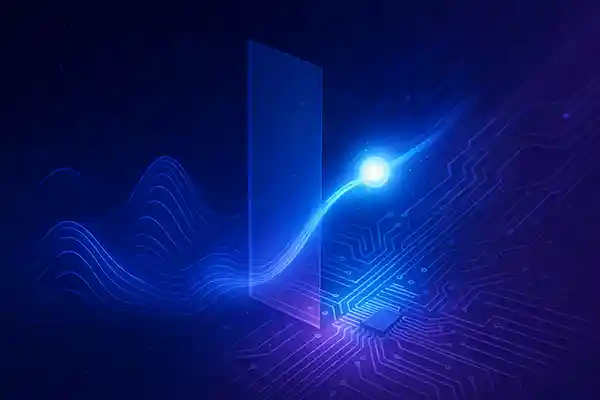
Image 1: Quantum tunnelling bridges the invisible world of particles with the technologies shaping our future.
Click Here to Read WGF Blogs from World Leaders…
What Is the Story of the 2025 Physics Nobel?
In the early 1980s, three physicists scattered across California and France chased an idea most thought impossible: that the eerie laws of the quantum world might be visible at a scale big enough to hold in one’s hand.
They built a tiny superconducting circuit and watched it do the unthinkable – particles leapt through barriers, as if walls had turned to mist. Classical physics said it couldn’t happen; quantum physics smiled and said it must.
They called it quantum tunnelling.
At the time, they didn’t imagine awards or revolutions – only curiosity. Yet their experiment became the foundation of quantum computing, quantum sensors, and quantum encryption.
“It was the surprise of my life,” said John Clarke. “We never dreamed this could lead to a Nobel Prize.”
Their story is less about prizes and more about patience – proof that sometimes, science tunnels its way to glory long after the experiment ends.
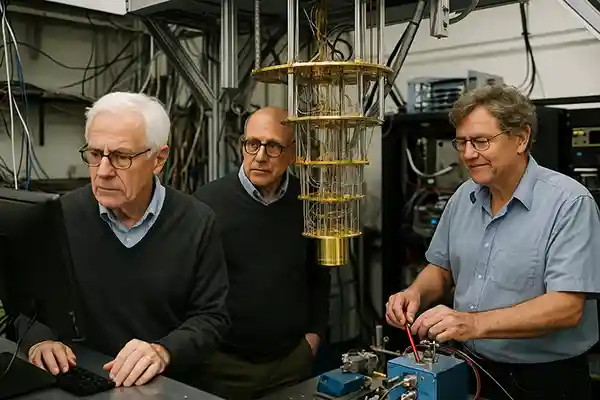
Image 2: Three pioneers turned a once-theoretical quantum effect into a tangible experiment – reshaping how we harness the laws of nature.
Click Here to Read What Is Behind Nvidia’s $5 Billion Lifeline to Intel…
Did You Know?
Nobel Prizes
- First awarded in 1901, created from the will of Alfred Nobel, the inventor of dynamite
- Each laureate receives a medal, diploma, and share of 11 million Swedish kronor (~ $1.2 million USD)
- The awards are presented every December 10 – the anniversary of Nobel’s death
Did You Know?
Nobel Prizes in Physics
- The first Physics Nobel (1901) went to Wilhelm Röntgen for discovering X-rays
- Past laureates include Einstein, Bohr, Schrödinger, and Planck – all architects of quantum theory
- Recent trends show Physics Prizes celebrating quantum technologies (2022–2025)
Click Here to Read What Is NATO…
Nobel Prizes in Numbers
• 230: Total Nobel Prize in Physics laureates (1901–2025); 229 individuals (John Bardeen won twice)
• Up to 3: Maximum number of laureates who may share the Physics prize in a given year
• 11 million SEK: It is the current total prize money
Click Here to Watch Keynote Speeches and Interviews of World Leaders at WGF YouTube…
Historical Note
In late 1925, Erwin Schrödinger was overwhelmed – both by heartbreak and confusion over Heisenberg’s abstract ‘matrix mechanics’.
He retreated to a snow-covered chalet in Arosa, Switzerland, taking along a stack of papers, a suitcase of books, and – legend says – a lover.
By the time he returned to Zürich after Christmas, he had written the equation that defines all quantum behavior: the Schrödinger Wave Equation.
Heisenberg later joked that Schrödinger “had sex and invented the wave equation”, turning pain and passion into physics.
Click Here to Read What Is the Trump–Putin Alaska Summit About…
What Is the Story of Nobel Prizes?
The story of the Nobel Prizes begins not in a laboratory, but in guilt.
In 1888, Alfred Nobel, the Swedish chemist and inventor of dynamite, woke up to read his own obituary in a French newspaper. It was a mistake – his brother Ludvig had died, but the paper confused the two. The headline read: “The Merchant of Death is Dead”.
The article condemned Nobel for profiting from explosives that had caused suffering in wars. Shaken by how he would be remembered, Nobel resolved to change his legacy.
He rewrote his will, leaving most of his vast fortune – equivalent to hundreds of millions of dollars today – to fund annual prizes for those who ‘have conferred the greatest benefit to humankind’.
When he died in 1896, Nobel’s will astonished even his family. It took years of legal battles before the Nobel Foundation was finally established in 1900.
The first Nobel Prizes were awarded in 1901, recognizing achievements in Physics, Chemistry, Medicine, Literature, and Peace – the disciplines Nobel believed could elevate both science and humanity.
Over the decades, the Nobel has evolved from a personal act of redemption into the world’s most respected symbol of intellectual triumph – proof that even from the invention of dynamite, enlightenment can emerge.
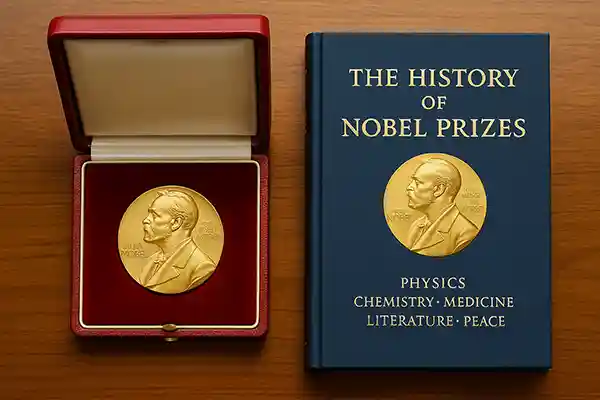
Image 3: Since Alfred Nobel’s vision in 1895, each Nobel Prize has honored discoveries that transform our understanding of the world.
Click Here to Watch WGF News on World Leaders at WGF TV…
What Is a Nobel Prize?
A Nobel Prize is among humanity’s highest scientific honors – awarded annually in Physics, Chemistry, Medicine, Literature, Peace, and later Economics. It stands for perseverance and peerless contribution, chosen by committees in Sweden and Norway after months of review. More than a trophy, it represents the idea that knowledge can change the world.
Click Here to Read What Is A Ceasefire Agreement…
Who Is John Clarke?
A British-born physicist now at UC Berkeley, Clarke’s work in superconductivity and magnetometry changed how we detect faint magnetic fields. He remains humble about his Nobel recognition, insisting that ‘curiosity, not expectation’, guided his journey.
Click Here to Read What Is De-Dollarisation…
Who Is Michel Devoret?
A French scientist at Yale University, Devoret specializes in quantum electronic circuits – building the delicate bridges between the quantum and classical worlds.
He also serves as Chief Scientist at Google Quantum AI, linking academia and industry in the race for the first practical quantum computer.
Click Here to Read What Is the Hiroshima Atomic Bombing’s Legacy – 80 Years Later…
Who Is John Martinis?
An American physicist at UC Santa Barbara, Martinis once led Google’s Quantum AI Lab, achieving the 2019 milestone of quantum supremacy. His lab’s superconducting qubits remain a cornerstone of global quantum research.
Click Here to Read What Is the Russian Volcano Eruption After 500 Years…
So, What Is Quantum Tunnelling, and Why Is It So Strange?
In classical physics, an object cannot cross a barrier unless it has enough energy to climb over it – like a ball needing force to jump a wall. But in quantum mechanics, particles behave like waves. And a wave, unlike a ball, can leak through a wall – appearing on the other side as if it had tunnelled through.
This effect, known as quantum tunnelling, was long considered limited to atoms and electrons. What Clarke, Devoret, and Martinis proved is that tunnelling can occur in large-scale systems, too – even in an electronic circuit you can hold.
The discovery also connects to the famous paradox of Schrödinger’s Cat, the thought experiment where a cat is both dead and alive until observed. In much the same way, quantum systems exist in multiple states simultaneously until measured – a concept now central to quantum computing.
Click Here to Read What Is Coral Bleaching…
What Is Energy Quantisation?
In quantum mechanics, energy isn’t continuous like water flowing from a tap; it comes in packets called quanta.
Clarke, Devoret, and Martinis demonstrated that even electrical circuits obey this rule – their energy levels rise and fall in discrete steps, not smooth curves. This insight fuels the design of quantum bits (qubits), the building blocks of quantum computers.
Click Here to Read What Is Botox…
What Is Quantum Computing?
Quantum computing harnesses the principles of superposition and entanglement to perform calculations classical computers can’t. While a normal bit is 0 or 1, a qubit can be both simultaneously – allowing exponential processing power. From climate modelling to drug discovery, quantum computing promises leaps that once seemed science fiction.
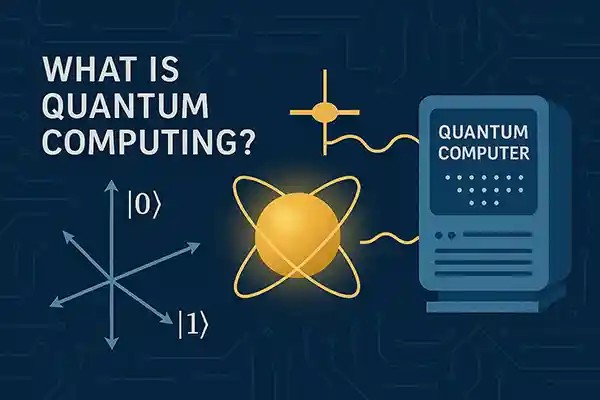
Image 4: Quantum computing uses the strange logic of particles to solve problems that classical computers can only dream of tackling.
Click Here to Read What Is Giorgio Armani’s Legacy…
What Are Qubits?
At the heart of quantum computing lies the qubit, short for quantum bit. While a classical bit – the smallest unit of data in a normal computer – can be either 0 or 1, a qubit can exist as 0, 1, or both at once thanks to a quantum principle called superposition.
Think of a spinning coin: while it’s in motion, it’s both heads and tails. Only when it lands – when it’s measured – does it become one or the other.
Qubits also have a second, mind-bending property called entanglement, where two or more qubits become linked so that the state of one instantly influences the other, even if they’re far apart.
Einstein called this ‘spooky action at a distance’, but today it’s the foundation of quantum communication.
The 2025 Nobel-winning experiments laid the groundwork for superconducting qubits – circuits cooled to near absolute zero, where electricity flows without resistance and quantum effects can persist long enough to perform complex calculations.
In simple terms:
- Bits are switches
- Qubits are probabilities – and that’s what makes them powerful
Together, they’re transforming computation from a world of yes or no to a universe of maybe, until measured.
Click Here to Read What Is Tesla’s New ‘Affordable’ Model 3 & Model Y…
What Are Quantum Sensors?
Quantum sensors exploit the extreme sensitivity of quantum states to detect the tiniest changes in magnetic, electric, or gravitational fields. They’re used in navigation without GPS, medical imaging, and even in tracking underground water or minerals. The same physics that once puzzled Einstein now guides surgeons and satellites.
Click Here to Read What Is ChatGPT Atlas…
What Is Quantum Encryption?
Quantum encryption (or quantum key distribution) secures communication by encoding data in photons. If anyone tries to intercept, the act of observation itself disturbs the signal – revealing the intrusion instantly. It’s security written in the laws of nature.
Click Here to Read What Is the AWS Outage…
What Is the Paradox of Schrödinger’s Cat?
Physicist Erwin Schrödinger imagined a cat locked in a box with a radioactive atom. Until observed, the atom – and therefore the cat – could be both alive and dead.
This thought experiment captured the core quantum mystery: reality depends on observation. The 2025 laureates showed that even circuits can behave like Schrödinger’s cat – existing in multiple states until measured.
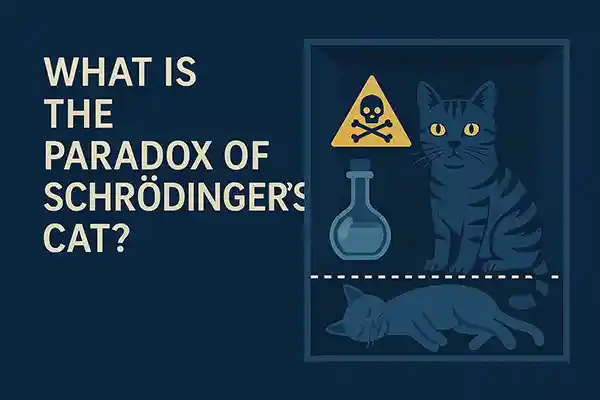
Image 5: Schrödinger’s thought experiment reveals how uncertainty and observation define the very fabric of quantum reality.
Click Here to Read What Is Dark Matter…
How Does This Discovery Power Quantum Technology Today?
The 1980s experiments evolved into today’s race for quantum supremacy – building computers that outperform classical supercomputers.
John Martinis, one of the laureates, led Google’s Quantum AI Lab, where researchers in 2019 demonstrated a quantum processor solving a problem faster than any existing supercomputer.
Michel Devoret continues to lead research on superconducting qubits at Yale, while John Clarke’s pioneering work in superconductivity remains foundational for quantum sensors used in MRI machines and magnetometers.
Applications born from their discovery include:
- Quantum computers: for certain specialised problems, can vastly outperform classical machines
- Quantum cryptography: tamper-evident communications based on quantum effects
- Quantum sensors: higher-precision navigation, imaging, and environmental measurement
Together, these technologies could transform sectors from energy to medicine – and even accelerate climate-change modelling and drug discovery.
Click Here to Read What Is OpenAI’s ‘Erotica for Verified Adults’ Policy…
Why Quantum Physics Matters to Everyday Life?
Quantum mechanics might seem abstract, but it powers almost every digital device today.
Transistors, lasers, LEDs, and fibre optics – all rely on quantum principles to function.
As the Nobel Committee noted: “There is no advanced technology used today that does not rely on quantum mechanics.”
Every time you unlock your phone with facial recognition, watch a 4K video, or use GPS, you’re interacting with quantum science at work – proof that physics, no matter how strange, drives progress at every scale.
Click Here to Read What Is Deepfake Technology…
WGF Take – Tunnelling to the Other Side for a Quantum Leap?
Every breakthrough begins as disbelief. Quantum physics has always challenged common sense. Yet, it’s this very defiance of logic that drives invention. When Clarke, Devoret, and Martinis showed that a circuit could behave like an atom, they didn’t just win a Nobel Prize – they redefined the scale of possibility.
Their story reminds us that today’s mystery is tomorrow’s motherboard. Quantum tunnelling teaches us that barriers are sometimes illusions.
From electrons to ideas, the world advances when something – or someone – dares to pass through the impossible. The future isn’t just digital anymore. It’s quantum.
Follow World Growth Forums on the following for more updates…