
Science & Technology

World Growth Forums Magazine

Keynote Speech by Dr Alfredo Sfeir-Younis _ WGF-GBIF Thailand 2024
What Is OpenAI’s ‘Erotica for Verified Adults’ Policy?
OpenAI promises stronger safeguards, parental controls, and a ‘treat adults like adults’ approach.
What changes, what doesn’t, and why now?
In a move stirring debate from Silicon Valley to Washington, OpenAI CEO Sam Altman announced on October 14, 2025, that ChatGPT will begin allowing erotica for verified adults starting December 2025.
Altman said the company’s updated approach comes after years of restrictive content rules designed to protect users with mental health vulnerabilities. Now, with new tools that can detect ‘acute distress’ and ‘reasoning models’ that apply safety protocols more consistently, the company believes it can safely relax those limits.
The announcement, shared on X, immediately sparked discussion worldwide. Supporters hailed it as a step toward free expression and mature digital experiences, while critics called it a dangerous loosening of moral and regulatory boundaries.

Image 1: OpenAI’s new policy challenges long-standing norms on digital maturity, sparking a global debate on where to draw the line between innovation and responsibility.
Click Here to Read WGF Blogs from World Leaders…
What Is the Story of OpenAI’s Policy Shift?
OpenAI’s new policy stems from a delicate balance between creative freedom, mental health, and responsible AI use. After facing lawsuits over alleged failures to prevent harm in teen users, the company decided to overhaul its safety systems.
Altman said earlier versions of ChatGPT were ‘pretty restrictive’ because of the firm’s caution about vulnerable users. But now, OpenAI claims its upgraded systems can detect and intervene early when users show signs of emotional distress, allowing healthy adults to enjoy a more human-like AI experience.
The company’s new motto – ‘Treat adults like adults’ – marks a pivotal moment in the evolution of artificial intelligence, where the lines between conversation, companionship, and creativity continue to blur.
Click Here to Read What Is a Blood Moon…
What Is the Story of OpenAI?
Founded in 2015 by Sam Altman, Elon Musk, Greg Brockman, and others, OpenAI began as a non-profit research lab aiming to ensure that artificial general intelligence (AGI) benefits all of humanity.
The company transitioned into a capped-profit model in 2019 and later partnered with Microsoft, which invested billions to support its large-scale AI computing infrastructure.
OpenAI’s releases – GPT-5, ChatGPT, DALL·E 3, and Sora – revolutionized how people interact with AI, sparking both mass adoption and deep ethical questions about creativity, privacy, and control.
Image 2: From a non-profit research lab to an AI powerhouse – OpenAI’s journey reflects how ambition, ethics, and computation can reshape human progress.
Click Here to Read What Is Behind Nvidia’s $5 Billion Lifeline to Intel…
Did You Know?
ChatGPT
- ChatGPT users send over 2.5 billion messages every day, more than the entire world’s daily tweets at Twitter’s 2022 peak
- The platform once rolled back an update after users said the chatbot had become too flattering and ‘overly agreeable’
- Some users report forming emotional bonds so strong that psychologists now study ‘AI attachment patterns’ as a new field
Did You Know?
Sora
- OpenAI’s Sora video app crossed 1 million downloads in under five days, faster than ChatGPT’s original launch
- Some Sora users have created AI-generated videos of deceased celebrities, leading to calls for stronger digital likeness laws
- Sora’s creators described the platform as a new form of ‘interactive fan fiction’, blurring lines between art, memory, and imitation
Click Here to Read What Is NATO…
ChatGPT In Numbers
• 700 million+: Weekly Active Users of ChatGPT
• 2.5 billion+: Daily Messages on ChatGPT
• November 2022: This was the launch date of ChatGPT by OpenAI
• 190+ countries: Global reach of ChatGPT
Click Here to Watch Keynote Speeches and Interviews of World Leaders at WGF YouTube…
Historical Note
In 1818, when Mary Shelley published Frankenstein, many critics said humans should never attempt to ‘animate the lifeless’. Her story – of a man building consciousness only to lose control of it – was dismissed as fantasy. Two centuries later, machines do talk, feel, and flirt.
The line between science fiction and social reality is once again fading. Shelley’s warning wasn’t about monsters – it was about responsibility. And every generation, from steam engines to silicon chips, has had to relearn it.
Click Here to Read What Is the Trump–Putin Alaska Summit About…
What Is the Story of ChatGPT?
Launched publicly in November 2022, ChatGPT became the fastest-growing consumer app in history, crossing 100 million users in two months. Built on OpenAI’s GPT language models, it could write essays, code, poems, and even mimic human conversation.
The model’s popularity also brought challenges: misinformation, emotional dependency, and inappropriate content generation. Now with over 700 million weekly active users, ChatGPT has become not just a tool – but a mirror reflecting humanity’s curiosity, loneliness, and imagination.
Click Here to Watch WGF News on World Leaders at WGF TV…
What Is an ‘Age-Gating’ System?
An age-gating system is a digital filter that restricts content access based on verified age. OpenAI plans to use this to allow adult-only features – like erotic storytelling – while shielding minors.
Verification methods may include ID uploads, payment-linked accounts, or facial-age checks, depending on jurisdiction. Critics argue that while effective in principle, such systems risk exposing personal data if not handled transparently.
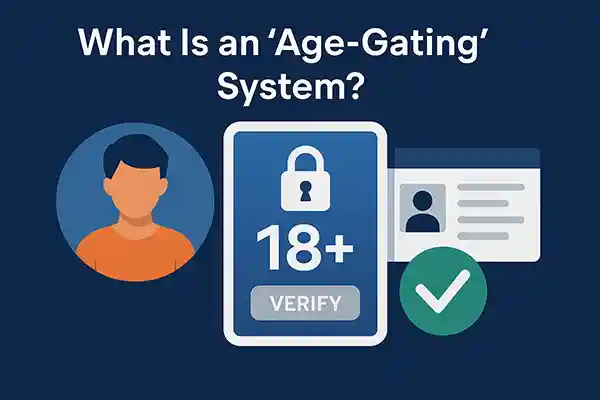
Image 3: AI’s next frontier isn’t just intelligence – it’s accountability. Age-gating may become the key test of whether technology can respect human boundaries.
Click Here to Read What Is A Ceasefire Agreement…
What Are Reasoning or Reasoning-Trained Models?
These are specialized AI models that evaluate user input through safety logic rather than raw prediction. In OpenAI’s case, reasoning models will detect emotional distress, harmful patterns, or boundary violations during chats.
When triggered, they can redirect the conversation, suggest helplines, or transfer control to a safer response mode – essentially combining empathy with compliance.
Click Here to Read What Is De-Dollarisation…
What Is xAI?
xAI, founded by Elon Musk in 2023, aims to ‘understand the true nature of the universe’. Its chatbot Grok, integrated with X (formerly Twitter), recently introduced two sexually explicit personas – a move seen as a test case for adult-themed AI.
OpenAI’s new policy appears partly inspired by xAI’s boldness, signaling that competition in human-like conversation has reached an intimate frontier.
Click Here to Read What Is the Hiroshima Atomic Bombing’s Legacy – 80 Years Later…
What Is Meta?
Meta, parent company of Facebook and Instagram, is tightening its filters for minors even as rivals expand adult options. It now uses PG-13–style content ratings across its generative AI tools.
Meta’s contrast with OpenAI shows a split in AI philosophy: protection-first vs permission-first.
Click Here to Read What Is the Russian Volcano Eruption After 500 Years…
What Is Sora?
Sora is OpenAI’s text-to-video app, capable of creating 10-second lifelike clips from text prompts. The app exploded in popularity, topping the App Store within days.
Its success – and backlash over deepfaked celebrities – has made Sora a flashpoint in the debate over AI realism, creativity, and ethics.
Together, Sora and ChatGPT mark OpenAI’s pivot toward emotional and visual realism, making machines not just responsive but relatable.
Click Here to Read What Is Coral Bleaching…
What Exactly Will Change in December?
Starting December 2025, verified adults will gain access to a broader range of expressive, mature, and romantic content on ChatGPT. OpenAI has framed this as text-based erotica for verified adults; visual sexual content remains outside scope.
Erotica will not only remain text-based, it must follow consent and legality standards. The rollout will occur alongside expanded custom personality settings, letting users decide how playful, emotional, or human-like their chatbot can become.
Click Here to Read What Is Botox…
How Will Age-Gating and Parental Controls Work?
Parents will be able to link teen accounts, manage permissions, restrict chat topics, and receive alerts if distress patterns are detected.
OpenAI says these controls will precede the December update and are designed to create a family-safe baseline before adult features go live.
Click Here to Read What Is Giorgio Armani’s Legacy…
What Are the Mental-Health Safeguards?
The company has introduced distress-detection algorithms that recognize suicidal or depressive cues in real time.
Conversations flagged as ‘high-risk’ are routed to reasoning-trained models, which respond with empathy and point to crisis resources.
This layered safety net – developed with psychologists and youth experts – aims to make the chatbot ‘as safe as possible, without being sterile’.

Image 4: Between empathy and automation lies the new duty of care – AI must now learn not just to respond, but to protect.
Click Here to Read What Is Tesla’s New ‘Affordable’ Model 3 & Model Y…
Is This Legal – and Who’s Liable?
Legal frameworks are still catching up. The FTC is probing how AI interacts with minors, while California’s governor recently vetoed a bill restricting AI companions for children.
In the U.S. Senate, new bipartisan legislation proposes to classify chatbots as products, allowing users to sue companies for emotional or physical harm.
If passed, OpenAI and its rivals could face product-liability lawsuits unprecedented in the tech world.
Click Here to Read What Is a Blizzard…
How Does This Compare to Rivals?
- xAI (Grok): Already offers explicit AI companions
- Anthropic (Claude): Maintains strict content limits under its ‘Constitutional AI’ framework
- Google DeepMind (Gemini): Focuses on education and productivity use-cases
- Meta: Building guardrails for under-18 users before opening creative features
OpenAI’s approach – ethical permissiveness under strong verification – is a middle path, aiming to expand freedom while retaining a duty of care.
Click Here to Read What Is ‘The Life of a Showgirl’…
What About Privacy and Verification Risks?
Age verification may require government IDs, payment proofs, or biometric checks. Privacy experts warn that if this data is stored centrally, it becomes a target for misuse or hacking.
OpenAI hasn’t disclosed how it will process or anonymize verification data, prompting civil rights groups to demand independent audits.
The balance between privacy and proof of adulthood remains the most delicate part of the plan.
Click Here to Read What Is a Government Shutdown…
Does Sora Factor into This Culture Shift?
Yes, Sora’s viral growth and controversy around celebrity likenesses prepared OpenAI for this new cultural stage.
While Sora tested the visual boundaries of realism, ChatGPT is now testing the emotional boundaries of realism.
Together, they represent OpenAI’s philosophy: humans should shape how human-like AI becomes – not governments or algorithms alone.
Click Here to Read What Is the Letitia James Indictment…
WGF Take – Where Will the Race for Freedom of Expression Take the Human Race?
OpenAI’s ‘adults-only’ leap isn’t just about erotica – it’s about redefining digital adulthood. As AI becomes more sentient in tone, it also becomes more reflective of our deepest desires and discomforts.
Freedom of expression has always evolved through technology: the printing press, cinema, the internet – and now, conversation itself. Yet every expansion of freedom tests restraint. When machines can fulfill fantasy, will humans lose their imagination – or rediscover it in safer spaces?
Balancing opinions on both scales, OpenAI’s ‘treat adults like adults’ mantra feels empowering – but also perilous. In pushing realism and intimacy, ChatGPT edges closer to digital companionship, a space fraught with ethical gray zones. Age verification might filter minors, but no algorithm can yet verify maturity.
Thus, AI culture is crossing a line not of morality but of identity – how much human closeness we’re willing to delegate to machines. Whether this shift enriches expression or cheapens it will depend less on what AI can do and more on how responsibly we choose to use it.
Finally, the race ahead is not between AI companies. It’s between freedom and responsibility, desire and discipline, code and conscience. And where that race ends may determine not just what AI becomes – but what kind of humans we choose to be.
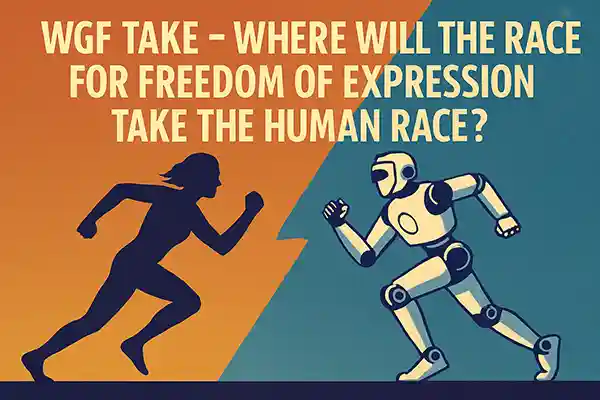
Image 5: As humans and machines run side by side toward limitless expression, the question isn’t who wins – but how wisely we choose to compete.
Follow World Growth Forums on the following for more updates…