
Science & Technology

World Growth Forums Magazine

Keynote Speech by Dr Alfredo Sfeir-Younis _ WGF-GBIF Thailand 2024
What Is Dark Matter?
Will a New Gamma-Ray Clue from the Milky Way Prove the Existence of Dark Matter?
A mysterious gamma-ray glow at the center of our galaxy has once again turned the cosmic spotlight toward one of the universe’s greatest mysteries – dark matter.
In a new study published on October 16, 2025, in Physical Review Letters, scientists found that dark matter fits the observed gamma-ray data just as well as the rival theory involving neutron stars. The finding brings physicists closer than ever to confirming that dark matter – which makes up nearly 27% of the universe – may not just be a mathematical placeholder but a real, physical substance shaping everything around us.
And the stage for its possible detection? Our own Milky Way.
Image 1: The universe hides more than it reveals – yet even the invisible leaves its mark.
Click Here to Read WGF Blogs from World Leaders…
What Is the Story of the Discovery of Dark Matter?
The story of dark matter began not with a flash of light, but with an absence of it.
In the early 1930s, Swiss astronomer Fritz Zwicky was studying the motion of galaxies in the Coma Cluster. He found something odd – galaxies were moving so fast that they should have flown apart, unless some invisible force was holding them together. He called this unseen mass ‘dunkle Materie’ – dark matter.
Decades later, American astronomer Vera Rubin offered another clue. Observing the rotation speeds of spiral galaxies, she discovered they spun much faster than visible matter alone could explain. Something unseen was adding gravitational weight. That ‘something’ became the backbone of modern cosmology – a ghostly presence binding the universe together.
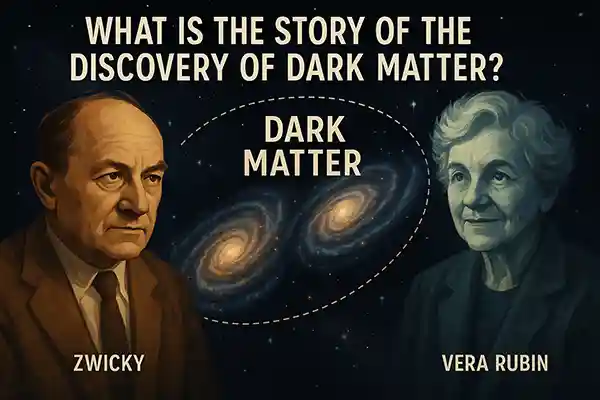
Image 2: From Zwicky’s bold guess to Rubin’s quiet proof – the unseen began to shape our understanding of everything seen.
Click Here to Read What Is Behind Nvidia’s $5 Billion Lifeline to Intel…
Did You Know?
Dark Matter
- Scientists estimate that 85% of all matter in the universe is dark matter
- If you removed every star, planet, and galaxy we can see, most of the universe’s mass would still exist – unseen
- Dark matter neither emits, absorbs, nor reflects light – it is truly invisible, detectable only through its gravitational pull
Did You Know?
Gamma Rays
- Gamma rays are a trillion times more energetic than visible light. They sit at the extreme end of the electromagnetic spectrum, beyond X-rays
- Earth’s atmosphere blocks most gamma rays, which is why telescopes like NASA’s Fermi or the upcoming Cherenkov Array must operate in space or high altitudes
- A single gamma-ray burst can release more energy in seconds than the Sun will emit in its entire 10-billion-year lifetime
Click Here to Read What Is NATO…
Dark Matter in Numbers
• 27%: Portion of the universe made of dark matter
• 5%: Portion made of ordinary matter
• 68%: Portion made of dark energy
• 7,000 light-years: Width of the Milky Way region studied
• 26,000 light-years: Earth’s distance from the Galactic Center
• 9.5 trillion kilometers: One light-year
Click Here to Watch Keynote Speeches and Interviews of World Leaders at WGF YouTube…
Historical Note
In 1933, Fritz Zwicky was mocked for his ‘missing mass’ theory – even colleagues called his idea absurd. But his instinct was right. Later, Vera Rubin’s patient observations in the 1970s confirmed that galaxies spin too fast for visible matter alone. The irony? Neither Zwicky nor Rubin lived to see dark matter confirmed – yet their ‘invisible’ legacy endures as science’s greatest unseen triumph.
Click Here to Read What Is the Trump–Putin Alaska Summit About…
What Did Scientists Find at the Milky Way’s Center?
At the heart of the Milky Way lies a glowing riddle – an excess of gamma rays, first detected by NASA’s Fermi Gamma-ray Space Telescope.
These rays, invisible to the human eye but immensely energetic, come from a region about 7,000 light-years across. Two competing theories emerged: either the glow is caused by colliding dark matter particles, or it comes from millisecond pulsars – ultra-fast spinning remnants of dead stars.
A new simulation published this week shows both explanations fit the data equally well. The result doesn’t solve the mystery, but it elevates dark matter from theory to possibility.
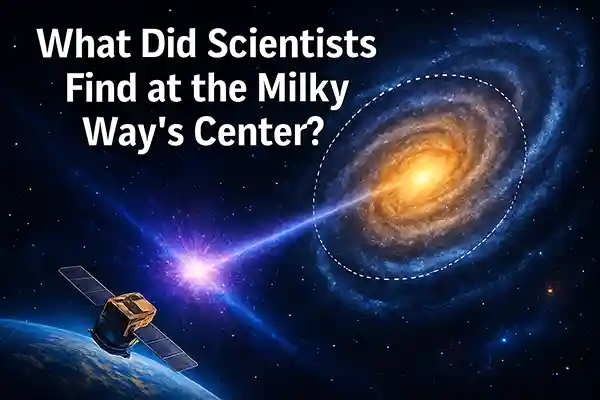
Image 3: A faint glow at our galaxy’s heart may hold the first whisper of dark matter’s existence.
Click Here to Watch WGF News on World Leaders at WGF TV…
So, What Exactly is Dark Matter?
Dark matter isn’t a single substance we can hold or observe – it’s a category of mystery.
Scientists believe it could be made of WIMPs (Weakly Interacting Massive Particles), or even entirely new forms of particles beyond the Standard Model of physics.
It neither emits nor reflects light, yet its gravitational fingerprint is everywhere – bending starlight, shaping galaxies, and subtly steering the universe’s expansion.
Click Here to Read What Is A Ceasefire Agreement…
What Is Dark Energy?
If dark matter holds the universe together, dark energy tears it apart.
It’s the force driving the accelerating expansion of the cosmos – a mysterious pressure woven into the very fabric of space. Discovered in 1998, dark energy remains even more elusive than dark matter, accounting for nearly two-thirds of all cosmic energy.
Click Here to Read What Is De-Dollarisation…
What Are Gamma Rays?
Gamma rays are the most energetic form of light in the electromagnetic spectrum – far beyond X-rays. They emerge from the universe’s most violent events: supernovae, black holes, and possibly, dark matter annihilations. Because of their short wavelength and immense energy, gamma rays can travel across galaxies – acting as cosmic fingerprints of invisible processes.
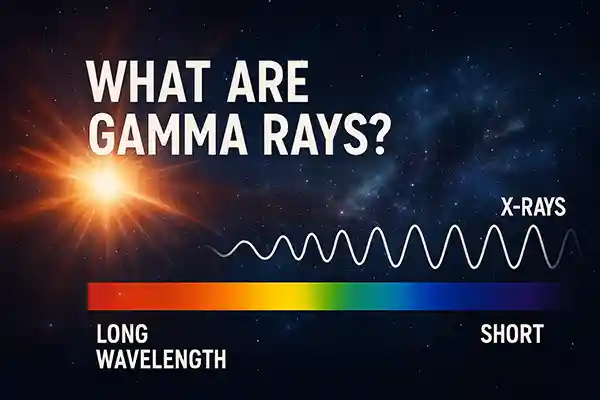
Image 4: When the universe speaks in energy, gamma rays are its loudest voice.
Click Here to Read What Is the Hiroshima Atomic Bombing’s Legacy – 80 Years Later…
What Is a Gamma-Ray Afterglow?
After a high-energy event like a stellar explosion or a gamma-ray burst, the fading glow of gamma rays – the afterglow – lingers for hours or days. Studying these afterglows helps scientists trace the origin of the explosion and understand the physics of particle decay, magnetic fields, and radiation in deep space.
Click Here to Read What Is the Russian Volcano Eruption After 500 Years…
What Is the Milky Way?
The Milky Way is our home galaxy – a barred spiral about 100,000 light-years wide, hosting more than 100 billion stars.
At its center lies a supermassive black hole, Sagittarius A*, and a dense region where dark matter is believed to be most concentrated. It’s here, amid the swirl of stars and cosmic dust, that the mysterious gamma-ray glow has been detected.
Click Here to Read What Is Coral Bleaching…
What Is the Fermi Gamma-ray Space Telescope?
Launched by NASA in 2008, the Fermi Gamma-ray Space Telescope scans the sky for the universe’s most energetic light. It detects photons from supernovae, pulsars, and black holes – and, potentially, from dark matter collisions. Fermi’s all-sky map revealed the gamma-ray excess at the Milky Way’s center, now the focal point of this cosmic investigation.
Click Here to Read What Is Botox…
What Is the Cherenkov Telescope Array?
Still under construction in Chile and Spain, the Cherenkov Telescope Array (CTA) will be the world’s most sensitive gamma-ray observatory.
It’s expected to begin operations in 2026, capable of distinguishing the energy signatures of pulsars from those of dark matter annihilation. For scientists, CTA may finally answer the question Zwicky asked nearly a century ago – what holds the universe together?
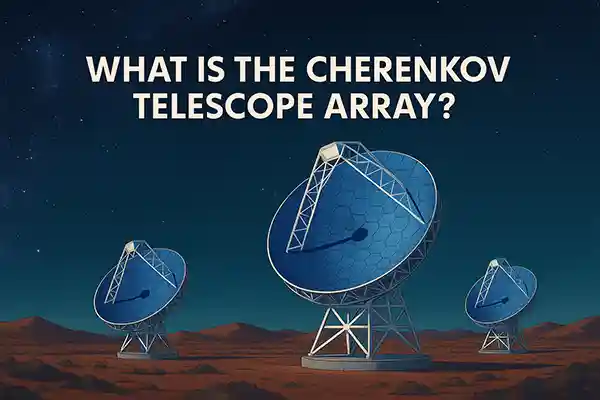
Image 5: Built beneath the world’s clearest skies, the CTA may finally separate light born of stars from light born of mystery.
Click Here to Read What Is Giorgio Armani’s Legacy…
What Are Neutron Stars or Pulsars?
When massive stars die, they collapse into neutron stars – dense remnants packed so tightly that a teaspoon of their material weighs billions of tons.
Some of these spin rapidly, emitting beams of radiation like a lighthouse. These are called pulsars. As they rotate, their beams sweep across space, creating rhythmic pulses detectable by telescopes on Earth.
Click Here to Read What Is Tesla’s New ‘Affordable’ Model 3 & Model Y…
What Are Millisecond Pulsars?
Millisecond pulsars are neutron stars spinning hundreds of times per second. Their incredible speed makes them efficient gamma-ray emitters.
Astronomers suspect that thousands of such pulsars, hidden near the Milky Way’s center, could collectively mimic the glow attributed to dark matter – which is why they remain the strongest competing explanation.
Click Here to Read What Is a Blizzard…
What Are the Two Competing Explanations of Dark Matter vs Pulsars?
It’s the ultimate cosmic whodunit.
On one side are the dark matter detectives, convinced that invisible particles – possibly their own antiparticles – collide and annihilate to release pure energy in the form of gamma rays.
Their evidence: the energy pattern and spatial distribution of the glow match predictions for dark matter.
On the other side stand the pulsar advocates, who argue the glow comes from an army of faint, rapidly spinning neutron stars. Their beams overlap so densely that they blur into one diffuse light, fooling telescopes into seeing a dark matter signature.
The new research throws both sides a twist – simulations now show both theories fit perfectly. Until better instruments can tell them apart, the Milky Way’s center remains the universe’s grandest courtroom, with light as the witness and darkness as the accused.
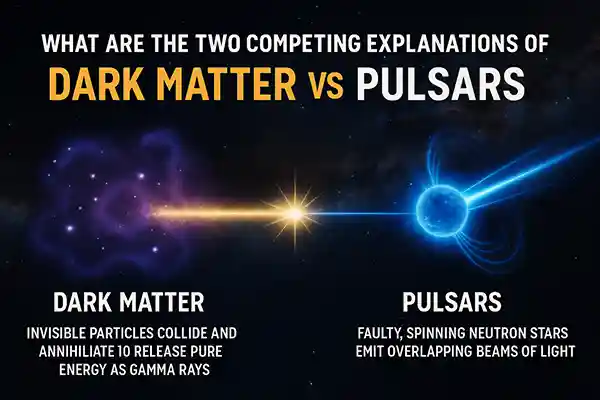
Image 6: Dark matter or dying stars – the cosmos offers both clues and contradictions in equal measure.
Click Here to Read What Is ‘The Life of a Showgirl’…
How Do Gamma Rays Become a Smoking Gun?
If dark matter particles are indeed their own antiparticles, every collision would cause them to annihilate completely – releasing gamma rays.
These high-energy photons would appear as a faint, steady glow, distinct from the pulsed flashes of neutron stars. If CTA or other observatories detect that unmistakable signature, it could be the first indirect detection of dark matter in history – the ‘smoking gun’ cosmologists have chased for generations.
Click Here to Read What Is a Government Shutdown…
What Tools Can Finally Settle This Debate?
The world’s most powerful eyes are on the case. The Cherenkov Telescope Array, once operational, will provide unprecedented energy resolution. NASA’s Fermi Gamma-ray Space Telescope continues scanning, while the Einstein Probe, the James Webb Space Telescope, and H.E.S.S. telescopes (High Energy Stereoscopic System) are joining forces to cross-check results.
If dark matter exists, it will reveal itself not in silence, but in spectrum – through a pattern of energy that only one explanation can fit.
Click Here to Read What Is the Letitia James Indictment…
Do Repeating Gamma-Ray Bursts Change the Picture?
In July, astronomers observed a once-in-a-lifetime phenomenon: repeating gamma-ray bursts – explosions so powerful they outshine entire galaxies, repeating within 24 hours.
This defied all previous records, as such bursts are typically one-time cataclysms. These events don’t directly prove or disprove dark matter, but they deepen our understanding of how extreme energy behaves.
By decoding such bursts, scientists refine models of how particles collide, how stars die, and how cosmic radiation spreads – insights that could illuminate the dark matter puzzle.
Click Here to Read What Is OpenAI’s ‘Erotica for Verified Adults’ Policy…
Why This Matters on Earth – Right Now?
At first glance, dark matter seems remote – a mystery floating light-years away. But its understanding could reshape physics, technology, and even life on Earth.
Knowing how unseen forces behave could help protect satellites from cosmic radiation, improve navigation systems, and deepen our understanding of gravity and time.
Every breakthrough in astronomy eventually trickles down – from GPS to imaging technology, from radiation shielding to quantum research.
The chase for dark matter is, at its heart, the chase to understand reality itself.
Click Here to Read What Is Deepfake Technology…
WGF Take – Let There Be Light Soon on Dark Matter
Proof may arrive not as a shout but as a spectrum.
For nearly a century, dark matter has stood at the edge of science and imagination – unseen, unfelt, yet inescapably real. The new gamma-ray findings bring us one step closer, not just to seeing the invisible, but to believing it.
Dark matter has long lived in the shadows of theoretical physics, but this new study changes tone from speculation to near-detection. What’s striking is the scientific humility – researchers aren’t claiming discovery, they’re quantifying uncertainty. That is real progress.
As Earth’s most advanced telescopes align their mirrors toward the Milky Way’s core, humanity inches closer to answering a timeless question: What is most of the universe made of?
And in doing so, we may learn something profound about our own invisible scaffolding – curiosity itself.
At WGF, we see this not just as a scientific milestone but as a story of human persistence. In the search for darkness, scientists have illuminated something greater – the unstoppable curiosity that binds our species to the stars.
Let there be light soon on dark matter.

Image 7: Science moves through darkness not by denial, but by the courage to keep looking for light.
Follow World Growth Forums on the following for more updates…