International
World Growth Forums Magazine
Keynote Speech by Dr Alfredo Sfeir-Younis _ WGF-GBIF Thailand 2024
What Is China’s Military Parade with Putin and Kim?
Inside Xi’s show of strength, new weapons, and a united front challenging the West.
On September 3, 2025, Beijing transformed Tiananmen Square into a stage of military might. China unveiled hypersonic missiles, underwater drones, laser systems, and thousands of troops in a massive ‘Victory Day’ parade marking 80 years since Japan’s defeat in World War Two. But the bigger headline wasn’t just the weapons – it was the image of Xi Jinping flanked by Russia’s Vladimir Putin and North Korea’s Kim Jong Un. Western leaders stayed away, while Donald Trump called the gathering a conspiracy against the US. Was this a celebration, a warning, or a preview of a new world order?
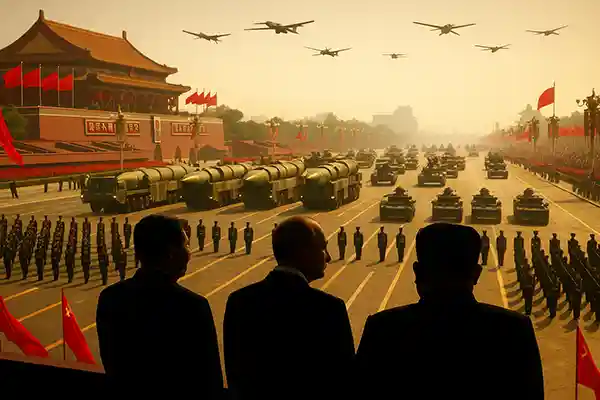
Image 1: The image of Xi, Putin, and Kim standing together defined the 2025 Victory Day parade – a visual signal of shifting global alignments.
Click Here to Read WGF Blogs from World Leaders…
What Is the Story of China’s Military Parade?
The backdrop for this grand spectacle was China’s commemoration of World War Two, a reminder of its role in defeating Japan. Xi Jinping framed the event as proof of China’s ‘unstoppable rise’ and a warning that the world faces a choice between peace or war, dialogue or confrontation.
The spark was Xi’s ambition to showcase military modernization and signal to Washington that China is prepared for multiple conflict zones – Taiwan, the Korean Peninsula, and beyond.
The defining moments came not from the hardware, but from the symbolism: Xi walking shoulder-to-shoulder with Putin and Kim, marking their first public appearance as a trio. It was a message that these nations, isolated in parts of the West, are finding strength in unity.
Western leaders largely shunned the event, calling it propaganda and an arms sales pitch. Yet inside China, civil servants were instructed to watch the parade and write reflections – evidence of how deeply this spectacle was tied to national pride.
The transition was clear: the parade wasn’t just a domestic morale boost, but a global statement that China, Russia, and North Korea are willing to present themselves as an alternative pole to the US-led order.
Click Here to Read What Is Israel’s Gaza City Takeover Plan…
Did You Know?
China
- The Great Wall stretches over 21,000 kilometers, making it the longest structure ever built
- China has the world’s largest standing army, with over 2 million active personnel
- Mandarin Chinese is the most spoken language globally, with over 1 billion speakers
Did You Know?
North Korea
- North Korea has a ‘three generations rule’: punishments can extend to children and grandchildren
- The Arirang Mass Games are among the largest choreographed shows on earth
- The country runs its own intranet system called ‘Kwangmyong’, isolated from the global internet
Did You Know?
Russia
- Russia spans 11 time zones, the most of any country
- Lake Baikal in Siberia holds 20% of the world’s unfrozen freshwater
- Russia’s Trans-Siberian Railway is the longest railway line in the world, stretching 9,289 km
Did You Know?
South Korea
- South Korea transformed from poverty in the 1950s to the 10th largest economy today
- It is the world’s most wired society, with some of the fastest internet speeds globally
- The global rise of K-pop and Korean dramas has made Seoul a cultural powerhouse
Click Here to Read What Is NATO…
What New Weapons Did China Unveil?
China’s military showcase highlighted its push into next-generation warfare:
- Hypersonic missiles capable of evading traditional defenses
- Underwater drones and robotic ‘wolf’ machines signaling advances in autonomous warfare
- Laser systems and advanced UAVs hinting at futuristic battlefields
These weapons demonstrate how China has evolved from a regional power to a global contender. For Western defense planners, it raised urgent questions: can existing security alliances counter such rapid innovation, or will they need a complete overhaul?
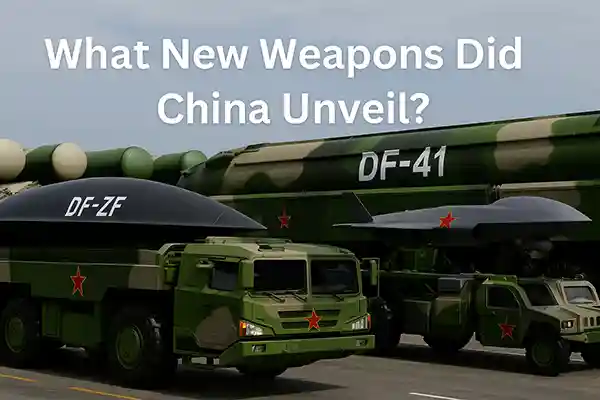
Image 2: China’s unveiling of hypersonic missiles and drones underlined its ambition to redefine future warfare and challenge Western defenses.
Click Here to Watch Keynote Speeches and Interviews of World Leaders at WGF YouTube…
Why Were Putin and Kim’s Presence So Significant?
Their presence transformed the event from a national celebration into a geopolitical show of force. For Putin, fresh from escalating strikes in Ukraine, it was a chance to demonstrate he isn’t isolated. For Kim, it was an opportunity to break his long diplomatic silence and align publicly with Beijing and Moscow.
The symbolism is stark: a trio that could pressure the US on three fronts at once – Ukraine, Taiwan, and the Korean Peninsula. Analysts argue this alignment, even if loose, complicates Western strategy by forcing Washington to divide its attention and resources.
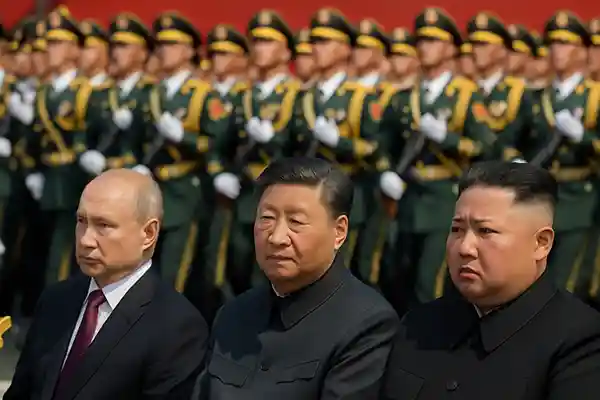
Image 3: Their first public appearance as a trio sent a message: Beijing, Moscow, and Pyongyang are prepared to project unity against US influence.
Click Here to Watch WGF News on World Leaders at WGF TV…
Why Did Western Leaders Stay Away?
Only two Western leaders – Serbia’s Aleksandar Vučić and Slovakia’s Robert Fico – attended. Most of Europe and the US avoided the parade, wary of legitimizing China’s growing closeness with Russia.
For Brussels, Xi’s parade was seen as a propaganda platform. EU officials even clarified that Slovakia was not representing the bloc. For others, attendance would have meant standing on a stage that openly challenged Western unity.
This absence highlighted the growing divide: as China draws closer to countries defying sanctions and norms, the West doubles down on diplomatic isolation.
Click Here to Read What Is A Ceasefire Agreement…
How Did the World React?
- Donald Trump, from afar, mocked the trio, saying Xi, Putin, and Kim were ‘conspiring against the United States’
- Ukraine reminded the world of ongoing war – on the same day as the parade, Russia launched over 500 drones and 24 missiles into Ukrainian cities
- Defense analysts noted the parade doubled as a weapons sales pitch, with Myanmar and other potential buyers watching closely
The world’s mixed reactions reflected the dual nature of the parade: spectacle on one hand, a warning signal on the other.
Click Here to Read What Is De-Dollarisation…
What Is the Significance of Tiananmen Square?
Tiananmen Square is one of the most politically symbolic spaces in China. It was the site where Mao Zedong proclaimed the founding of the People’s Republic in 1949 and has since hosted major parades to showcase national power.
For Xi Jinping, holding the 2025 Victory Day parade here emphasized continuity with China’s revolutionary past – a statement that China is not only modernizing but also reclaiming its central place in global history.
The square is also known worldwide for the 1989 pro-democracy protests, making it a space of both pride and pain in global memory. Yet for Xi, hosting the 2025 Victory Day parade here emphasized continuity with China’s revolutionary past and its modern resurgence.
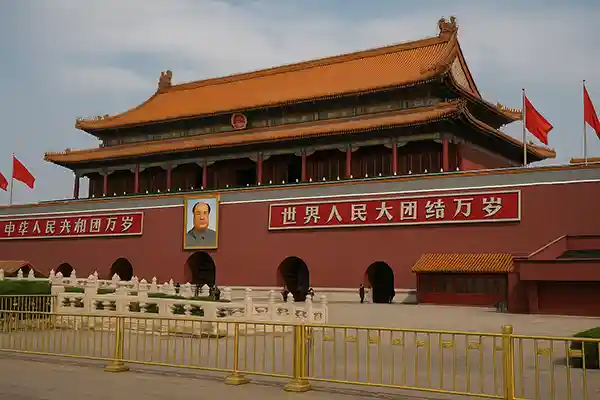
Image 4: Tiananmen Square remains the symbolic heart of Chinese state power – a place where history, pride, and controversy intersect.
Click Here to Read What Is the Hiroshima Atomic Bombing’s Legacy – 80 Years Later…
What Are Hypersonic Missiles?
Hypersonic missiles travel at speeds greater than Mach 5 (five times the speed of sound), making them difficult to detect or intercept. Unlike traditional ballistic missiles, hypersonic weapons can maneuver mid-flight, complicating defense systems. Their development signals a major shift in global security, as the US, Russia, and China race to perfect this technology.
Click Here to Read What Is the Trump–Putin Alaska Summit About…
What Is Mach 5?
Mach 5 refers to a speed five times faster than the speed of sound. Since sound travels at about 1,235 km/h (767 mph) at sea level, Mach 5 equals roughly 6,175 km/h (3,836 mph). At such speeds, a missile or aircraft can cross vast distances in minutes, leaving very little reaction time for defenses.
The term ‘Mach’ is named after physicist Ernst Mach, who studied supersonic motion. Hypersonic weapons traveling at Mach 5 or above are considered game-changers in military strategy because they combine extreme speed with the ability to maneuver, making them far harder to intercept than traditional missiles.
Click Here to Read What Is the Russian Volcano Eruption After 500 Years…
What Is a UAV?
A UAV, or Unmanned Aerial Vehicle, is commonly known as a drone. These can be used for surveillance, electronic warfare, or direct attacks. At the parade, China displayed advanced UAVs capable of long-range missions, highlighting how the future battlefield may rely less on manned aircraft and more on autonomous systems.
Click Here to Read What Is Coral Bleaching…
What Is the Victory Day of China?
China’s Victory Day commemorates the defeat of Japan in World War Two. While most countries mark the event in 1945, China uses the anniversary to highlight its sacrifices and role in ending the war. For Xi, it is also a chance to tie China’s wartime resilience to its current rise – portraying today’s modernization as a continuation of national rejuvenation.
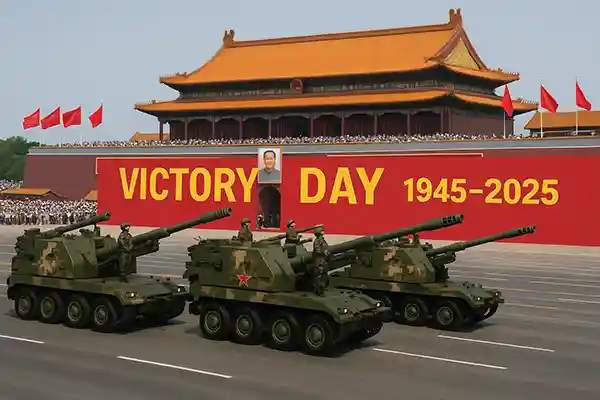
Image 5: China’s 2025 Victory Day parade marked 80 years since World War Two, blending history with a declaration of modern strength.
Click Here to Read What Is Botox…
How Is North Korea Different from South Korea Politically?
North Korea is a hereditary dictatorship led by Kim Jong Un, rooted in Juche (self-reliance) ideology, with a closed economy and severe restrictions on freedom. South Korea, by contrast, is a democracy with regular elections, robust civil liberties, and a globally integrated economy. Their division, dating back to the Korean War armistice in 1953, remains one of the world’s starkest political contrasts.
Click Here to Read What Are Wildfires…
WGF Take – Are We Witnessing the Rise of a New World Order?
This parade was not just pomp; it was a deliberate geopolitical theater. By seating Putin and Kim beside him, Xi positioned China as the anchor of a new bloc – a counterbalance to the US-led world. Yet beneath the optics lies fragility: Russia is mired in Ukraine, North Korea remains economically strangled, and China itself faces internal slowdowns and military purges.
The real power of the day wasn’t in the missiles, but in the message: if America wants to confront Beijing, it risks facing Moscow and Pyongyang at the same time. For much of the world, the trio’s handshake was less about unity and more about signaling the turbulence of a shifting global order.
Follow World Growth Forums on the following for more updates…