
International

World Growth Forums Magazine
Keynote Speech by Dr Alfredo Sfeir-Younis _ WGF-GBIF Thailand 2024
What Is a Government Shutdown?
Why the U.S. Closed on Oct 1, 2025 – and What Happens Next?
At the stroke of midnight, the U.S. federal government shut its doors on October 1, 2025. For the first time in almost seven years, hundreds of thousands of federal employees were told not to come to work, national parks and museums faced closures, and markets woke up unsettled. The political battle lines are drawn around health care subsidies, but the consequences extend far beyond Washington. The shutdown not only freezes government operations – it tests the world’s trust in America’s ability to govern itself.
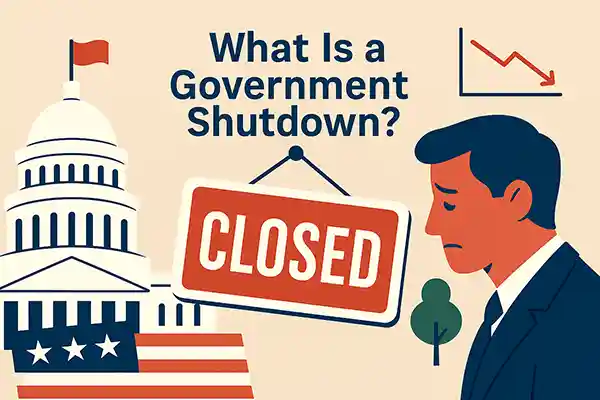
Image 1: A government shutdown halts services, disrupts lives, and tests America’s ability to govern itself.
Click Here to Read WGF Blogs from World Leaders…
What Is the Story of the 2025 Government Shutdown in the U.S.?
The latest shutdown is a drama of politics, power, and public policy. It began with deadlocked negotiations in Congress, where Republicans sought a ‘clean’ stopgap measure to extend government funding for seven weeks. Democrats refused, insisting that the bill must also include an extension of health care subsidies under the Affordable Care Act (ACA), known as Obamacare.
When neither side yielded, the clock struck midnight, and funding expired. By dawn, around 750,000 federal workers were facing furlough, federal services began winding down, and President Donald Trump warned that his administration could use the shutdown to enact ‘irreversible’ changes – including mass layoffs of ‘non-essential’ staff.
Markets reacted quickly: gold spiked to record highs, the U.S. dollar slid, and futures pointed downward. For ordinary Americans, the questions were far more immediate: Will my paycheck stop? Will my benefits arrive? Will my flight be delayed?
This is not America’s first shutdown. But the stakes in 2025 feel sharper, because the fight isn’t just about a temporary funding bill – it’s about the future of health care for millions and the political gamble of brinkmanship.
Image 2: The 2025 shutdown unfolded as Congress clashed over health care subsidies, leaving 750,000 federal workers in limbo.
Click Here to Read What Is Behind Nvidia’s $5 Billion Lifeline to Intel…
What Is the Story of the Government Shutdowns in the U.S.?
Government shutdowns are almost a ritual in modern U.S. politics. Since 1981, America has lived through 15 shutdowns, some lasting just a day, others stretching into weeks. The most infamous came in 2018–2019, when a dispute over border wall funding kept the government closed for 35 days, the longest in U.S. history.
Each shutdown follows a familiar script:
- A divided Congress fails to pass a spending bill
- Agencies without approved budgets close or furlough workers
- Essential services like defense, law enforcement, and air travel keep running – sometimes without pay
- Markets wobble, and global investors watch closely
In many ways, shutdowns are a symptom of political polarization. They highlight how America’s system, designed for checks and balances, can grind to a halt when compromise disappears.
Click Here to Read What Is Google…
Did You Know?
U.S. Government Shutdown 2025
- Roughly 750,000 federal workers affected
- Daily wage losses estimated at $400 million
- Gold surged to $3,875/oz, a new record
Did You Know?
U.S. Government Shutdown in General
- Since 1981, shutdowns have occurred 15 times
- Essential workers often labor without pay
- Past shutdowns delayed tax refunds, visas, and even food safety inspections
Click Here to Read What Is NATO…
U.S. Government Shutdowns In Numbers
• 15 shutdowns since 1981
• 35 days – longest in history (2018–2019)
• $11 billion lost in GDP during the 2019 shutdown
• $400M/day in lost wages during the 2025 shutdown
Click Here to Watch Keynote Speeches and Interviews of World Leaders at WGF YouTube…
Historical Note
The concept of halting government operations is relatively new in U.S. history. For most of the 20th century, when budgets weren’t passed on time, agencies continued operating, assuming Congress would eventually approve funding.
That changed in 1980 and 1981, when Attorney General Benjamin Civiletti issued a series of legal opinions. He ruled that under the Antideficiency Act, agencies could not legally spend money without an appropriation. From then on, when Congress failed to act, agencies were required to shut down.
This reshaped U.S. politics:
• It gave rise to the modern shutdown era, where budget disputes became weapons of political leverage
• It turned deadlines into high-stakes moments of brinkmanship
• It created a uniquely American phenomenon – other democracies either keep government running or dissolve parliament and call new elections
What was once an administrative oversight became, after Civiletti, a recurring national crisis – a distinctly American brand of political theater.
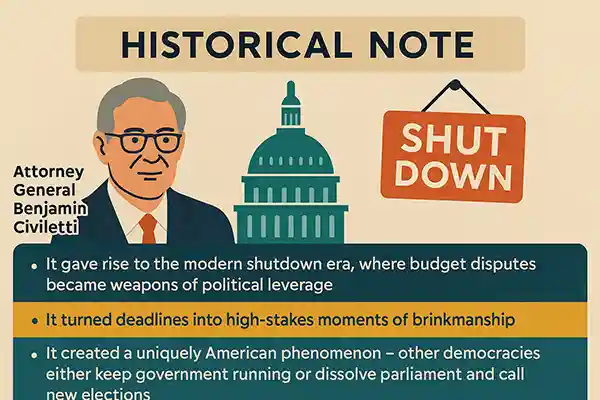
Image 3: Modern shutdowns began in the 1980s, turning budget deadlines into recurring crises of governance.
Click Here to Read What Is the Trump–Putin Alaska Summit About…
What Is a Federal Government in the U.S., or in Any Country?
A federal government is the central authority of a nation that holds power over national issues – defense, foreign policy, monetary systems, and federal programs. In the U.S., this authority is shared with state governments. While states manage education, policing, and local laws, the federal government coordinates policies that bind the nation together.
Think of it as the brain of a vast body, making decisions for the entire organism, while the states act like limbs managing local movement. When the brain shuts down, the whole body falters.
Click Here to Watch WGF News on World Leaders at WGF TV…
What Is Congress in the U.S.?
Congress is America’s legislative branch, divided into two chambers:
- The House of Representatives – 435 members, based on population, elected every two years
- The Senate – 100 members, two from each state, elected for six years
Congress writes and passes laws, approves budgets, and holds the power of the purse. Without Congress passing appropriations bills or continuing resolutions, the federal government cannot legally spend money – triggering a shutdown.
Click Here to Read What Is A Ceasefire Agreement…
What Are Obamacare Subsidies?
The Affordable Care Act (ACA), nicknamed Obamacare, was passed in 2010 to expand health care access. A critical part of the law is subsidies – financial assistance that reduces insurance premiums for lower- and middle-income Americans.
In 2021, enhanced subsidies were introduced during the pandemic to make coverage even more affordable. Today, 24 million Americans depend on them. If they expire at the end of 2025, premiums could rise by as much as 75% in 2026, pricing millions out of coverage.
This is the central fault line of the 2025 shutdown: Democrats want subsidies extended now, Republicans want to defer the fight.
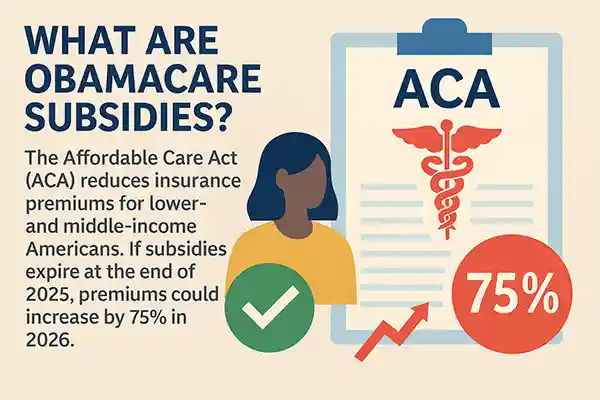
Image 4: Obamacare subsidies, protecting 24 million Americans from soaring premiums, sit at the heart of the 2025 standoff.
Click Here to Read What Is De-Dollarisation…
So, What Exactly Is a U.S. Government Shutdown?
A government shutdown happens when Congress and the President cannot agree on funding bills. Without legal authority to spend money, federal agencies begin to suspend operations.
Essential staff (e.g., military, law enforcement, air traffic control) must still work, often without pay until the shutdown ends.
Non-essential staff are furloughed – sent home without pay, with back pay guaranteed by law once funding resumes (Government Employee Fair Treatment Act of 2019).
Public-facing services like national parks, museums, and visa processing often close.
A shutdown is not a collapse of government – but it is a costly pause that ripples across society and the economy.
Click Here to Read What Is the Hiroshima Atomic Bombing’s Legacy – 80 Years Later…
What Is a Furlough in a U.S. Government Shutdown?
A furlough is a temporary, mandatory leave of absence without pay. During shutdowns, non-essential federal employees are furloughed. They are prohibited from working, even voluntarily, because their agencies no longer have legal authority to operate.
Key details about furloughs:
- Workers cannot access government systems, answer emails, or perform any duties
- They usually receive back pay once the shutdown ends, though that depends on Congressional approval
- Furloughs create financial hardship – workers must cover rent, mortgages, and daily expenses without a paycheck
- Even after agencies reopen, the disruption often causes delays and backlogs in public services
For many families, a furlough means uncertainty: bills pile up while Washington argues.
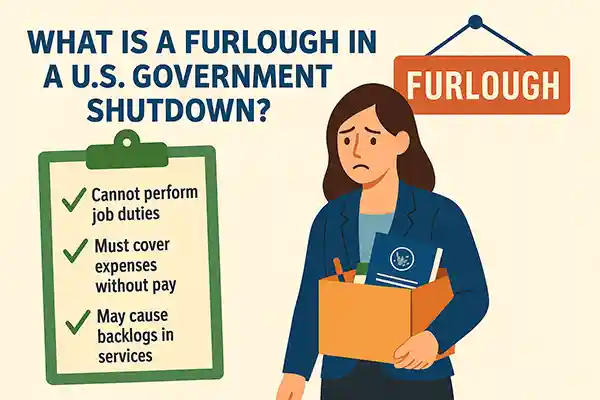
Image 5: For furloughed workers, a shutdown means unpaid bills, mounting stress, and uncertainty for their families.
Click Here to Read What Is the Russian Volcano Eruption After 500 Years…
Why Did Talks Fail This Time?
At the heart of the deadlock are Obamacare subsidies.
Democrats’ stance: Protecting health care affordability is non-negotiable. Without subsidies, premiums could skyrocket.
Republicans’ stance: Keep the funding bill clean; discuss subsidies later. They argue subsidies are costly and need stricter eligibility.
Neither side blinked. Political incentives played a role too: Democrats fear being blamed by their base if health care is sacrificed, while Republicans believe they can portray Democrats as obstructing government funding.
Click Here to Read What Is Coral Bleaching…
How Will This Affect Everyday Americans?
Shutdowns always hit hardest at ground level.
- Workers: ~750,000 federal employees furloughed, losing about $400 million in wages daily
- Travel: Flight delays and longer security lines if unpaid TSA and air traffic staff call in sick
- Public spaces: National parks, Smithsonian museums, and the National Zoo face closures unless emergency funds are used
- Services: Social Security, Medicare, and veterans’ benefits continue – but hotlines, research programs, and educational aid stop
For millions, the shutdown is not abstract politics – it’s a disruption of daily life.
Click Here to Read What Is Botox…
What Does It Mean for Global Markets?
Markets dislike uncertainty, and shutdowns inject plenty of it. Already:
- Gold has surged past $3,875/oz, a record
- The dollar weakened to a one-week low
- Futures on Wall Street dipped as investors worry about delayed economic data
More than lost wages, what rattles global markets is the suspension of key government reports – especially the monthly jobs data that guides Federal Reserve interest rate decisions.
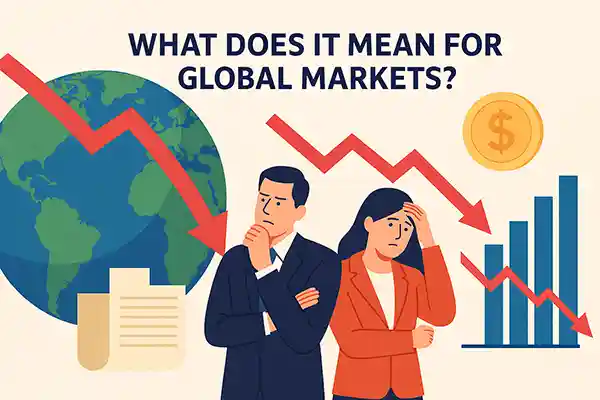
Image 6: Markets worldwide react to U.S. shutdowns, from sliding dollars to record-breaking gold prices.
Click Here to Read What Is Giorgio Armani’s Legacy…
What Is the Federal Reserve?
The Federal Reserve, or the Fed, is America’s central bank. It sets interest rates, regulates banks, and manages the nation’s money supply. Investors and businesses worldwide watch the Fed’s moves closely.
If the shutdown delays critical data – like jobs and inflation reports – the Fed may struggle to calibrate rate decisions. That uncertainty adds another layer of volatility to already nervous global markets.
Click Here to Read What Is China’s Military Parade with Putin and Kim…
How Does a Government Shutdown End?
Shutdowns typically end in one of two ways:
- A short-term continuing resolution (CR) – a stopgap that reopens government while talks continue.
- A full bipartisan budget deal – rarer, but more stable.
Often, shutdowns end not because lawmakers find common ground, but because public pressure mounts, markets react negatively, and politicians face backlash from voters.
Click Here to Read What Is the Game of Football…
Why Do Government Shutdowns Mostly Happen in the U.S.?
Unlike most countries, the U.S. cannot legally spend money without explicit annual approval from Congress. In parliamentary systems, failure to pass a budget often topples the government – prompting elections. In the U.S., it simply freezes government operations.
The unique 60-vote Senate threshold also forces bipartisan cooperation – something increasingly rare in polarized Washington.
Click Here to Read What Is A Data Breach…
How Many U.S. Government Shutdowns Happened Since 1980?
Since 1981, there have been 15 shutdowns. Some lasted less than a day; others dragged on for weeks. The longest, in 2018–2019, stretched to 35 days.
The 2025 shutdown is the 16th, and it may prove one of the costliest if it drags on – given its scale, political stakes, and global economic ripple effects.
Click Here to Read What Is a Blood Moon…
What Is Capitol Hill?
‘Capitol Hill’ is both a physical place and a symbol. It refers to the area in Washington, D.C., where the U.S. Capitol building stands – the seat of Congress. But in everyday language, ‘Capitol Hill’ means the lawmakers, staff, and political culture that shape America’s laws.
When people say ‘gridlock on Capitol Hill’, they mean the political deadlock inside Congress.
Click Here to Read What Is SpaceX…
WGF Take – Shutdown of Politics Would Help the World More Than Shutdown of Governance
Shutdowns are framed as fights over budgets, but in reality, they reflect the paralysis of politics itself. Governance is supposed to serve people, yet in shutdowns, political gamesmanship takes priority over workers, families, and markets.
The irony is stark: America can shut down its government, but it cannot shut down the consequences. Federal workers go unpaid, markets grow jittery, and global partners question Washington’s reliability. A temporary closure of government is damaging – but the deeper problem is a permanent closure of political compromise. That, more than anything, is what threatens America’s role as a leader in the world.
A shutdown of politics would mean politicians stop playing games that harm citizens. It would mean an end to brinkmanship that gambles with livelihoods and economies. On the other hand, governance, especially good governance, must never shut down, because it is the lifeline of a functioning society.
The tragedy of 2025 is not that the government stopped – it’s that politics kept going.
Follow World Growth Forums on the following for more updates…