
Environment

World Growth Forums Magazine

Keynote Speech by Dr Alfredo Sfeir-Younis _ WGF-GBIF Thailand 2024
What Is a Blizzard?
What Caused the Sudden Blizzard on Mount Everest, and What Rescue Efforts Are Underway?
On the night of October 4, 2025, and throughout October 5, a sudden Himalayan blizzard trapped more than 200 hikers on the Tibetan slopes of Mount Everest, while over 350 others were guided to safety after enduring freezing nights and knee-deep snow, as rescue efforts continued into October 6.
The storm struck on the eve of China’s National Day holidays, when thousands of domestic tourists flocked to high-altitude trails for scenic treks.
Rescue teams and villagers worked through the night, carrying stranded trekkers on their backs and serving them warm food once they reached safety.
But the event is more than a mountain tragedy – it’s a window into the power of nature’s unpredictability, the fragility of human adventure, and the rising volatility of Earth’s climate systems.
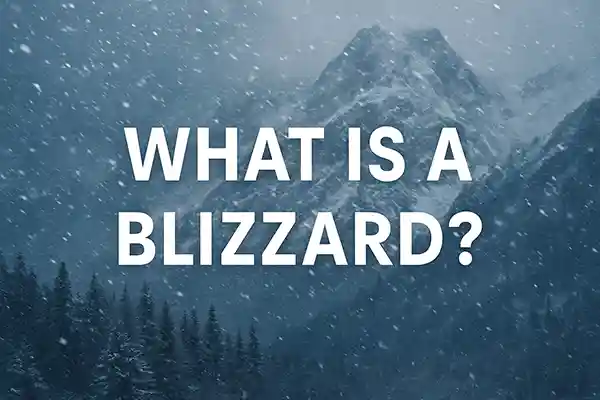
Image 1: Where beauty meets brutality – the Himalayas remind us that nature’s calm can turn to chaos within hours.
Click Here to Read WGF Blogs from World Leaders…
What Is the Story of the Everest Blizzard?
The storm began quietly. On Friday evening, clouds thickened over the Karma Valley, and trekkers noticed flakes of snow falling unusually early for October.
Within hours, the gentle snowfall turned into a ferocious blizzard, with thunder and lightning cracking across the slopes.
Visibility dropped to zero. Campers huddled together as strong winds ripped tents and flattened trails.
Some hikers cleared snow from their tents every ten minutes to avoid collapse. “It was so wet and cold, and hypothermia was a real risk,” said Chen Geshuang, who survived with her 18-member trekking group.
Others described sharing tents meant for four people among ten, battling exhaustion through the long night.
As panic spread, rescue teams from Tibet’s firefighting units and local villagers with yaks and horses set out in the dark. They waded through deep snow, carrying climbers on their backs, clearing blocked paths, and distributing food and blankets.
Social media posts captured the surreal mix of chaos and calm – the white storm and the human chains pulling one another to safety.
By Sunday, contact was made with all 200+ remaining trekkers. The storm also battered Nepal’s side of the Himalayas, triggering landslides and floods that killed at least 47 people.
The blizzard’s aftermath is now being compared to the 2014 Annapurna disaster in Nepal, when an unexpected October snowstorm killed over 40 trekkers after Cyclone Hudhud swept moisture into the Himalayas.
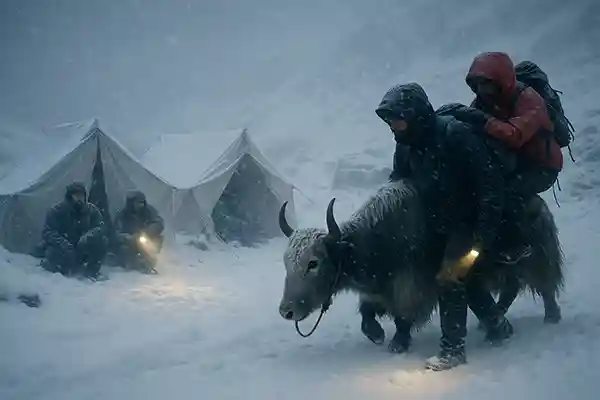
Image 2: As the storm raged, courage walked on – through whiteouts, frozen trails, and human chains forged in snow.
Click Here to Read What Is Behind Nvidia’s $5 Billion Lifeline to Intel…
Did You Know?
Blizzards
- A blizzard can last anywhere from 3 hours to several days, depending on wind persistence
- The term comes from early 19th-century American slang meaning ‘violent outburst’
- In Antarctica, blizzards can reduce visibility to less than 1 metre
Did You Know?
Climate Change
- The Himalayas store over 15,000 glaciers, feeding Asia’s major rivers
- If global warming continues unchecked, one-third of Himalayan ice could melt by 2100
- Changing jet streams are causing erratic snow patterns – even in the supposed ‘dry’ season
Did You Know?
Himalayan Blizzards
- The Himalayas experience over 40 major snowstorms every year across the range
- October storms are rare – but rising since 2010, say meteorologists
- The 2014 Annapurna blizzard killed 43 trekkers in Nepal in a similar October storm
Did You Know?
Mount Everest
- Everest grows approximately 4 millimetres taller each year due to tectonic movement
- The summit temperature can drop to –60°C in winter
- The first confirmed ascent from the Kangshung Face was achieved only in 1983
Click Here to Read What Is NATO…
Blizzards in Numbers
• >56 km/h (35 mph): Average wind speed in a blizzard
• <400 metres for 3+ hours: Visibility threshold for a blizzard
• 3–5 metres: Estimated annual snowfall on Everest (varies by altitude)
• 4,200 metres (13,800 feet): Altitude of Karma Valley
• 200+: Hikers stranded in the 2025 Everest storm
• 350+: Rescued safely
• 47: Deaths in neighbouring Nepal
Click Here to Watch Keynote Speeches and Interviews of World Leaders at WGF YouTube…
Historical Note
This isn’t the first time the Himalayas have tested human resilience.
In October 2014, a sudden snowstorm struck Nepal’s Annapurna region, killing dozens of trekkers in what became known as one of the deadliest trekking disasters in Himalayan history.
That tragedy led to better weather tracking, but a decade later, the Karma Valley storm proves that the mountain still commands the final word.
Every generation of climbers believes it is more prepared than the last – until nature reminds them who’s truly in charge.
Click Here to Read What Is the Trump–Putin Alaska Summit About…
So, What Exactly Is a Blizzard?
A blizzard is more than just heavy snowfall – it’s a severe snowstorm with winds exceeding 56 km/h (35 mph) and visibility reduced to less than 400 metres for several hours or more.
Blizzards occur when cold, dry air meets moist, warm air, creating a swirling front of freezing precipitation.
In mountainous regions like the Himalayas, the terrain amplifies these effects, trapping clouds and intensifying snowfall.
Historically, blizzards have reshaped landscapes, closed nations, and rewritten mountaineering history. From the ‘Storm of the Century’ in the U.S. (1993) to Antarctic whiteouts, each event is a reminder that even advanced forecasting cannot outmatch atmospheric chaos.
The Everest storm adds one more chapter – where science, survival, and human endurance collided in the thin air above the clouds.
Click Here to Watch WGF News on World Leaders at WGF TV…
What Is Mount Everest?
At 8,848.86 metres (29,031 feet), Mount Everest is Earth’s highest peak, straddling the border between Nepal and China’s Tibet Autonomous Region.
Known as Sagarmatha in Nepal and Chomolungma in Tibet, Everest has been both a spiritual symbol and a physical challenge for generations.
Thousands of climbers and trekkers visit its slopes annually, but its serene beauty masks extreme danger – where temperatures drop below –40°C, oxygen levels plummet, and weather can change within minutes.
Click Here to Read What Is A Ceasefire Agreement…
What Is Karma Valley?
The Karma Valley lies in eastern Tibet, forming a passage toward the Kangshung Face of Everest – its least-explored side.
Unlike the rocky, barren north face, Karma Valley is carpeted with lush forests, alpine meadows, and glacial rivers.
Trekkers describe it as the ‘Green Face of Everest’, a world where wild yaks graze and waterfalls cut through pristine cliffs.
Yet this beauty comes with isolation. Its remoteness and high altitude (around 4,200 metres/13,800 ft) make communication and rescue efforts extremely difficult when weather turns hostile.
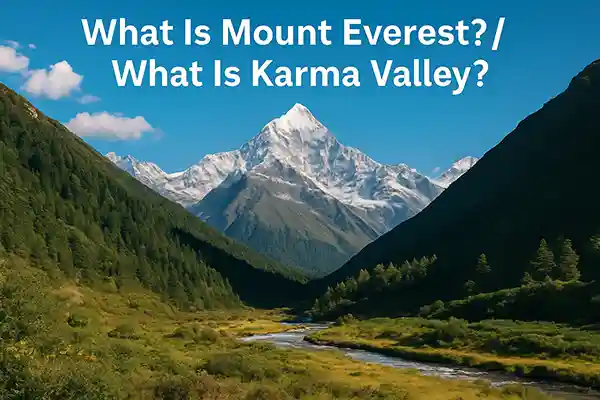
Image 3: Before the storm came silence – Karma Valley’s serene face hides the unpredictable heart of Everest.
Click Here to Read What Is De-Dollarisation…
What Is the Kangshung Face?
The Kangshung Face is the eastern face of Mount Everest, first mapped by Western explorers in the early 20th century.
It is regarded as one of the mountain’s most treacherous sides, defined by towering ice cliffs and unstable seracs (a serac is a pinnacle or ridge of ice on the surface of a glacier).
Unlike the crowded routes from Nepal or the paved approach to the north face, the Kangshung area remains a wilderness.
Few have summited Everest via this face – but it draws trekkers who seek solitude and an authentic Himalayan experience.
Unlike the dry northern plateau, this valley is fed by meltwater streams and dense alpine forests, earning it the nickname ‘Everest’s Secret Garden’.
Click Here to Read What Is the Hiroshima Atomic Bombing’s Legacy – 80 Years Later…
What Is the National Day of China?
Every year on October 1, China celebrates its National Day, marking the founding of the People’s Republic of China in 1949.
The celebration kicks off an eight-day ‘Golden Week’ holiday, during which millions of citizens travel across the country.
In Tibet, this period sees a surge of domestic tourism, with visitors seeking mountain treks, monastery visits, and rare views of Everest.
This year, the same holiday crowd that brought economic cheer also magnified the crisis – hundreds were caught in the blizzard that swept the region on the weekend.
Click Here to Read What Is the Russian Volcano Eruption After 500 Years…
What Makes the Everest Region So Vulnerable to Sudden Blizzards?
The Himalayas are the world’s youngest major mountain range, still rising as tectonic plates grind together. This geological volatility shapes its weather too.
Moisture-laden winds from the Bay of Bengal monsoon can meet frigid Tibetan air to form instant snowstorms – even outside the traditional monsoon season.
October is usually considered a ‘clear sky’ period, ideal for trekking, but climate change is shifting those patterns.
Scientists have noted a rise in unseasonal precipitation and temperature swings that make forecasts unreliable.
A few degrees of global warming can turn high-altitude rain into lethal snow, catching trekkers unaware.
The Himalayas form a natural barrier between tropical South Asia and the icy Tibetan Plateau. Warm monsoon winds rising from the Indian plains meet cold Tibetan air masses, generating rapidly shifting pressure zones.
Add in global climate warming, and the recipe for chaos intensifies.
Meteorologists report rising humidity levels at higher altitudes and unseasonal precipitation, making what was once ‘stable October weather’ increasingly unreliable.
Simply put: Everest’s beauty rests on fragile atmospheric balance – and that balance is now tipping.
Click Here to Read What Is Coral Bleaching…
What Is Hypothermia?
Hypothermia occurs when the body loses heat faster than it can produce it, dropping core temperature below 35°C (95°F).
In the Everest storm, several trekkers were treated for early-stage hypothermia – fatigue, confusion, and loss of coordination.
At high altitudes, thin air and wet snow accelerate heat loss. Even professional climbers can succumb quickly if their clothing is soaked or wind exposure is prolonged.
Click Here to Read What Is Botox…
What Is a Whiteout?
A whiteout happens when snow-covered ground and overcast skies blend into a single field of white, erasing depth and direction.
Trekkers in the Karma Valley described not being able to distinguish the path beneath their feet.
In such conditions, compasses and GPS lose accuracy, and moving even a few metres off trail can lead to disaster.
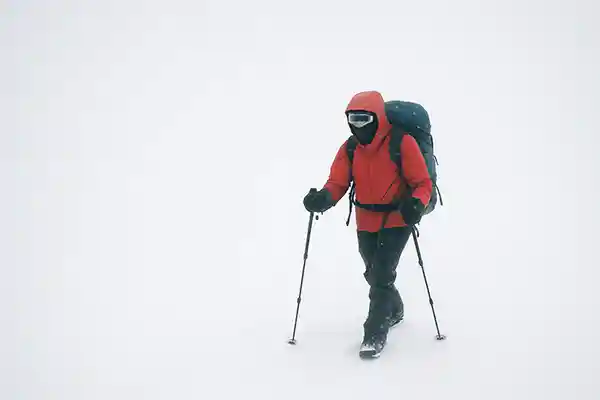
Image 4: When the world turns white, even direction disappears – a lesson in humility before the mountain’s invisible power.
Click Here to Read What Is Giorgio Armani’s Legacy…
Why Were So Many Tourists Caught Off Guard?
Every October, China’s National Day holiday brings thousands of domestic tourists to Tibet’s scenic zones.
While weather apps showed mild forecasts, the storm system developed too quickly for alerts to reach hikers in time.
The Chinese side of Everest, though tightly regulated, remains logistically challenging.
Weather forecasts were optimistic when trekkers began their expeditions, and the sudden storm evolved faster than meteorological systems could track.
Moreover, the National Day holiday drew inexperienced hikers unfamiliar with high-altitude survival.
Unlike the Nepali south face, Tibet’s eastern routes are less commercialised – meaning fewer lodges, radios, and evacuation vehicles.
Click Here to Read What Is China’s Military Parade with Putin and Kim…
What Is the Everest Scenic Area?
The Everest Scenic Area, managed by the Tingri County Tourism Company, encompasses the northern and eastern approaches to Everest.
Visitors pay for permits, guides, and controlled access to preserve the fragile environment.
After the storm, ticket sales and tourist entry were suspended, halting one of Tibet’s most lucrative travel seasons.
The closure underscores how environmental unpredictability now threatens not only lives but also livelihoods dependent on Himalayan tourism.
Click Here to Read What Is the Game of Football…
What Are the Human Stories Emerging from the Rescue?
The blizzard revealed both the fragility and resilience of human spirit.
Rescuers from Tibet’s firefighting units worked through the night, carrying climbers on their backs for kilometres, risking frostbite and exhaustion, and handing out warm food.
Another described sharing one tent with ten others, clearing snow until dawn.
Villagers melted snow to provide drinking water and offered sweet tea to survivors.
One video showed a rescuer smiling through fogged goggles, saying simply, “They are safe now”.
In an age of technology, it was human endurance and empathy that ultimately saved lives.
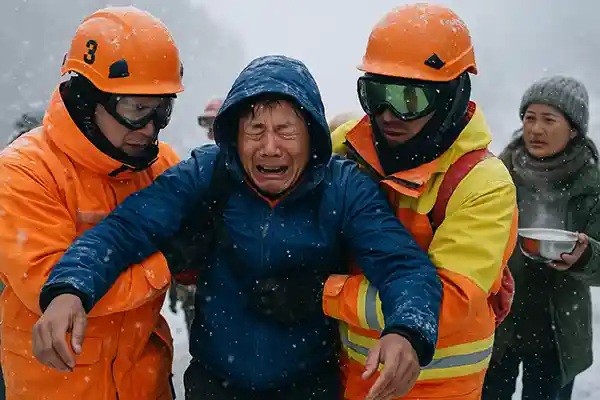
Image 5: In the coldest hours, warmth came not from fire – but from hands that carried, and hearts that refused to give up.
Click Here to Read What Is A Data Breach…
What Does This Tell Us About Climate Shifts in the Himalayas?
The Everest blizzard is not an isolated event – it’s part of a disturbing pattern.
Researchers warn that the Himalayas are warming 0.3°C faster than the global average, leading to melting glaciers, unstable snowpack, and more frequent extreme events.
The storm’s simultaneous floods in Nepal and snowfall in Tibet reflect how one weather system can now trigger multiple crises across regions.
For scientists, it’s more evidence that the world’s ‘Third Pole’ – the massive ice reserves of the Himalayas – is destabilising faster than expected.
These events are part of a wider pattern: weather no longer respects seasons.
The Everest blizzard may be remembered not just as a freak storm, but as another milestone in the planet’s ongoing climate reckoning.
Click Here to Read What Is a Blood Moon…
WGF Take – Man Must Address Climate Change Before the Roof Collapses
The Everest blizzard is not just a mountain story – it’s a mirror held up to humanity.
We chase the thrill of conquering nature while ignoring the quiet rebellion of the climate beneath our feet.
The Himalayas, once timeless and untouchable, now tremble under human impact and global warming.
As trekkers cling to life in the snow, the planet sends another urgent message: man must master his emissions before nature masters him.
Everest will stand tall for centuries – but the question is, will we?
The Mount Everest blizzard is a striking reminder that the roof of the world is no longer immune to global turbulence. What once symbolised permanence is now at the frontline of change.
Rescuers’ courage deserves applause, but the deeper story lies in our collective climate complacency.
If the world’s mightiest mountain can be shaken overnight, so can our illusion of control. From the Karma Valley’s white silence, the message is unmistakable – the Himalayas are speaking, and the world must listen.
Follow World Growth Forums on the following for more updates…