International
World Growth Forums Magazine

Keynote Speech by Dr Alfredo Sfeir-Younis _ WGF-GBIF Thailand 2024
What Are Trump’s New Global Tariffs?
Who Is Hit the Hardest?
A new era in global trade began on August 7, 2025, as President Donald Trump’s sweeping new tariffs officially came into force, altering the course of global trade yet again. Affecting over 90 countries, the move marks one of the most aggressive protectionist trade strategies in modern U.S. history. Trump, celebrating the policy on his Truth Social account, declared, “Billions of dollars are now flowing into the U.S.,” calling the tariffs a tool to restore fairness to the global trading system.
From India and China to Switzerland and Brazil, nations are now scrambling to assess the impact and negotiate deals to soften the blow. While the tariffs may boost U.S. federal revenues, they also threaten to upend supply chains, raise consumer prices, and escalate geopolitical tensions. Here’s a deep dive into the key highlights, targets, reactions, and implications of this global trade reset.
Image 1: Trump’s latest tariff wave resets the rules of global trade. But who wins – and who pays?
Click Here to Know More About WGF Felicitations…
Why Did Trump Impose These New Tariffs?
President Trump’s rationale for the new tariffs hinges on the idea of ‘reciprocal trade’. His administration argues that for too long, the U.S. has been at the losing end of global trade deals – facing higher tariffs abroad while offering lower rates at home. The new tariff policy aims to:
- Pressure countries into fairer trade agreements
- Penalize nations that continue business with adversaries such as Russia
- Encourage domestic manufacturing and job creation
- Use tariffs as a foreign policy tool to enforce U.S. global interests
Beyond economic motivations, these tariffs also signal a shift: trade is now being used as a geopolitical weapon.
Image 2: From trade fairness to geopolitical leverage – here’s why Trump says the world must pay up.
Click Here to Read What Is A Ceasefire Agreement…
Which Countries and Sectors are Most Affected by the Tariffs?
The new tariff structure targets more than 90 countries with varying rates – from 10% to 50%. Among the hardest hit:
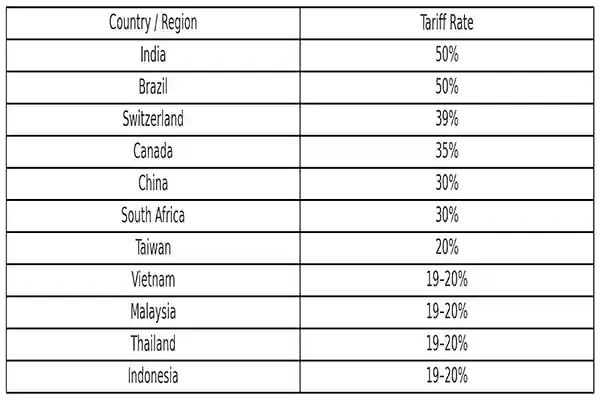
Table 1: From 10% to 50% – here’s a quick look at the countries facing Trump’s toughest tariffs yet.
- India: 50%
- Brazil: 50%
- Switzerland: 39%
- Canada: 35%
- China: 30%
- South Africa: 30%
- Taiwan: 20%
- Vietnam, Malaysia, Thailand, Indonesia: 19–20%
Sectors like semiconductors, energy, electronics, automobiles, and consumer goods are among the most exposed. Trump has also threatened a 100% tariff on foreign-made microchips – a direct hit at tech firms dependent on global supply chains.
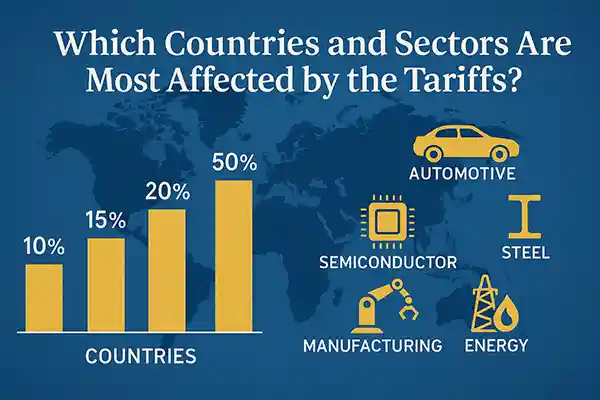
Image 3: Over 90 countries and key industries are now caught in the crossfire of U.S. tariff policy.
Click Here to Read More under WGF What Is Series…
The Special Case of India: Punishment for Russian Oil Imports?
India’s tariffs have doubled to 50%, and a second 25% tariff is scheduled to take effect later this month. The move, according to Trump, is a direct response to India’s continued purchase of Russian oil.
Indian Prime Minister Narendra Modi called the tariff ‘unfair, unjustified, and unreasonable’, but stood firm: “India will never compromise on the interests of our farmers, fishermen, and dairy workers.”
India’s Ministry of External Affairs issued a strongly worded statement emphasizing the country’s sovereign right to ensure energy security for its 1.4 billion citizens.
India is now seen as the first test case in Trump’s strategy of punishing trade partners who engage economically with Russia – with the implicit message that others could be next.
Image 4: India becomes ground zero in Trump’s fight against Russian oil trade – but is this just the beginning?
Click Here to Read WGF Blogs from World Leaders…
Will China Be the Next Target?
All eyes are now on China – the largest buyer of Russian energy. Though Trump and Beijing are negotiating a new trade agreement, the President has refused to rule out applying similar secondary tariffs on Chinese imports.
China’s Foreign Ministry warned, “Tariff wars have no winners… China will firmly safeguard its own sovereignty, security, and development interests.”
With the current trade truce set to expire on August 12, any breakdown could lead to a sharp escalation, including triple-digit tariffs on Chinese goods. For now, uncertainty prevails.
Image 5: All eyes are on China as Trump hints that Beijing may be next in line for secondary sanctions.
Click Here to Watch Keynote Speeches and Interviews of World Leaders at WGF YouTube…
How Are Other Countries Reacting?
The global response has ranged from emergency meetings to quiet negotiation.
- Switzerland, hit with a 39% tariff, has convened an emergency economic session
- Taiwan, facing a 20% tariff, says the rate is ‘temporary’ and talks are ongoing
- The European Union struck a framework deal, accepting a 15% tariff across goods
- Japan, South Korea, and the UK secured reduced rates of 10–15% through quick diplomatic action
Meanwhile, Canada, punished with a 35% tariff over drug trafficking concerns, has called the measures harsh but is protected by existing trade agreements under the USMCA.
Image 6: Some nations rushed to strike deals. Others called emergency meetings. Global reactions vary – but none are quiet.
Click Here to Watch WGF News on World Leaders at WGF TV…
What Are ‘Secondary Tariffs’ and Why Do They Matter?
Unlike traditional tariffs that aim to protect domestic industry, secondary tariffs are designed to punish countries doing business with U.S. adversaries – in this case, Russia.
These penalties force countries to make a difficult choice:
- Cut economic ties with countries like Russia, or
- Face severe consequences in the form of S. tariffs
The strategy introduces a new dimension to global diplomacy – trade enforcement as geopolitical leverage.
Image 7: More than economic tools – ‘secondary tariffs’ are fast becoming weapons of foreign policy.
Click Here to Read What Is NATO…
Could These Tariffs Backfire on the US Economy?
While the tariffs may increase federal revenues – projected to cross $300 billion a year, according to U.S. Treasury Secretary Scott Bessent – they also pose significant economic risks:
- Inflation: Prices of imported goods are already rising
- Supply Chain Disruption: Multinational companies face steep cost increases
- Corporate Profit Losses: Estimated $15 billion in earnings lost globally in 2025 alone
- Consumer Impact: Higher prices for electronics, vehicles, and daily-use goods
Some of America’s top corporations – including Caterpillar, Marriott, and Yum Brands – have warned of lower profits due to the higher import duties.
Image 8: While revenues rise, U.S. businesses warn of inflation, price hikes, and profit losses.
Click Here to Read What Are the Epstein Files…
Are These Tariffs Permanent or Negotiable?
Not all countries will face the full force of Trump’s tariffs – if they negotiate.
- The UK, Japan, South Korea, and EU struck deals to reduce their exposure
- Mexico secured a 90-day delay
- Vietnam, Indonesia, and the Philippines saw rates reduced to 19–20%
- Major chipmakers like TSMC and Samsung were reportedly exempted
However, countries like India and Brazil, accused of political or economic misalignment, are facing the steepest penalties – with little clarity on how or when rates may be reduced.
Image 9: These tariffs aren’t set in stone – but only those aligned with U.S. policy may catch a break.
Click Here to Read What Is Indian Premier League…
WGF Take: Tariffs as a Weapon in a New Kind of War
Trump’s tariff wave is more than just economic policy – it’s a signal of a new geopolitical doctrine. Trade is no longer just about goods and deficits. It’s about power, alignment, and punishment.
The use of tariffs to enforce energy policy, shape diplomacy, and influence global alliances marks a dramatic shift in how the U.S. projects strength. But will this strategy result in a global reset – or a trade war spiral?
As nations weigh their options, one thing is clear: The rules of global trade have changed, and the world is now playing by Trump’s terms.
President Trump’s latest tariff offensive isn’t just about protecting American jobs or balancing trade deficits – it’s a bold declaration that economic statecraft is now the primary battlefield of global power politics.
In this new paradigm, tariffs are no longer mere fiscal tools. They’ve become instruments of pressure, persuasion, and punishment – aimed not only at economic rivals, but also at long-standing allies who refuse to toe the line on issues like energy sourcing, tech manufacturing, or geopolitical loyalty.
By targeting countries that engage with adversaries such as Russia, Trump is redefining the global trade order through the lens of strategic alignment. Nations are being forced to choose: remain neutral or non-aligned and pay the price, or comply with U.S. interests and be rewarded with reduced tariffs and access.
This is economic diplomacy – or coercion – at full throttle.
And yet, the long-term consequences are deeply uncertain.
- Will this approach bring countries closer to a S.-led trade consensus, or drive them to form alternative alliances and trade blocs beyond American influence?
- Will tariffs ultimately reshape supply chains, or simply inflame inflation, disrupt businesses, and trigger retaliation?
- Can economic warfare succeed where diplomatic dialogue has stalled?
For now, Trump’s tariff doctrine has injected a sense of urgency, unpredictability, and confrontation into global commerce. It is reshaping not only trade but trust – between countries, corporations, and citizens.
As the world scrambles to respond, one thing is evident:
This is not just about economics – it’s about empire.
And every nation, willingly or not, is now a participant in this high-stakes realignment.
The only question is: Who will blink first – and who will pay the price?
Follow World Growth Forums on the following for more updates…