
International

World Growth Forums Magazine

Keynote Speech by Dr Alfredo Sfeir-Younis _ WGF-GBIF Thailand 2024
What Is the Thailand–Cambodia Border Crisis?
Inside the Airstrikes That Threaten a Fragile Peace
One of Southeast Asia’s most sensitive borders is again under fire. Thailand launched airstrikes on December 8, 2025, on Cambodian military positions after a Thai soldier was killed in early-morning clashes along the long-disputed frontier.
Cambodia says it has not retaliated and accuses Thailand of ‘provocative actions’. Thailand insists it is acting to defend its sovereignty.
What makes this escalation especially alarming is that it comes barely two months after a ceasefire deal – brokered personally by U.S. President Donald Trump and Malaysian Prime Minister Anwar Ibrahim – was signed to prevent exactly this situation. With civilians fleeing, heavy weapons mobilised, and accusations flying from both sides, the region faces its most dangerous moment in years.
This explainer breaks down what triggered the airstrikes, why the ceasefire is unraveling, and what the world needs to know right now.
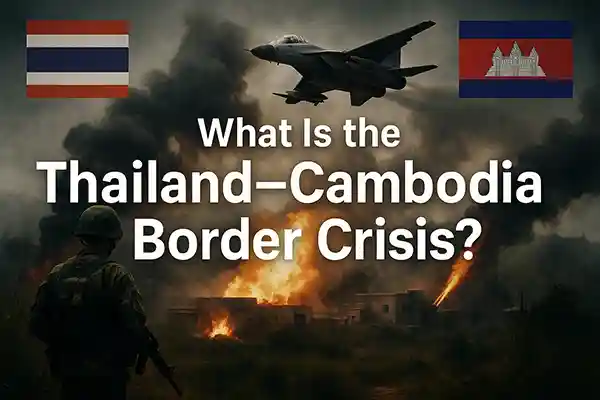
Image 1: A century-old dispute returns to the forefront as two neighbours face their most dangerous moment in years.
Click Here to Read WGF Blogs from World Leaders…
What Is the Story of the Thailand–Cambodia Border Crisis?
A Century-Old Border Dispute
The roots of this crisis stretch back to 1907, when French colonial authorities drew a border map between Siam (Thailand) and Cambodia. Thailand disputes parts of that map, including areas near the ancient Preah Vihear temple.
The result? Over a century of mistrust, sporadic clashes, and cycles of peace and conflict. Even after multiple rounds of talks, the frontier remains one of Asia’s most sensitive military zones.
July’s Five-Day War and the Trump-Brokered Ceasefire
In July 2025, brief skirmishes exploded into five days of heavy fighting, with rockets and artillery fire killing at least 48 people and displacing over 300,000.
Trump intervened with urgent calls to both leaders, resulting in a July 28 ceasefire. By October, a formal Kuala Lumpur Declaration was signed with Malaysian PM Anwar Ibrahim – touted as a diplomatic breakthrough.
Landmines, Suspended Peace Deal, and Rising Tensions
Barely weeks after the agreement, a landmine blast on the Thai side maimed several soldiers, prompting Thailand to suspend implementation of the deal.
Thailand accused Cambodia of newly planted mines. Cambodia denied it.
Diplomatic statements turned sharp. Military patrols grew more aggressive. The peace deal began to fray almost immediately.
Local Gunfire and Daily Accusations
Over the following weeks, both sides reported near-daily incidents: exchanged fire, troop movements, and allegations of boundary violations. Cambodia accused Thailand of ‘provocations’. Thailand accused Cambodia of ‘targeted attacks’.
The situation was deteriorating – fast.
From Skirmishes to Full Airstrikes
On December 8, Thai military officials reported artillery and mortar attacks from the Cambodian side, killing one Thai soldier and injuring several.
Thailand responded with airstrikes, targeting what it described as Cambodian ‘military infrastructure’ to ‘neutralise the threat’.
Cambodia denies attacking first and says it has not retaliated – yet. This moment marks one of ASEAN’s most serious internal security crises in years.
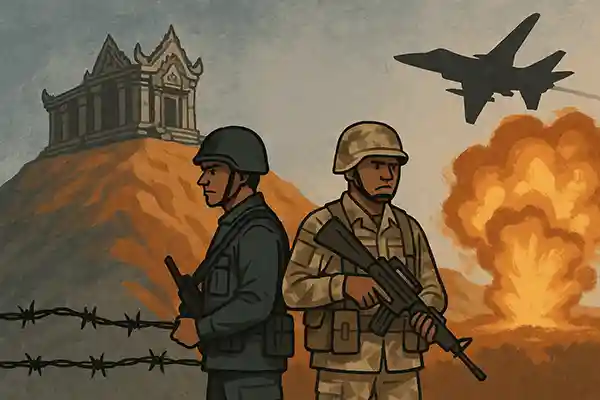
Image 2: History, mistrust, and unresolved borders continue to shape every new chapter of this long-running conflict.
Click Here to Read What Is a Blood Moon…
Did You Know?
Thailand
- Thailand has one of Southeast Asia’s largest and most modern air forces – yet it has rarely used it in cross-border conflicts
- The disputed Thai–Cambodian frontier spans more than 800 km, but much of it runs through thick forest where borders were never clearly marked
- Northern Thailand still contains thousands of unexploded landmines left behind from decades of conflict, making patrols dangerous even in peacetime
Did You Know?
ASEAN
- ASEAN was founded in 1967 partly to prevent conflict among its own member states
- Cross-border military strikes between ASEAN members are extremely rare – making today’s events historically significant
- ASEAN decisions are made by consensus, meaning even one member’s objection can block collective diplomatic action
Did You Know?
Cambodia
- Cambodia’s military still operates along terrain once heavily mined during the Khmer Rouge era and subsequent civil wars
- Many Cambodian border villages lie just kilometres from ancient temple sites, giving the region both strategic and cultural significance
- Cambodia’s former prime minister, Hun Sen, himself a former Khmer Rouge commander, has long shaped the country’s military posture along the border
Did You Know?
Modern Southeast Asian History
- The region’s last major temple-related border dispute – involving Thailand, Cambodia, and the Preah Vihear temple – reached the International Court of Justice in 2011
- The modern Thai–Cambodian frontier is one of the last borders in Asia still contested based on colonial-era maps
- Civilian displacement on this border has recurred every decade since the 1950s, making it one of Asia’s longest-running unresolved territorial conflicts
Click Here to Read What Is NATO…
Thailand–Cambodia Border Crisis In Numbers
• 385,000+: Number of civilians evacuated in Thailand
• 1,100+: Number of families evacuated in Cambodia
• 1 & 8: 1 Thai soldier killed; 8 wounded
• 3+: Number of Cambodian civilians seriously injured
• 48 & 300,000: A five-day conflict in July left 48 dead and 300,000 displaced
• 817 km: Length of border contested for over 100 years
Click Here to Watch Keynote Speeches and Interviews of World Leaders at WGF YouTube…
Historical Note: A Memory from 1962
In 1962, long before today’s soldiers patrolled the frontier, the dispute over the Preah Vihear temple reached the world’s highest court. Thailand and Cambodia both claimed ownership of the dramatic cliff-top shrine.
In a landmark ruling, the International Court of Justice awarded the temple to Cambodia – but the only road leading up to it lay on the Thai side. For decades, visitors had to enter Cambodia by driving through Thailand, creating a strange, uneasy travel corridor where tourists wandered through territory neither country fully accepted.
That surreal arrangement – half-shared, half-contested – captures the essence of this border: a place where history refuses to sit quietly, even when peace treaties try to draw neat lines.
Click Here to Read What Is the Trump–Putin Alaska Summit About…
What Is the Kuala Lumpur Declaration?
The Kuala Lumpur Declaration, signed in October 2025, was meant to turn a hurried ceasefire into a long-term peace framework. Witnessed by Trump and Malaysia’s PM Anwar Ibrahim, the agreement required Thailand and Cambodia to withdraw heavy weapons, allow neutral observers into the disputed zones, and begin talks on border demarcation.
But from the start, the declaration carried a quiet vulnerability: it was drafted in the aftermath of a war, before either side trusted the other. Progress stalled within weeks. When Thai soldiers struck a landmine along the border, Bangkok accused Cambodia of sabotage and suspended implementation. The ceasefire never fully rooted itself in the soil it hoped to pacify.
Click Here to Watch WGF News on World Leaders at WGF TV…
What Triggered Today’s Airstrikes?
On the morning of December 8, sporadic gunfire near the Chong An Ma Pass escalated sharply. Thailand reported that Cambodian forces used artillery and mortars against Thai positions, killing one soldier and injuring several.
Within hours, Thai jets were airborne, striking what they described as Cambodian ‘arms-supporting positions’. Officials framed the attack as a defensive measure – a response to continued provocation and a necessary step to protect Thai border communities.
Cambodia told a very different story. It accused Thailand of days of insults and incursions, insisting its own troops had not retaliated. As is often the case along this border, the truth sits in a grey space of claims and counterclaims. But the outcome – a ceasefire torn open – is unmistakable.
Narratives are conflicting, but one fact is clear: the ceasefire has effectively collapsed.
Image 3: A single morning of gunfire shattered an already fragile calm along one of Asia’s most sensitive frontiers.
Click Here to Read What Is A Ceasefire Agreement…
Why Is the Ceasefire Deal at Risk?
The truce was already fraying long before today’s explosions. Landmine blasts, public accusations, and delays in implementing key steps eroded confidence.
Thailand’s leaders complained that Cambodia was not pulling back heavy weaponry as promised. Cambodia argued that Thailand’s patrols were entering sensitive areas. Each side interpreted the agreement through its own lens, and every small incident looked like a breach.
Ceasefires rarely collapse in one moment – they die slowly, in the spaces between expectations and reality. December 8 merely exposed a peace that had been weakening for weeks.
Malaysia’s PM Anwar Ibrahim warned that renewed clashes could ‘unravel the careful work that has gone into stabilising relations’.
Click Here to Read What Is De-Dollarisation…
How Are Civilians Being Affected?
In border towns on both sides, life changed dramatically overnight. Thai villages heard the thud of artillery and the roar of jets. Cambodia’s northern provinces reported burned homes and fleeing families.
More than 385,000 people in Thailand are being moved into temporary shelters. Schools have closed, roads are blocked, and local markets stand abandoned.
Across the border, Cambodian families in Oddar Meanchey province have been evacuating in trucks and tractors, carrying whatever they can in plastic sacks. Artillery echoes through valleys where children once played.
In conflicts like these, civilians pay the first price and bear the longest scars.
In ASEAN – a region proud of its stability – this scale of displacement is extraordinary.
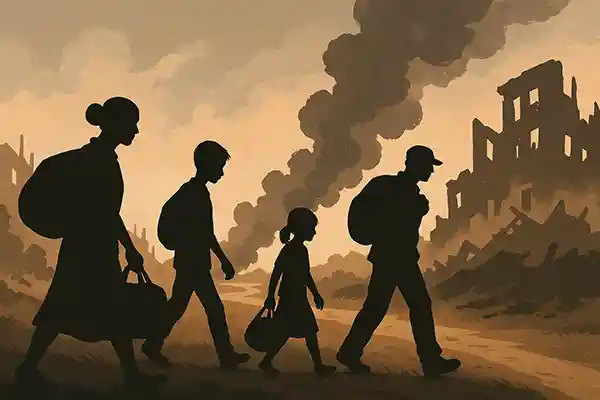
Image 4: As borders harden and tensions rise, ordinary families bear the heaviest burden of a conflict not of their making.
Click Here to Read What Is the Hiroshima Atomic Bombing’s Legacy – 80 Years Later…
What Are Regional and International Responses?
Malaysia’s Prime Minister Anwar Ibrahim, who helped broker the original ceasefire, has urged both countries to step back from the brink.
ASEAN, whose unity is often tested by internal disputes, finds itself unusually silent – partly because its charter discourages interference in bilateral matters.
For the United States, the renewed fighting challenges the legacy of Trump’s involvement. Once hailed as a diplomatic win, the ceasefire now risks becoming an example of how peace agreements without deep groundwork can unravel quickly.
Meanwhile, Cambodia’s former PM Hun Sen, a towering figure in regional politics, has condemned Thailand but urged Cambodian troops not to retaliate – at least not yet.
Regional diplomacy is struggling to catch up with the speed of military escalation.
Click Here to Read What Is the Russian Volcano Eruption After 500 Years…
What Is ASEAN?
The Association of Southeast Asian Nations is a 10-member regional bloc designed to promote cooperation and prevent conflict. Founded during the Cold War, ASEAN has largely succeeded in keeping wars at bay within its borders.
But its principles – non-interference, consensus, and dialogue – also limit its ability to act in crises like today’s. ASEAN rarely condemns member states, and it lacks a mechanism to enforce peace.
This is why the Thailand–Cambodia clash feels so unsettling. It disrupts ASEAN’s self-image as a region where disagreements are handled quietly, not through the roar of fighter jets.
Click Here to Read What Is Coral Bleaching…
Could This Escalate Into a Larger Conflict?
Thailand’s army chief has openly stated that the goal is to ‘cripple Cambodia’s military capability’. This is a significant escalation in tone, a phrase that signals deep strategic frustration. Cambodia, meanwhile, insists it will not respond – but how long that restraint will last remains uncertain.
Conflicts along this border have a way of spiralling. A few gunshots become mortar fire; mortar fire becomes artillery; artillery becomes airstrikes. And once cycles of accusation begin, even diplomacy struggles to intervene.
The coming days will determine whether this crisis remains a tense exchange – or becomes a conflict with regional repercussions.
Possible scenarios are:
- Limited conflict contained to border zones
- Expanded air and artillery operations
- A second full-scale border war like July
- Re-intervention by ASEAN leaders
Much depends on whether Cambodia retaliates – and whether international pressure halts the momentum.
Click Here to Read What Is Botox…
What Is the Preah Vihear Temple Area?
Perched on a dramatic cliff that rises above the Cambodian plains, the Preah Vihear temple is both a spiritual symbol and a geopolitical fault line. Thailand and Cambodia have fought over it for generations.
Though the International Court of Justice ruled in Cambodia’s favour, Thailand disputes the surrounding land. Between 2008 and 2011, soldiers exchanged fire near the temple, and both sides built makeshift fortresses among ancient stones.
To locals, the temple is sacred. To politicians, it is a rallying point. To soldiers, it is a forward post.
This combination – history, pride, and geography – makes Preah Vihear one of the region’s most combustible places.

Image 5: A sacred cliff-top temple becomes a symbol of pride, identity, and a dispute that refuses to fade.
Click Here to Read What Is Giorgio Armani’s Legacy…
WGF Take – There Is But One Evil: War
Conflicts rarely erupt overnight – they unravel slowly, in the spaces where diplomacy hesitates and history lingers. The collapse of the Thailand–Cambodia ceasefire is a reminder that peace agreements are only as strong as the trust behind them.
When borders are disputed, when old maps still shape modern politics, and when both sides feel misunderstood or threatened, even the best-brokered deals can falter.
What’s unfolding now is more than a border clash – it is a test for ASEAN, a test for international diplomacy, and a test for leaders who claim credit for peace without investing in its durability.
The human cost is already visible. The political cost may come next.
No matter how the narratives differ, no matter whose version feels more justified, the truth remains stark: civilians are suffering, trust is vanishing, and a fragile peace is slipping away.
The question now is not who fired first, but whether anyone will step in before the region slides into a conflict neither side can afford.
There is but one evil here – not a country, not a leader, not a claim on a map. The evil is war itself. The sooner leaders recognise this, the sooner the border can return not just to calm, but to hope. For if war prevails, no nation wins; only suffering does.
Follow World Growth Forums on the following for more updates…