
Science & Technology

World Growth Forums Magazine

Keynote Speech by Dr Alfredo Sfeir-Younis _ WGF-GBIF Thailand 2024
What Is the Microsoft Azure Outage?
How a Simple Configuration Change Disrupted the Internet?
On October 29, 2025, Microsoft’s Azure cloud platform – the backbone for nearly a fifth of global web infrastructure – suffered a major outage that rippled through industries worldwide. Airlines couldn’t update their systems. Banks saw online services flicker. Even government websites and gaming platforms went dark.
Microsoft later revealed the cause: an ‘inadvertent configuration change’ that led to DNS errors, disconnecting thousands of websites from their servers for over eight hours.
Coming just a week after a similar Amazon AWS outage, the incident reignited debate about the internet’s increasing dependence on just three cloud giants – Microsoft, Amazon, and Google – and the risks of placing too much trust in too few hands.
Image 1: When a cloud that powers the world flickers, it’s not just a glitch – it’s a global reminder of how fragile digital dependence can be.
Click Here to Read WGF Blogs from World Leaders…
What Is the Story of the Microsoft Azure Outage?
Cloud computing powers almost everything we touch online – from video calls to flight bookings to health records. Microsoft’s Azure, launched in 2010, has grown into one of the three pillars of this invisible infrastructure, alongside Amazon Web Services (AWS) and Google Cloud. Together, they support billions of digital interactions each day.
Around noon Eastern Time on October 29, businesses worldwide began reporting system errors, timeouts, and website failures. Airlines such as Alaska Airlines, telecom providers like Vodafone, and even the Scottish Parliament’s online voting system went down. Microsoft 365, Outlook, and Office.com were also hit, amplifying the disruption.
Azure engineers traced the problem to a faulty configuration update within its Front Door service – a global traffic-routing system that ensures websites load quickly worldwide. The small change caused large-scale DNS mismatches, temporarily ‘erasing’ website addresses from the internet’s map.
At its peak, more than 18,000 users reported issues via Downdetector (a real-time outage-tracking website). Governments delayed legislative sessions; retailers like Asda and M&S halted online sales. Even Microsoft’s own service-status page went offline, forcing the company to post updates on X (formerly Twitter).
By late evening, Microsoft announced that “error rates and latency have returned to pre-incident levels”. Yet experts say the problem isn’t the outage itself – it’s the concentration of digital power. The modern internet, they warn, is robust in scale but brittle in structure.
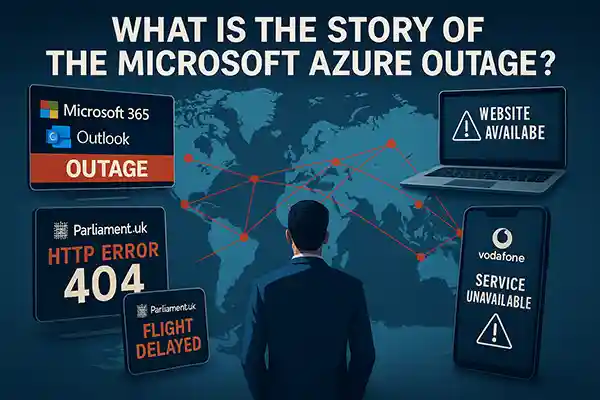
Image 2: From airlines to parliaments, a single configuration error told a story of how one cloud connects – and can disconnect – us all.
Click Here to Read What Is Behind Nvidia’s $5 Billion Lifeline to Intel…
Did You Know?
Microsoft Azure
- Azure powers about 20% of the global cloud-infrastructure market
- Over 90% of Fortune 500 companies rely on Microsoft Azure for part of their cloud or AI operations
- The name Azure was chosen to represent the ‘blue sky’ vision of limitless computing
Did You Know?
Microsoft Azure Outage
- The outage lasted over 8 hours before full recovery
- More than 18,000 users reported issues at its peak, according to Downdetector
- Even Microsoft’s own service-status page went down, forcing updates to be shared on X (formerly Twitter)
Click Here to Read What Is NATO…
Microsoft Azure Outage In Numbers
• 8+ hours: Duration of the Microsoft Azure outage
• 18,000+ reports: Peak User Complaints detected by Downdetector
• 20%: Share of the global cloud-infrastructure market held by Microsoft Azure is about 20%
Click Here to Watch Keynote Speeches and Interviews of World Leaders at WGF YouTube…
Historical Note
In February 1872, a single telegraph wire failure between London and Paris halted financial transactions for nearly two days. Traders called it ‘the silent panic’, as messages couldn’t cross the Channel. Newspapers mocked the ‘invisible wires that rule empires’.
Fast-forward 150 years – the wires are gone, but the dependence remains.
The Azure outage felt like a digital echo of that telegraph failure: a reminder that human civilization, despite its progress, still leans on unseen threads of connection. Whether it’s copper lines or cloud servers, when one breaks, the silence spreads faster than the sound ever did.
Click Here to Read What Is the Trump–Putin Alaska Summit About…
What Is Microsoft Azure?
Microsoft Azure is a cloud computing platform that provides businesses with on-demand access to computing power, storage, databases, and networking.
Instead of running apps on physical servers, companies use Azure’s data centers scattered across the globe.
It’s the infrastructure behind everything from banking apps and airline ticketing systems to online gaming and AI models. In essence, Azure is the digital backbone for both enterprise and everyday life.
Click Here to Watch WGF News on World Leaders at WGF TV…
What Are Amazon Web Services?
Amazon Web Services (AWS), Azure’s main rival, pioneered large-scale cloud computing in 2006.
It hosts a vast ecosystem of businesses – from Netflix and Airbnb to NASA’s open data archives.
Together, AWS, Azure, and Google Cloud form the ‘cloud trinity’ that manages around two-thirds of the global cloud-infrastructure market.
When one stumbles, the world feels it – as seen in the AWS outage just a week before Azure’s crash, which temporarily disrupted Snapchat and Reddit.
Click Here to Read What Is A Ceasefire Agreement…
What Is Google Cloud?
Google Cloud Platform (GCP) offers infrastructure similar to Azure and AWS, powering everything from YouTube’s backend to AI training clusters used by startups and research labs.
Google emphasizes machine learning integration and data analytics tools, making it a cornerstone for businesses relying on predictive insights.
Though smaller in scale, Google Cloud’s reliability and performance have positioned it as the third pillar of the global cloud ecosystem.
Click Here to Read What Is De-Dollarisation…
What Are Large-Scale DNS Mismatches?
Every time you type a website name, your computer asks a Domain Name System (DNS) server to find its location – much like dialing a contact name instead of remembering a phone number.
In the Azure outage, a faulty configuration caused DNS mismatches – meaning websites couldn’t ‘translate’ names like heathrowairport.com into machine-readable addresses.
So, even though servers were active, browsers simply couldn’t find them.
It’s like the world’s GPS losing the coordinates of every city at once – not because the cities vanished, but because the map did.

Image 3: When DNS falters, the internet forgets its own map – millions of websites vanish, not from existence, but from recognition.
Click Here to Read What Is the Hiroshima Atomic Bombing’s Legacy – 80 Years Later…
What Exactly Went Wrong with Azure?
Microsoft described the problem as an ‘inadvertent configuration change’ – a small internal adjustment that rippled across Azure’s network.
Essentially, a backend update went wrong. The change disrupted Azure’s DNS (Domain Name System), the internet’s addressing service that connects web names to their actual server locations.
The update interfered with Azure’s Front Door routing system, leading to global DNS lookup failures.
When the DNS fails, browsers can’t find the sites – even though the servers themselves are working fine. The problem cascaded through dependent services like Microsoft 365, Azure Communication Services, and Media Services, creating widespread access failures.
While engineers quickly rolled back the change, millions of users faced hours of downtime – a phenomenon engineers call the ‘long tail’ of an outage.
This wasn’t a hardware malfunction or cyberattack – it was a software-level chain reaction, proving how complexity itself can be the biggest risk in modern systems.
Click Here to Read What Is the Russian Volcano Eruption After 500 Years…
Why Did This Outage Matter So Much?
Azure underpins a vast digital ecosystem – from airline check-ins to parliamentary votes. Thousands of organizations – airlines, banks, hospitals, and governments – build their operations on Azure. When Azure breaks, the effects are immediate and visible.
The outage disrupted flight schedules, delayed online payments, and even suspended debates in the Scottish Parliament.
Consumer groups like Which? advised citizens to document missed payments and demand compensation.
For the public, the event was a temporary inconvenience. For the digital economy, it was a stark warning: a single cloud misfire can ripple across the entire world.
With AWS and Google Cloud facing similar incidents in recent years, the concern isn’t whether such events will happen again – but how many industries will be ready when they do.

Image 4: A momentary blackout in the cloud can dim entire industries – proof that the world’s digital heartbeat depends on three silent giants.
Click Here to Read What Is Coral Bleaching…
How Did Microsoft and Businesses Respond?
Microsoft engineers worked through the day to isolate and reverse the faulty configuration.
Since Azure’s status portal itself was affected, updates were relayed through Microsoft’s official X thread – an irony not lost on the tech community.
Affected companies switched to manual backups and offline modes. Banks reassured customers that telephone and mobile services were active, while supermarkets and telecom providers focused on rapid restoration.
Although the crisis ended within hours, its reputational footprint may last longer. For Microsoft, a company that markets reliability, the outage tested the trust that underpins its trillion-dollar cloud business.

Image 5: In the chaos of disconnection, teams across continents raced to reconnect a world that runs on invisible threads of trust.
Click Here to Read What Is Botox…
What Is Which?
Which? is a UK-based consumer protection organization that monitors corporate accountability and advocates for customer rights.
During the outage, Which? urged consumers to record any failed transactions or delays and seek fee waivers from affected companies.
Its intervention underscored how deeply cloud disruptions can affect ordinary lives – from missing bill payments to losing access to essential digital services.
Click Here to Read What Is Giorgio Armani’s Legacy…
What Does This Reveal About the Internet’s Fragility?
The outage revealed that the internet, often imagined as a decentralized network, is actually highly centralized. Three companies – Microsoft, Amazon, and Google – handle the majority of online operations.
As Professor Gregory Falco of Cornell University explained, “Azure or AWS aren’t single monoliths – they’re thousands of interconnected components managed by different teams and third parties.”
Experts warn this creates a ‘single point of collective failure’. A simple code push in one data center can disrupt hundreds of countries’ worth of systems. Analysts are calling for multi-cloud resilience, urging companies to spread their infrastructure across multiple providers to avoid total dependence on one.
The efficiency that drives cloud dominance also creates its weakness: a chain only as strong as its strongest link – until it snaps.
Click Here to Read What Is Tesla’s New ‘Affordable’ Model 3 & Model Y…
WGF Take – Repeated Outages Should Encourage Humans to Light Other Bulbs
The Azure outage is more than a tech hiccup – it’s a warning light flashing across the digital landscape.
We’ve built a world where a handful of companies hold the keys to connectivity, commerce, and communication. The convenience is undeniable, but so is the vulnerability.
If the 20th century’s infrastructure risk was oil dependence, the 21st century’s may well be cloud dependence. The next phase of progress won’t come from faster chips or bigger servers – but from distributing digital power more wisely.
Because when the cloud falters, the whole world feels the rain.
We must understand that human progress has always relied on shared light – from Edison’s bulb to the glow of the cloud. Yet, in chasing efficiency, we’ve placed all that light in a few vaults in Seattle, Dublin, and Virginia.
Each outage – whether AWS, Azure, or Google Cloud – is not just a blackout, but an invitation. A reminder that the brilliance of technology should be distributed, not concentrated.
If humanity’s digital sky keeps dimming, perhaps it’s time to light other bulbs – smaller, independent, resilient networks that ensure when one cloud fades, the horizon still shines.
Follow World Growth Forums on the following for more updates…