
Science & Technology
World Growth Forums Magazine
Keynote Speech by Dr Alfredo Sfeir-Younis _ WGF-GBIF Thailand 2024
What Is Molecular Architecture?
How the 2025 Chemistry Nobel May Help Heal the Planet?
The 2025 Nobel Prize in Chemistry has gone to Susumu Kitagawa, Richard Robson, and Omar Yaghi (as announced on October 8, 2025) for creating metal-organic frameworks (MOFs) – a new class of materials that can capture gases, purify water, and store energy with remarkable efficiency.
These structures, invisible to the eye but vast in potential, redefine how humanity can tackle climate change, pollution, and resource scarcity. These porous, crystalline structures – dubbed ‘molecular architecture’ – may one day help the planet breathe easier by reducing industrial emissions, harvesting water from dry air, and filtering toxic ‘forever chemicals’.
Here’s how three scientists working on three continents turned chemistry’s quiet curiosity into a planetary solution.
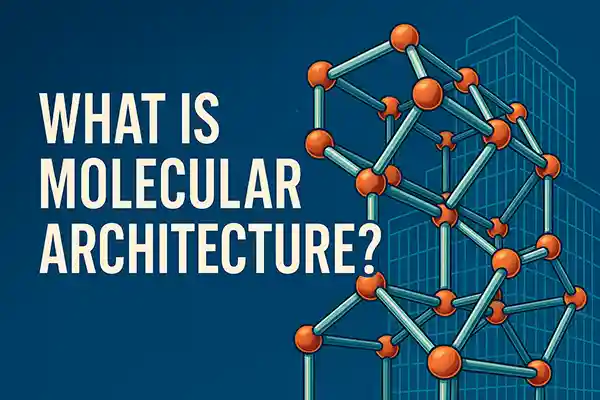
Image 1: Where chemistry meets creativity – building invisible structures that could change how our planet breathes.
Click Here to Read WGF Blogs from World Leaders…
What Is the Story of the 2025 Chemistry Nobel?
By the late 20th century, chemists were searching for materials that could both hold and release molecules – a kind of smart sponge for gases and liquids. The idea of designing matter with deliberate internal spaces fascinated a few visionary researchers, but most saw it as impractical.
In 1974, at the University of Melbourne, Professor Richard Robson was teaching students about molecular structures using wooden balls and rods. When drilling holes into the models, he noticed that the positioning of connections could create new types of cavities. What if molecules could be linked like miniature scaffolds?
1980s: Robson built the first crystalline frameworks with metal ions and organic linkers – materials with hollow interiors.
1990s: In Japan, Susumu Kitagawa advanced these ideas into ‘porous coordination polymers’, emphasizing ‘the usefulness of useless’.
2000s: Omar Yaghi, who had emigrated from Jordan to the U.S., created MOF-5, a robust structure that could store gases and even extract water from desert air.
For years, funding agencies dismissed MOFs as ‘empty materials’. Critics argued that holes in a solid were weaknesses, not strengths. But these ‘holes’ became chemistry’s most powerful innovation space.
From theoretical curiosity to environmental technology, MOFs are now tested in cement plants, power stations, and water-harvesting devices. They’ve become known as ‘molecular hotels’ – where gases like CO₂ check in and stay.
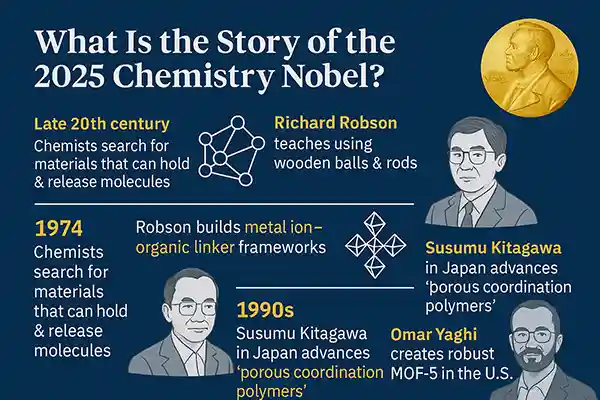
Image 2: A half-century journey from wooden models to molecular miracles – three scientists, one vision: turning empty space into environmental hope.
Click Here to Read What Is Behind Nvidia’s $5 Billion Lifeline to Intel…
Did You Know?
Molecular Architecture
- The term was coined by the Nobel Committee itself to describe how molecules can be assembled like blueprints for microscopic buildings
- Some MOF structures are so precise that a one-millimetre crystal may contain over a billion identical pores
- A gram of MOF material can have the internal surface area of a football field
Did You Know?
Metal Ions
- Metal ions are atoms (like zinc or copper) that have lost or gained electrons, giving them a charge that lets them bond strongly with organic molecules
- In MOFs, metal ions act as ‘connectors’ – the cornerstones of molecular buildings
- Their choice determines the MOF’s colour, stability, and chemical reactivity
Click Here to Read What Is NATO…
Molecular Architecture In Numbers
• 100,000+: Known MOF Types
• 10,000 m²: Surface Area per Gram of an MOF is about 10,000 m², equivalent to 1 football field
• 400 litres: CO₂ Captured per kg is about 400 litres as per the lab-scale capture capacity (varies by MOF)
Click Here to Watch Keynote Speeches and Interviews of World Leaders at WGF YouTube…
Historical Note
Long before modern chemistry had computers or crystal scanners, scientists in the early 1900s were fascinated by a strange volcanic stone called zeolite.
When dropped into coloured liquids, it would breathe – trapping some molecules while letting others pass through. No one fully understood how, but those rocks became nature’s first porous filters.
A century later, chemists like Richard Robson and Susumu Kitagawa wondered: could humans design such ‘breathing solids’ from scratch?
Their experiments turned curiosity into creation – building frameworks atom by atom, pore by pore.
The 2025 Chemistry Nobel, in many ways, closes that century-old loop: a journey that began in volcanic caves and ended in molecular architecture, where humanity learned to engineer the very spaces between atoms.
Click Here to Read What Is the Trump–Putin Alaska Summit About…
So, What Are Metal-Organic Frameworks?
Metal-Organic Frameworks (MOFs) are crystalline structures built by linking metal ions with organic molecules to form a three-dimensional lattice filled with nanoscopic pores.
They behave like molecular sponges, absorbing specific gases or liquids and releasing them under controlled conditions.
Because their structure is modular, chemists can tune MOFs to target pollutants, store energy gases, or separate industrial chemicals with unprecedented precision.
Click Here to Watch WGF News on World Leaders at WGF TV…
What Is the Royal Swedish Academy of Sciences?
Founded in 1739, the Royal Swedish Academy of Sciences selects the Nobel laureates in Physics and Chemistry.
Its mission is to ‘strengthen the influence of science in society’. The Academy’s Chemistry Committee reviews hundreds of nominations worldwide each year before announcing its decision from Stockholm.

Image 3: From Stockholm’s historic halls, the world’s greatest scientific ideas find their global stage.
Click Here to Read What Is A Ceasefire Agreement…
What Are Forever Chemicals?
Forever chemicals, scientifically known as PFAS (Per- and Polyfluoroalkyl Substances), are industrial compounds that don’t degrade in nature.
They accumulate in water, soil and human bodies – linked to health risks from cancer to hormonal disruption. MOFs can trap and break down these molecules, offering hope for a cleaner future.
Click Here to Read What Is De-Dollarisation…
What Is the Usefulness of Useless?
Coined by Professor Susumu Kitagawa, this phrase reflects a deep scientific philosophy: that knowledge pursued without immediate utility often proves most valuable in time.
MOFs embody that spirit – what once seemed a playful curiosity now stands at the frontline of climate innovation.
Click Here to Read What Is the Hiroshima Atomic Bombing’s Legacy – 80 Years Later…
What Are Molecular Hotels?
The Nobel Committee described MOFs as ‘molecular hotels’. Inside their crystal framework, gases like CO₂ or water molecules enter tiny rooms, stay temporarily, and can be released when conditions change – just like guests checking in and out of a hotel.
Click Here to Read What Is the Russian Volcano Eruption After 500 Years…
What Are Metal Ions?
Metal ions are charged metal atoms – like zinc²⁺ or copper²⁺ – that serve as the connecting nodes in MOFs. Their positive charges attract organic linkers, forming the skeleton of the molecular framework.
Different metals give MOFs different strengths, colours, and reactivities.

Image 4: At the heart of every framework – charged atoms linking science’s smallest pieces into tomorrow’s clean-energy solutions.
Click Here to Read What Is Coral Bleaching…
What Are Organic Linkers?
Organic linkers are carbon-based molecules that bridge metal ions together, creating the three-dimensional lattice.
They act like the beams in a building’s architecture – defining the shape, size, and function of the pores inside the MOF.
Click Here to Read What Is Botox…
What Is the Hermione Granger’s Handbag Analogy?
To illustrate MOFs, the Nobel Committee used a pop-culture analogy: Hermione’s handbag from Harry Potter, which looks small outside but is immense inside.
MOFs operate similarly – tiny solids that hide vast inner spaces for storing gases or liquids.

Image 5: Tiny outside, infinite inside – a perfect metaphor for molecular architecture’s hidden power.
Click Here to Read What Is Giorgio Armani’s Legacy…
Why Do MOFs Matter for the Planet?
The environmental potential of MOFs is staggering:
- Carbon Capture: They can trap CO₂ from power-plant exhaust before it reaches the atmosphere
- Clean Water: Some MOFs absorb forever chemicals (PFAS) and break down pollutants in wastewater
- Freshwater Access: Yaghi’s team used MOFs to extract water directly from desert air – powered only by sunlight.
- Green Energy: Certain MOFs can safely store hydrogen, making them candidates for next-generation fuel systems.
While still expensive to mass-produce, researchers see MOFs as one of the most flexible tools in the fight against pollution, drought, and climate change.
Click Here to Read What Is Tesla’s New ‘Affordable’ Model 3 & Model Y…
Who Are the Laureates Behind the Discovery?
Susumu Kitagawa (Japan): Professor at Kyoto University. Known for his calm philosophy of ‘finding usefulness in the useless’, he proved that pure curiosity can yield planetary benefit.
Richard Robson (Australia): Born in Yorkshire, he moved to Melbourne in the 1960s. His wooden-ball experiments redefined how scientists visualize matter.
Omar Yaghi (U.S.–Jordan): Born to Palestinian refugees in Jordan, raised in a one-room home without electricity, he calls science ‘the greatest equalizing force in the world’. His MOFs now sit at the frontier of sustainable innovation.
Their journeys span three continents but share one theme: curiosity as a bridge to impact.
Click Here to Read What Is ChatGPT Atlas…
How Could MOFs Shape the Future?
MOFs could soon appear in unexpected places:
- Cement manufacturing: capturing CO₂ during production
- Desalination and air filtration: cleaning water and air in megacities
- Battery and fuel-cell research: storing energy more efficiently
But scaling up remains the next challenge. Creating large quantities of MOFs without losing their delicate internal structure requires precision – and investment.
Still, with more than 100,000 types already synthesized, their potential applications are limited only by imagination.
Click Here to Read What Is the AWS Outage…
WGF Take – Building a Better World at the Molecular Level
In an era ruled by artificial intelligence and rocket launches, the 2025 Chemistry Nobel reminds us that some revolutions happen silently – at the molecular level.
Kitagawa, Robson, and Yaghi did not set out to save the planet; they simply followed curiosity. Yet their metal-organic frameworks could become cornerstones of climate repair and clean technology.
Their story proves that innovation need not shout – it just needs to breathe.
When molecules are arranged with imagination, matter itself becomes a message: that science, patience, and persistence can still build a better world – one tiny cavity at a time.
Follow World Growth Forums on the following for more updates…