Science & Technology
World Growth Forums Magazine
Keynote Speech by Dr Alfredo Sfeir-Younis _ WGF-GBIF Thailand 2024
What Is Google?
From a Stanford garage to a $3 trillion empire – and why its birthday isn’t really its birthday.
Today, on September 27, 2025, Google celebrates what it calls its 27th birthday with a nostalgic Doodle featuring its original 1998 logo. But here’s the twist: Google wasn’t actually founded on this date.
The company was incorporated on September 4, 1998, and arguably ‘born’ in August 1998 when Andy Bechtolsheim, co-founder of Sun Microsystems, handed Larry Page and Sergey Brin a $100,000 check to turn their Stanford research project into a company.
So why does Google celebrate its birthday on September 27 instead? Let’s dig into the fascinating story behind the world’s most influential search engine.
Image 1: From a Stanford garage project to the world’s most powerful search engine, Google’s story begins with curiosity and ambition.
Click Here to Read WGF Blogs from World Leaders…
What Is the Story of Google’s Birthday Confusion?
Once upon a time in the mid-1990s, two Stanford PhD students, Larry Page and Sergey Brin, built a search engine called BackRub. It lived on Stanford’s servers, analyzing web links to decide which pages mattered most.
By August 1998, their project was more than an experiment. Andy Bechtolsheim, co-founder of Sun Microsystems, believed in the idea so strongly that he wrote them a $100,000 check – payable to a company that technically didn’t exist yet. Within weeks, Google Inc. was incorporated on September 4.
So why September 27? In its early years, Google shifted between September dates for ‘birthday’ celebrations, perhaps tied to milestones like surpassing indexing records. Finally, in 2006, Google fixed September 27 as its official birthday. Today, that chosen date has become ritual, even though the real paperwork tells a different tale.
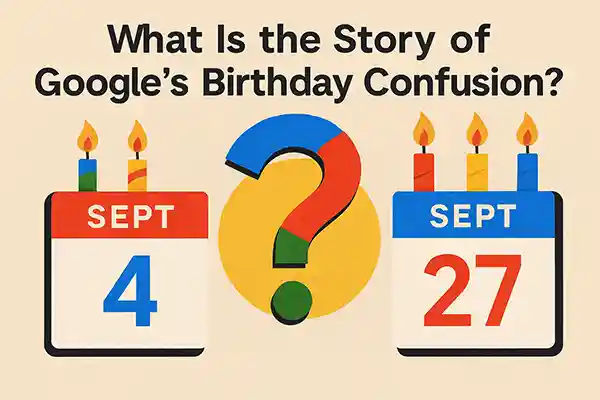
Image 2: Why does Google celebrate its birthday on September 27 when it was founded weeks earlier? A tale of milestones, myths, and marketing.
Click Here to Read What Is Behind Nvidia’s $5 Billion Lifeline to Intel…
Did You Know?
- Google was originally called BackRub
- Its name was inspired by googol (10¹⁰⁰)
- It handles 8.5 billion searches daily
Did You Know?
Larry Page
- Childhood home filled with computers and magazines
- Invented PageRank algorithm
- Owns flying car startups Kitty Hawk & Opener
Did You Know?
Google Doodle
- First Doodle was marked Burning Man 1998
- Over 5,000 Doodles have been created so far
- Doodle team includes engineers, artists, and illustrators
Did You Know?
Sergey Brin
- Emigrated from Moscow at age 6
- Passionate about space travel and philanthropy
- Co-founded Planetary Resources, an asteroid-mining company
Click Here to Read What Is NATO…
Google In Numbers
• 1998 – Founded (incorporated Sept 4)
• $3 trillion – Alphabet’s 2025 valuation
• 90%+ – Search engine market share
• 70,000+ – Employees in 50+ countries
• 8.5 billion – Daily Google searches
Click Here to Watch Keynote Speeches and Interviews of World Leaders at WGF YouTube…
Historical Note
In the 1990s, the internet was like a vast library with no catalog. Search engines such as Yahoo, AltaVista, Excite, and Lycos tried to make sense of it, but their systems often fell short. Results were cluttered with irrelevant links, and advertising frequently drowned out meaningful answers.
It was in this chaotic environment that Larry Page and Sergey Brin proposed a radical idea: what if the importance of a webpage could be judged by the number and quality of links pointing to it? Their PageRank algorithm treated every link as a kind of vote of confidence. In doing so, they transformed the messy web into something that could be navigated with trust and efficiency.
This breakthrough was not just technical; it was philosophical. It assumed that the web itself, through millions of human choices, could collectively decide what mattered. Google became the first search engine to successfully channel the wisdom of crowds into precise, relevant results.
By the early 2000s, Google had leapfrogged its competitors. Yahoo became a portal, AltaVista faded, and Lycos disappeared from mainstream use. Meanwhile, Google doubled down on its clean, simple interface and lightning-fast performance.
Then came the next revolution: advertising. Through AdWords (2000) and later AdSense (2003), Google monetized attention. It matched ads not just to keywords but to user intent, creating one of the most powerful advertising platforms in history. This model reshaped digital marketing, gave birth to the SEO industry, and financed Google’s massive expansion.
From there, Google became more than a search engine. Its acquisition of YouTube (2006), the dominance of Android (from 2008), the launch of Chrome (2008), and breakthroughs in cloud computing and AI made it the beating heart of the internet.
What began in a garage in Menlo Park was no longer just a company – it was the organizing principle of the web itself. Google’s journey reflects not just the history of technology, but the very history of how humanity learned to search, share, and make sense of knowledge in the digital age.
Click Here to Read What Is the Trump–Putin Alaska Summit About…
What Is a Google Doodle?
A Google Doodle is a playful redesign of the Google logo to mark special occasions. The very first Doodle appeared in 1998 when Page and Brin inserted a stick figure behind the second “o” to signal they were attending the Burning Man festival.
Since then, Doodles have become cultural markers – celebrating Nobel Prize winners, historical figures, national holidays, and even pizza. They are not just artwork but reminders of Google’s philosophy: making information useful, accessible, and occasionally fun.
Click Here to Watch WGF News on World Leaders at WGF TV…
Who Designed the Iconic Google Logo?
In 1998, Page and Brin asked Ruth Kedar, a Stanford professor and designer, to create their logo. She didn’t dismiss them as just ‘students with a hobby’. Instead, she chose the Catull font, balancing tradition with modern elegance.
Her decision to use primary colours – red, yellow, blue – made the logo childlike and approachable. And the off-pattern green ‘l’ symbolized Google’s willingness to break rules.
Kedar’s logo survived for years and birthed the idea of Google Doodles, which now reach billions of people daily.
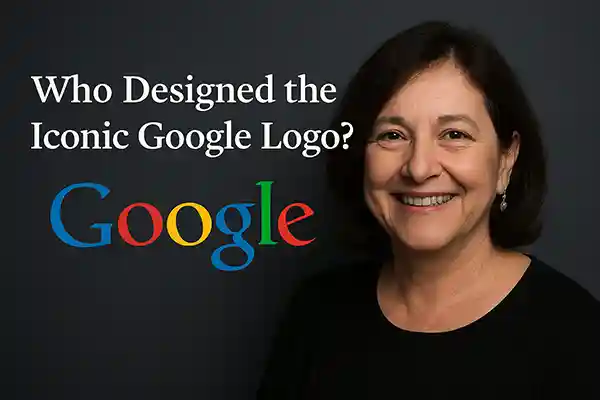
Image 3: Ruth Kedar’s design choices – Catull font and playful primary colours – gave Google an identity that became as iconic as its search engine.
Click Here to Read What Is A Ceasefire Agreement…
What Has Google Become in 27 Years?
From humble beginnings in a garage, Google has grown into a tech empire under Alphabet Inc. Its reach is staggering:
- It owns the world’s dominant search engine
- It powers billions of smartphones through Android
- It connects billions of users with Gmail, Maps, YouTube, and Chrome
- It explores the future with AI (Gemini), quantum computing, and self-driving cars
Alphabet’s valuation has crossed $3 trillion, making it one of the world’s most valuable companies. And at its helm today is Sundar Pichai, a Chennai-born engineer who rose to lead both Google and Alphabet.
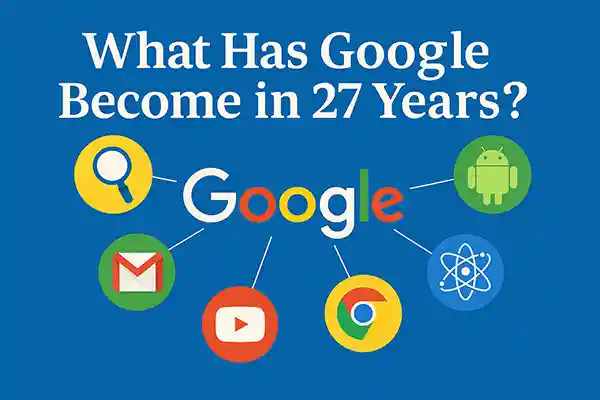
Image 4: In just 27 years, Google expanded from a search tool into an empire shaping communication, culture, and the future of technology.
Click Here to Read What Is De-Dollarisation…
What Is the Significance of Today’s Nostalgic Doodle?
The 27th birthday Doodle revives Google’s 1998 logo – blocky, simple, and oddly charming. It’s not just nostalgia; it’s a reminder of beginnings.
Google uses these moments to reflect: from ‘organizing the world’s information’ to shaping how humanity learns, works, and even thinks.
Click Here to Read What Is the Hiroshima Atomic Bombing’s Legacy – 80 Years Later…
What Is Sun Microsystems?
Founded in 1982 in California, Sun Microsystems was one of the great Silicon Valley trailblazers. The company became famous for building high-performance workstations and servers that powered universities, research labs, and businesses during the rise of the internet. But its most enduring contribution was Java, the programming language that promised ‘write once, run anywhere’ – and still runs on billions of devices today.
Sun also created the Network File System (NFS), Solaris operating system, and hardware that became the backbone of the early web. For a time in the 1990s, Sun’s slogan – ‘The network is the computer’ – defined the future. Though the company was eventually acquired by Oracle in 2010, its legacy is deeply etched into internet history.
And for Google, Sun matters for another reason: co-founder Andy Bechtolsheim, one of Sun’s brightest minds, provided the seed funding that transformed an idea called BackRub into the global giant we now know as Google.
Click Here to Read What Is the Russian Volcano Eruption After 500 Years…
Who Is Andy Bechtolsheim?
Andreas ‘Andy’ Bechtolsheim, born in Germany in 1955, is a legendary engineer and entrepreneur. After moving to the U.S., he co-founded Sun Microsystems, where his hardware innovations shaped modern computing. But beyond Sun, Bechtolsheim built a reputation as a super angel investor, spotting world-changing companies long before others did.
In 1998, when he heard Larry Page and Sergey Brin pitch their search engine idea at Stanford, Bechtolsheim didn’t wait for lengthy business plans. He immediately wrote a $100,000 check to a company that technically didn’t yet exist. That check became the first official funding of Google Inc.
His quick judgment earned him a place in tech folklore – people often call his signature on that check the ‘birth certificate of Google’.
Click Here to Read What Is Coral Bleaching…
Who Is Larry Page, and What Is His Story?
Lawrence ‘Larry’ Page was born in 1973 in Michigan, into a family where computers were dinner-table talk. Both his parents were computer science professors, and young Larry grew up tinkering with technology. At Stanford, while pursuing his PhD, Page began exploring how the web could be better organized. His research led to PageRank, a system for ranking websites based on the quality and number of links pointing to them.
Teaming up with fellow student Sergey Brin, he transformed this academic project into what became Google. Page was known for his quiet intensity and vision: he believed in tackling impossible problems and letting technology solve them. Even after stepping back from daily operations, he remains influential through his special Class B shares, giving him outsized voting power in Alphabet.
Beyond Google, Page has backed projects in renewable energy, flying cars, and futuristic healthcare, continuing his lifelong belief that technology can change the world.
Click Here to Read What Is Botox…
Who Is Sergey Brin, and What Is His Story?
Sergey Brin was born in Moscow in 1973 and moved to the U.S. with his family at the age of six, escaping Soviet anti-Semitism. Settling in Maryland, Brin grew up excelling in mathematics and computer science. At Stanford, his path crossed with Larry Page’s – and though they initially clashed, their partnership gave birth to one of the most powerful collaborations in tech history.
Brin became known as the more outgoing, experimental half of the duo. While Page obsessed over algorithms, Brin focused on innovation and Google’s culture of curiosity. He pushed projects like Google Glass and self-driving cars, embodying Google’s willingness to take risks.
Today, Brin has stepped away from daily management but remains a major shareholder and visionary investor. His journey – from an immigrant child to co-founder of one of the world’s most influential companies – is a classic Silicon Valley story of reinvention.
Click Here to Read What Is Giorgio Armani’s Legacy…
Who Is Sundar Pichai, and What Is His Story?
Pichai Sundararajan, better known as Sundar Pichai, was born in Chennai, India, in 1972. The son of an electrical engineer, Pichai grew up in a modest household where every purchase was carefully weighed. His early fascination with technology began when his family got their first rotary telephone – young Sundar amazed everyone by remembering every phone number dialed.
Pichai graduated from IIT Kharagpur in metallurgical engineering, then went on to Stanford for a Master’s and Wharton for an MBA. He joined Google in 2004, where he impressed colleagues by leading projects like Google Toolbar, Chrome, and Android. His calm leadership style and ability to manage massive teams earned him rapid promotions.
In 2015, when Google reorganized into Alphabet, Pichai became CEO of Google. By 2019, he was also named CEO of Alphabet. Today, he oversees everything from search and ads to YouTube, Android, and Google Cloud, embodying the story of how global talent fuels Silicon Valley’s rise.
Click Here to Read What Is China’s Military Parade with Putin and Kim…
What Is Alphabet?
By 2015, Google had become more than just a search engine company. It was experimenting with self-driving cars, health tech, robotics, and AI, alongside its advertising empire. To manage this sprawl, Larry Page and Sergey Brin announced a corporate restructuring: the creation of Alphabet Inc.
Alphabet became the parent holding company, with Google as its largest subsidiary. This structure allowed risky, experimental projects – known as ‘moonshots’ – to exist under Alphabet while Google focused on its core businesses of search, ads, and Android.
Today, Alphabet’s portfolio includes:
- Google (search, ads, YouTube, Gmail, etc.)
- Waymo (self-driving cars)
- Verily (healthcare technology)
- DeepMind (AI research)
- Calico (longevity research)
- and dozens of other bets
Alphabet isn’t just a name change. It represents a philosophy: give ambitious projects their own space, while letting the Google engine of search and ads fund the future of innovation.
Click Here to Read What Is the Game of Football…
How Many Names Have Google Changed Since Its Birth?
- BackRub (1996) – original project name
- Google (1997) – inspired by the mathematical term ‘googol’
- Informally, ‘Google Inc.’ became simply Google, and later Alphabet took the parent role in 2015
Click Here to Read What Is A Data Breach…
What Does a Catull Font Look Like?
Catull is a serif typeface created in 1982 by German designer Günter Gerhard Lange for the Berthold Type Foundry. It combines sharp, elegant strokes with unusual curves, giving it both classical gravitas and a modern eccentricity.
The most distinctive features are:
- The double-story ‘g’, which gave Google’s early logo its quirky personality
- Stretched, almost calligraphic serifs that make letters feel carved rather than printed
- A mix of rigid verticals with playful diagonals, making it both formal and approachable
Click Here to Read What Is a Blood Moon…
What Is an Exhaustive List of Google Products?
- Search (core product)
- YouTube, Gmail, Google Maps, Chrome, Drive, Docs, Sheets, Slides, Meet, Calendar
- Android OS, Pixel phones, Chromebooks, Nest devices
- Google Cloud, BigQuery, Firebase, Workspace
- Gemini AI, DeepMind, Bard (AI assistant)
- Play Store, Photos, Translate, News, Earth
- …and dozens more spanning productivity, AI, and hardware.
Click Here to Read What Is SpaceX…
WGF Take – The Startup That Mothered the Internet
Google’s decision to celebrate its birthday on September 27 – rather than its legal founding day – is more than quirk. It’s a lesson in storytelling and branding.
By choosing a symbolic date and cementing it with a Doodle, Google reminds the world that narratives define legacies. Facts matter, but stories create memory. And in the digital age, where Google itself organizes the world’s information, the company has shown it can organize its own story just as powerfully.
Google isn’t just a company with a birthday problem. It is the startup that gave birth to whole ecosystems: search, digital ads, YouTube creators, app developers, cloud computing, and now AI.
By celebrating September 27, Google reminds us that stories, not just facts, shape history. Its true legacy is not the date on a certificate – it’s the billions of businesses, careers, and lives it has powered along the way.
Image 5: Google didn’t just grow into a giant – it nurtured entire ecosystems, from YouTube creators to app developers, redefining the internet itself.
Follow World Growth Forums on the following for more updates…