
Science & Technology

World Growth Forums Magazine

Keynote Speech by Dr Alfredo Sfeir-Younis _ WGF-GBIF Thailand 2024
What Is Behind Nvidia’s $5 Billion Lifeline to Intel?
Why Does the AI chip leader take a surprising stake in its struggling rival, reshaping tech, trade, and the future of computing?
In a move that stunned both Wall Street and Silicon Valley, Nvidia announced on September 18, 2025, a $5 billion investment in rival Intel, taking a 4% stake in the once-dominant chipmaker. The deal, coming just weeks after the U.S. government also bought a 10% share worth $8.9 billion in Intel, signals a coordinated push to revive America’s semiconductor power. Intel’s stock surged nearly 25% on the news, its sharpest single-day jump since 1987, while Nvidia’s shares also rose. But why would the $4 trillion AI titan invest in a struggling competitor? Let’s explore what this surprising partnership really means.
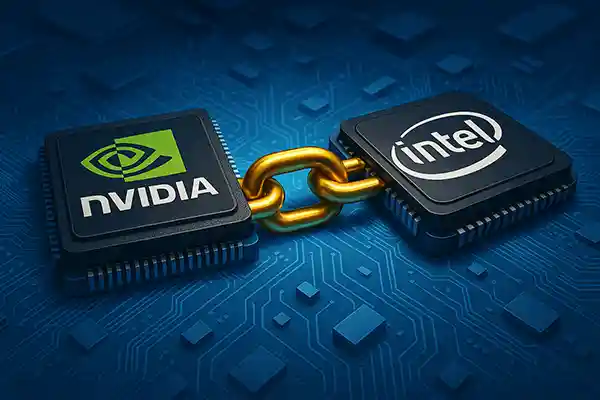
Image 1: Nvidia’s $5B stake in Intel is more than a deal – it’s a statement about the future of U.S. tech power.
Click Here to Read WGF Blogs from World Leaders…
What Is the Story of Nvidia’s Intel Bet?
For decades, Intel defined personal computing, powering everything from desktops to data centers. Yet in recent years, it lost its edge: manufacturing delays, missed opportunities in mobile, and failure to anticipate the AI revolution saw its dominance fade. Enter Nvidia – once a graphics card specialist, now the undisputed leader of the AI chip boom.
The spark came in late August, when the Trump administration invested $8.9 billion in Intel, calling it a ‘Great American Company’ vital for U.S. tech leadership. Now Nvidia has followed with its own bet, turning rivals into partners.
“This is a fusion of two world-class platforms,” said Nvidia CEO Jensen Huang. The collaboration will link Nvidia’s graphics and AI chips with Intel’s central processors through Nvidia’s high-speed NVLink technology. The goal: co-develop multiple generations of PC and data center chips, giving Intel a chance to stay relevant in the AI era.
Yet the backdrop is tense. Nvidia faces pressure in China – sales curbed by U.S. export restrictions and a new Chinese monopoly probe. For Intel, this partnership is less about choice than survival in a reshaped chip world.
Click Here to Read What Is Israel’s Gaza City Takeover Plan…
Did You Know?
Nvidia:
- Nvidia’s first GPU, the GeForce 256 (1999), was marketed as the world’s first ‘graphics processing unit’
- Nvidia’s market cap is now larger than Apple, Microsoft, and Saudi Aramco combined
- Nvidia’s CEO Jensen Huang is known for his leather jackets and bold predictions about AI
Did You Know?
Intel:
- Intel was co-founded in 1968 by Gordon Moore, who coined Moore’s Law
- Intel’s iconic ‘Intel Inside’ jingle became one of the most recognizable tech sounds ever
- Intel’s chips once powered over 80% of the world’s personal computers
Click Here to Read What Is NATO…
Nvidia & Intel in Numbers
• $5 billion: Nvidia’s stake in Intel
• 4%: Nvidia’s new shareholding in Intel
• $8.9 billion: U.S. government’s investment in Intel last month
• 25%: Intel’s stock surge after Nvidia’s announcement, its biggest gain since 1987
• $4 trillion vs $100 billion: Nvidia’s market cap compared to Intel’s market cap
• 2027: Intel’s critical 14A manufacturing target year
Click Here to Watch Keynote Speeches and Interviews of World Leaders at WGF YouTube…
What Is the Story of Intel?
Intel’s story is the story of modern computing itself. Founded in 1968 by Robert Noyce and Gordon Moore (famous for Moore’s Law), Intel became the backbone of the personal computer revolution. Its chips powered the IBM PC in the 1980s and most Windows machines in the 1990s and 2000s. The company’s ‘Intel Inside’ campaign turned a technical component into a global household brand, making Intel almost synonymous with computers.
But after its golden years, cracks appeared. Intel missed the mobile wave, allowing Apple to transition to its own silicon and leaving the smartphone era dominated by ARM-based chips. Its once world-class manufacturing process also slipped behind Taiwan’s TSMC and South Korea’s Samsung, eroding its technological leadership.
The AI boom has only highlighted Intel’s struggles. While Nvidia GPUs became the engine of AI, Intel’s CPUs failed to keep pace. Despite these setbacks, Intel is still the only U.S. company with large-scale semiconductor fabrication plants (fabs). This makes it strategically indispensable – too important for Washington to abandon. With a current market cap of about $100 billion, Intel is a shadow of its former self, but its survival is treated as a matter of national security.
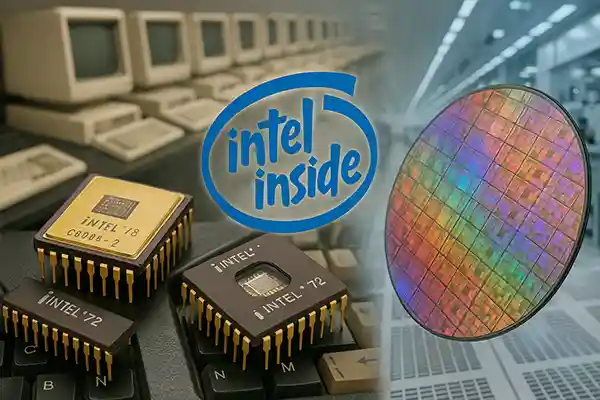
Image 2: From powering the PC revolution to fighting for relevance in AI – Intel’s story is one of reinvention.
Click Here to Watch WGF News on World Leaders at WGF TV…
What Is the Story of Nvidia?
Nvidia’s rise is one of the most remarkable transformations in tech. Founded in 1993 in Santa Clara, California by Jensen Huang, Chris Malachowsky, and Curtis Priem, the company began as a graphics card innovator. Its GPUs (graphics processing units) revolutionized gaming in the late 1990s and 2000s, becoming the standard for rendering realistic graphics.
But Nvidia’s breakthrough came when researchers discovered that GPUs could process data in parallel, making them ideal for training artificial intelligence models. What started as a gaming company suddenly became the backbone of the AI revolution.
Today, Nvidia’s chips power chatbots like ChatGPT, autonomous vehicles, supercomputers, data centers, and scientific research labs. Its CUDA software ecosystem, launched in 2006, locked in developers and made Nvidia’s GPUs the industry standard for AI workloads.
Nvidia’s market cap now exceeds $4 trillion, surpassing Apple and Microsoft, making it the world’s most valuable semiconductor company. Its CEO, Jensen Huang, has become Silicon Valley’s most influential figure, often compared to Steve Jobs for his vision.
By investing $5 billion in Intel, Nvidia isn’t merely supporting a struggling rival. It is hedging against supply-chain risks, aligning with U.S. policy goals, and securing the infrastructure of its own future growth. What started as a gaming hardware maker is now the company defining the future of artificial intelligence.
Image 3: What began as a gaming chipmaker now drives the world’s AI revolution – Nvidia’s transformation is unmatched.
Click Here to Read What Is A Ceasefire Agreement…
Why Did Nvidia Invest in Its Rival?
At first glance, Nvidia had no need to lift Intel. But there are strategic motives:
- Diversification: Nvidia relies heavily on Taiwan’s TSMC to produce chips. By investing in Intel, it reduces overdependence on a single supplier
- Policy alignment: Supporting Intel aligns Nvidia with the U.S. government’s agenda to secure domestic chipmaking capacity
- Ecosystem expansion: Linking Nvidia GPUs with Intel CPUs strengthens both companies’ relevance in cloud and AI infrastructure
Simply put, Nvidia isn’t just investing in Intel – it’s investing in America’s tech future.
Click Here to Read What Is De-Dollarisation…
What Is Silicon Valley?
Silicon Valley, in California, is the world’s technology hub. Named after the silicon-based semiconductors that revolutionized electronics, it houses giants like Apple, Google, Intel, and Nvidia. Once the symbol of Intel’s dominance, it is now the arena where Nvidia sets the pace in the AI era.
Click Here to Read What Is the Hiroshima Atomic Bombing’s Legacy – 80 Years Later…
What Is an AI Chip?
An AI chip is a specialized processor designed to train and run artificial intelligence models. Unlike traditional CPUs, AI chips handle vast amounts of data simultaneously, making them perfect for deep learning. Nvidia’s GPUs are today’s most powerful AI chips, giving it an unchallenged lead in the AI revolution.
Click Here to Read What Is the Trump–Putin Alaska Summit About…
What Is NVLink Technology?
NVLink is Nvidia’s proprietary high-speed interconnect that allows GPUs and CPUs to work together more efficiently. In this deal, NVLink becomes the backbone of the Nvidia–Intel partnership, combining Intel’s CPUs with Nvidia’s GPUs to supercharge computing performance.

Image 4: At the core of the partnership: NVLink, Nvidia’s high-speed bridge linking GPUs and CPUs into AI super-engines.
Click Here to Read What Is the Russian Volcano Eruption After 500 Years…
What Is Moore’s Law?
Moore’s Law, named after Intel co-founder Gordon Moore, is the observation made in 1965 that the number of transistors on a chip doubles roughly every two years, while the cost of computing power halves. For decades, this principle guided the semiconductor industry, driving relentless innovation and shrinking chips that powered everything from PCs to smartphones.
Intel became the standard-bearer of Moore’s Law, pushing the limits of silicon manufacturing. But in recent years, the law has slowed – the physical challenges of packing ever more transistors into tiny chips have become immense. Nvidia’s GPU breakthroughs, along with new architectures and AI-focused designs, represent a post-Moore’s Law era, where innovation comes not just from smaller chips but smarter designs.
Click Here to Read What Is Coral Bleaching…
What Is China’s Antitrust Probe Against Nvidia?
China recently accused Nvidia of violating anti-monopoly laws, escalating its tech trade war with the U.S. The probe comes just as Nvidia strengthens its U.S. alliances through Intel and Washington.
The timing suggests China sees Nvidia as a strategic threat. With 13% of Nvidia’s sales coming from China, the antitrust move could squeeze revenues. Nvidia’s investment in Intel doubles as a hedge against Beijing’s pressure.
Image 5: China’s antitrust probe signals the global chip war is as much about power as it is about technology.
Click Here to Read What Is Botox…
What Is a GPU?
A Graphics Processing Unit (GPU) is designed to handle complex visual and data tasks in parallel. Originally built for gaming, GPUs are now the engine of artificial intelligence, training models by crunching billions of calculations simultaneously. Nvidia is the global leader in GPUs.
Click Here to Read What Is Giorgio Armani’s Legacy…
What Is a CPU?
A Central Processing Unit (CPU) is the ‘brain’ of a computer, handling general-purpose tasks. Intel built its empire on CPUs, which powered the PC boom. In the AI age, CPUs alone are not enough, but paired with GPUs, they remain essential.
Click Here to Read What Is China’s Military Parade with Putin and Kim…
What Is Intel’s 14A Manufacturing Process?
Intel’s 14A process, planned for 2027, represents its most advanced chip manufacturing technology. The Nvidia partnership gives analysts confidence that Intel will gather the production volumes needed to make 14A viable. Without it, Intel’s long-term survival could be at risk.
Click Here to Read What Is the Game of Football…
What Is a Semiconductor?
A semiconductor is a material (often silicon) that conducts electricity under certain conditions, making it ideal for building electronic circuits. All modern technology – from smartphones to satellites – runs on semiconductors. Intel and Nvidia, though rivals, are both at the heart of this global industry.
Click Here to Read What Is A Data Breach…
What Is an AI Infrastructure?
AI infrastructure is the hardware and software backbone that powers artificial intelligence – chips, servers, data centers, and cloud networks. Nvidia leads the way with its GPUs, but by linking with Intel, it gains deeper access to enterprise and government ecosystems reliant on Intel’s legacy.
Click Here to Read What Is a Blood Moon…
What Does This Mean for Intel’s Future?
For Intel, the deal is nothing short of a lifeline. Analysts called it a ‘game-changer’, bringing Intel ‘front and center into the AI game’.
- It boosts confidence in Intel’s 14A manufacturing process, critical for its survival beyond 2027
- It makes Intel a credible partner in next-generation data centers, rather than just a fading legacy brand
- However, Nvidia hasn’t yet invested in Intel’s foundry services, leaving uncertainty about whether Intel’s manufacturing arm will benefit directly
Still, for a company that had slipped to the margins, the Nvidia stake is both a validation and a second chance.
Click Here to Read What Is SpaceX…
What Are Intel’s Foundry Services?
Intel Foundry Services (IFS) is the division of Intel that manufactures chips for other companies, not just its own designs. This model, also used by Taiwan’s TSMC, is known as a ‘foundry business’.
IFS is critical to Intel’s turnaround strategy: the company wants to become a global contract manufacturer for semiconductors, reducing dependence on Asia. However, Nvidia’s $5 billion investment does not directly support Intel’s foundry operations. Instead, it focuses on joint product development.
Analysts believe that if Nvidia eventually uses Intel Foundry Services, it could provide the production scale Intel desperately needs to justify its multi-billion-dollar 14A investments. For now, the foundry business remains Intel’s biggest gamble – and one of the world’s most closely watched bets in the chip war.
Click Here to Read What Is Currency Revaluation…
How Does This Affect the AI Arms Race with China?
The partnership is not just corporate – it’s geopolitical. The U.S. wants Intel to stand as a counterweight to Chinese ambitions. Nvidia, under pressure from Beijing, is hedging its bets by strengthening domestic alliances.
China, meanwhile, hit back this week by accusing Nvidia of violating anti-monopoly laws. This comes as U.S.-China trade talks intensify, with semiconductors at the heart of the dispute. Both countries see AI chips as weapons of national power.
With Washington backing Intel and Nvidia now tied closer to it, the deal strengthens America’s lead in the AI arms race – at least for now.
Click Here to Read What Is the Tibet Dispute…
Who Gains the Most – and Who Faces Challenges?
The biggest beneficiaries of this deal are clear. Nvidia strengthens its supply chain flexibility and deepens its political goodwill in Washington. Intel gains not just capital but also credibility – a renewed chance to re-enter the AI race. And for the U.S. government, the partnership secures a stronger, united front in the ongoing chip war, reinforcing America’s technological sovereignty.
At the same time, the deal creates new pressures for others. AMD may find itself squeezed out of critical AI partnerships, while TSMC risks losing some of its leverage as Nvidia explores alternatives to Taiwanese production. For China, the move highlights the growing consolidation of U.S. semiconductor alliances – a development that could complicate Beijing’s own ambitions to dominate the global chip supply chain.
Click Here to Read What Is Apple’s £2,000 iPhone…
WGF Take – Why Betting on a Rival Is Nvidia’s Smartest Move Yet
This is not charity – it’s strategy. Also, this deal is more than finance – it’s a strategic realignment in the global chip war. Nvidia knows that the AI race is bigger than one company. Nvidia could have left Intel to decline, but instead it chose to invest, signaling that America needs all its champions alive. By lifting Intel, it secures U.S. semiconductor resilience, reduces dependence on Asia, and wins Washington’s trust. The U.S. government’s stake set the stage, and Nvidia’s move reinforces the message: tech sovereignty is now a matter of national power.
The irony? Intel, once the giant that dwarfed Nvidia, is now being saved by it. But if this bet works, both companies – and America – will emerge stronger. The real test will be whether Intel can deliver on innovation, or if this is only a temporary lifeline.
Yet the risks remain. Can Intel truly rebound, or will this be a temporary boost? Can Nvidia balance political pressure at home with regulatory hostility in China? What’s clear is that the Nvidia-Intel alliance marks a turning point, not just for two companies, but for the future of global technology.

Image 6: WGF Take: Betting on a rival isn’t weakness – it’s Nvidia’s smartest move in a high-stakes chip war.
Follow World Growth Forums on the following for more updates…