
Entertainment
World Growth Forums Magazine
Keynote Speech by Dr Alfredo Sfeir-Younis _ WGF-GBIF Thailand 2024
What Made Robert Redford an Icon?
From Sundance to ‘Sundance Kid’ – how an actor changed movies, mentored generations, and moved culture.
Hollywood legend Robert Redford passed away at the age of 89, at his home in Sundance, Utah on September 16, 2025. Best known for his magnetic performances in Butch Cassidy and the Sundance Kid, The Sting, and All the President’s Men, Redford also won an Oscar as a Director (Ordinary People, 1980) and went on to shape cinema in a way few actors ever have. Beyond the screen, he built a legacy as the founder of the Sundance Institute and Film Festival, championing independent storytellers, and as a lifelong environmental advocate. Today, as tributes pour in from actors, directors, and leaders around the world, we ask: what truly made Robert Redford an icon?
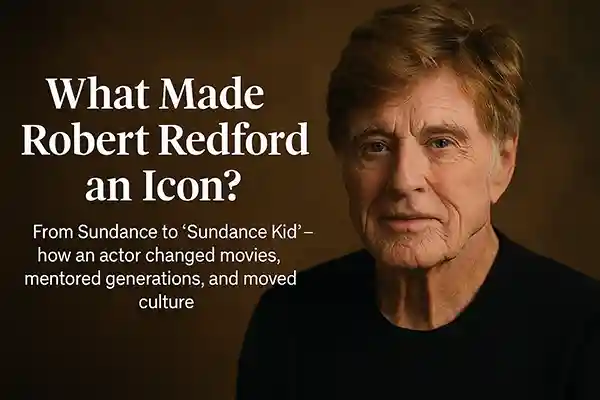
Image 1: Robert Redford’s legacy goes far beyond the screen – an actor who became a cultural architect.
Click Here to Read WGF Blogs from World Leaders…
What Is the Story of Robert Redford?
Born in Santa Monica in 1936, Redford grew up far from the glamour of Hollywood. A baseball scholarship took him to the University of Colorado, but tragedy struck when his mother died young. After drifting through Europe as an art student, he returned to New York to study acting, landing roles on Broadway (Barefoot in the Park) and then on television.
His big break came in 1969’s Butch Cassidy and the Sundance Kid alongside Paul Newman. The film not only made him a global star but lent him a nickname – ‘the Sundance Kid’ – that would define his later life.
The 1970s saw defining roles in The Sting, The Way We Were, and All the President’s Men. But Redford grew restless with being typecast as a golden-boy leading man. He turned to directing, winning an Oscar for his debut, Ordinary People (1980), and laid the groundwork for his greatest off-screen achievement: the Sundance Institute (1981) and later the Sundance Film Festival, the premier stage for independent cinema.
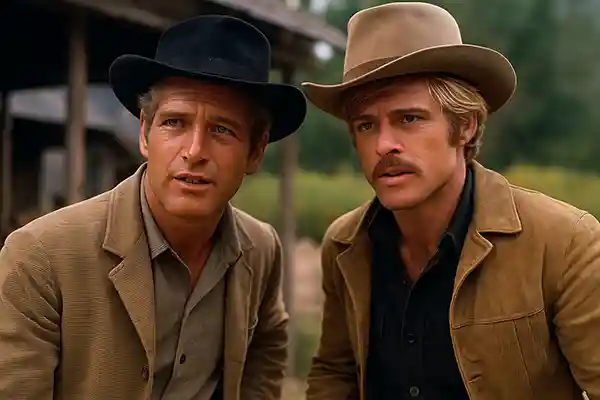
Image 2: The Redford–Newman duo in Butch Cassidy and the Sundance Kid shaped the meaning of Hollywood charisma.
Click Here to Read What Is Israel’s Gaza City Takeover Plan…
Did You Know?
Robert Redford
- He turned down the role of Benjamin in The Graduate (1967), which later made Dustin Hoffman famous
- Redford was a talented painter and studied art in Paris before choosing acting
- He bought land in Utah for just $500 in the 1960s, which later became the base for the Sundance Institute and Festival
Did You Know?
Sundance Kid
- The real outlaw’s name was Harry Alonzo Longabaugh, nicknamed ‘Sundance Kid’ after being jailed in Sundance, Wyoming
- He was part of Butch Cassidy’s ‘Wild Bunch’ gang, infamous for train and bank robberies in the late 1800s
- His fate is debated: some say he died in a 1908 Bolivian shootout, while others believe he returned to the U.S. under a new identity
Click Here to Read What Is NATO…
Robert Redford’s Life In Numbers
• 89 years: Redford’s age at passing
• 1 Best Director Oscar (Ordinary People, 1980)
• 40+ films as actor
• 4 decades of Sundance Festival
• 100s of filmmakers launched through Sundance, including Tarantino, Coogler, and Zhao
Click Here to Watch Keynote Speeches and Interviews of World Leaders at WGF YouTube…
What Are the Sundance Institute and the Sundance Film Festival?
Founded in 1981, the Sundance Institute began as Redford’s experiment in Utah to nurture new storytellers outside Hollywood’s studio system. It offered workshops, labs, and mentorship for filmmakers who had daring ideas but no access to big budgets.
By 1984, this vision expanded into the Sundance Film Festival, held annually in Utah. It quickly grew into the most important showcase for independent cinema worldwide. Films like Reservoir Dogs, Clerks, The Blair Witch Project, Little Miss Sunshine, Get Out, and CODA all premiered at Sundance before reaching global audiences.
For Redford, Sundance was never just about films – it was about creating a community where diverse voices could thrive. As he once said: “We wanted a place for new artists… to develop their craft and tell their stories.” Today, Sundance remains synonymous with artistic freedom, innovation, and authenticity – a living monument to Redford’s vision.
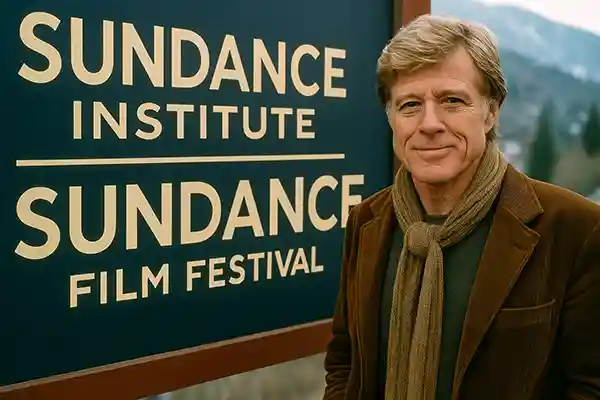
Image 3: From Sundance’s mountains to global cinema, Redford built a home for independent storytelling.
Click Here to Watch WGF News on World Leaders at WGF TV…
What Did Robert Redford Change About Hollywood?
Redford didn’t just star in movies – he reshaped the system that made them. His vision for Sundance created an alternative to Hollywood’s studio machine, giving space for small, daring, and personal stories.
Independent cinema was not taken seriously until Sundance gave it a platform. Films like Sex, Lies, and Videotape, Reservoir Dogs, Clerks, Manchester by the Sea, Get Out, and CODA all owe their visibility to the Sundance pipeline. Redford’s intervention meant audiences worldwide discovered new genres, new filmmakers, and new conversations – proof that art need not always be dictated by box office expectations.
Click Here to Read What Is A Ceasefire Agreement…
Why Does the Sundance Model Matter for New Voices?
Before Sundance, most outsiders had little chance of breaking into cinema. Redford’s ‘cinematic summer camp’ in Utah flipped that model. It paired young filmmakers with mentors, supported risky projects, and let stories find audiences on merit.
As director Ron Howard put it: Redford was an ‘artistic gamechanger’. By nurturing first-time directors like Quentin Tarantino (Reservoir Dogs), Darren Aronofsky (Pi), and Chloe Zhao (Songs My Brothers Taught Me), he created generations of storytellers. Today, Sundance remains shorthand for independent spirit – and Redford is its architect.
Click Here to Read What Is De-Dollarisation…
What Are Redford’s Essential On-Screen Roles – and Why?
Redford’s star power lay in mixing charm with moral gravity:
- Butch Cassidy and the Sundance Kid (1969) – witty, rebellious outlaw alongside Paul Newman
- The Sting (1973) – slick conman, pure chemistry with Newman
- All the President’s Men (1976) – journalism as national duty; Redford as Bob Woodward
- The Way We Were (1973) – romantic classic with Barbra Streisand
- The Natural (1984) – baseball mythmaking as American dream
- Indecent Proposal (1993) – wealth, desire, and moral complexity
Each role reflected the changing anxieties of America: trust in institutions, corruption, romance, ambition.
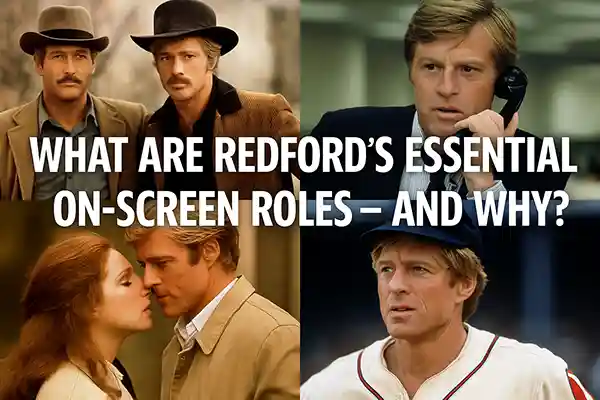
Image 4: Across decades, Redford’s on-screen roles mirrored America’s evolving hopes and anxieties.
Click Here to Read What Is the Hiroshima Atomic Bombing’s Legacy – 80 Years Later…
How Did Redford Reimagine Himself as a Director?
In 1980, Redford stunned Hollywood by directing Ordinary People, a quiet domestic drama that won Best Picture and Best Director. He followed with A River Runs Through It (1992), introducing Brad Pitt to the world, Quiz Show (1994), and The Horse Whisperer (1998).
Unlike his acting, Redford’s direction was understated – patient pacing, moral dilemmas, and human fragility. He proved that behind the movie-star looks was a serious craftsman with an eye for story and ethics.
Click Here to Read What Is the Trump–Putin Alaska Summit About…
Beyond Film: What Causes Did Redford Champion?
Long before it was fashionable, Redford was an environmentalist. He preserved lands in Utah, fought for clean energy, and used his platform to highlight climate change. He also promoted arts access, believing storytelling was a democratic right.
This fusion – cinema and activism – made him unique. As Leonardo DiCaprio said: “He was an incredible environmentalist too. He was a hero to a lot of us.”
Click Here to Read What Is the Russian Volcano Eruption After 500 Years…
What Made Redford & Paul Newman a Cultural Phenomenon?
The Redford–Newman duo remains Hollywood’s gold standard of charisma and chemistry. Their two films – Butch Cassidy and the Sundance Kid and The Sting – defined cool, friendship, and rebellion for a generation.
Off-screen, their friendship lasted decades. Though they never reunited on film after The Sting, their myth as the ultimate buddy pair continues to shape how we think about star power.
Click Here to Read What Is Coral Bleaching…
How the World Remembered Robert Redford?
Tributes have poured in from Hollywood and beyond, reflecting Redford’s impact on colleagues, friends, and admirers:
- Meryl Streep: “One of the lions has passed. Rest in peace, my lovely friend.”
- Jane Fonda: “He meant a lot to me and was a beautiful person in every way. I can’t stop crying.”
- Barbra Streisand: “Bob was charismatic, intelligent, intense, always interesting – and one of the finest actors ever.”
- Leonardo DiCaprio: “An absolute legend… an incredible environmentalist too. He was a hero to a lot of us.”
- Ron Howard: “A tremendously influential cultural figure… and an artistic gamechanger.”
- Jamie Lee Curtis: “A life! Family. Art. Transformation. Advocacy. Legacy. Thank you Robert Redford.”
- Stephen King: “Part of a new and exciting Hollywood in the 70s and 80s. Hard to believe he was 89.”
- Obama Foundation: “From iconic films to protecting our national parks, he inspired many through his advocacy, charisma, and passion.”
- Donald Trump: “Robert Redford was great. He had a series of years where there was nobody better.”
- Hillary Clinton: “I always admired Robert Redford… not only for his legendary career but for what came next.”
These voices underline how Redford’s influence stretched across film, politics, culture, and activism – a rare breadth few stars achieve.
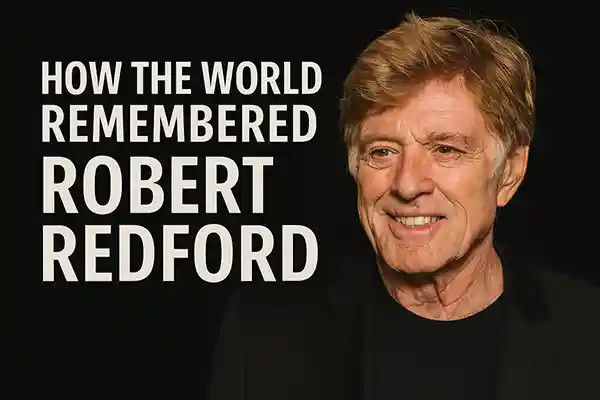
Image 5: From Hollywood to world leaders, tributes poured in for a man who inspired generations.
Click Here to Read What Is Botox…
WGF Take – Dancing His Way through Various Shades of Life
Robert Redford’s journey was never about staying in one frame. He danced – sometimes lightly, sometimes with fierce conviction – through the many shades of life: a dazzling actor, a serious director, a builder of platforms, an environmental voice, a friend, a mentor. Unlike many stars who fade with their last role, Redford created ripples that continue to move outward – every time a new filmmaker debuts at Sundance, every time a film dares to be independent, every time activism meets art.
He was more than a movie star – he was an architect of culture. By refusing to be trapped by stardom, he built structures that empowered others: the Sundance Institute, independent cinema, environmental advocacy. In an era dominated by franchises and streaming algorithms, his model – trust the artist, risk the story, protect the landscape – feels radical all over again. Redford’s face, framed in sunlight, is unforgettable. But his greater gift may be the shadows he cleared so others could step into the light.
He embraced contradictions: heartthrob and activist, rebel and institution, star and teacher. That balance is why he felt real, why he mattered, and why he still will. Redford reminds us that a life’s true measure is not in applause or awards but in the spaces one creates for others to shine. His legacy is not a period at the end of a career – it is an open door, forever inviting the next storyteller to step through.
Follow World Growth Forums on the following for more updates…