
Environment

World Growth Forums Magazine

Keynote Speech by Dr Alfredo Sfeir-Younis _ WGF-GBIF Thailand 2024
What Are Wildfires?
Deadly flames, mass evacuations, and a climate warning to the world
As of August 19, 2025, Southern Europe is ablaze. Spain and Portugal are battling their deadliest wildfire season in decades, with at least four lives lost and tens of thousands displaced. Spanish troops, reinforced by international aid, are fighting back flames that have already scorched more than 560,000 hectares of land. As historic pilgrimage routes, rural communities, and cultural landscapes burn, the fires raise urgent questions: What exactly are wildfires? Why are they becoming more destructive? And how do climate change and global warming intertwine with this fiery crisis?
Image 1: Wildfires are no longer distant events – they’re shaping our summers and our future.
Click Here to Read WGF Blogs from World Leaders…
What Is the Story of the Spain–Portugal Fires?
Backdrop
Wildfires are not unusual in southern Europe, but 2025 has already broken records. Spain and Portugal are seeing their worst fire season since modern tracking began, with land lost equivalent to the island of Mallorca.
The Spark
A brutal 16-day heatwave with temperatures above 45°C (113°F) turned landscapes into tinderboxes. One spark – whether from lightning, negligence, or arson – could ignite an inferno.
Defining Moments
The closure of part of the Camino de Santiago, the evacuation of 27,000 residents, and the deaths of firefighters in both Spain and Portugal turned the blazes into a continental crisis.
Early Struggles
Exhausted crews, accusations of poor planning, and smoke so dense it made air ‘unbreathable’ all highlighted the limits of local resources.
Transition
International aid arrived through the European Civil Protection Mechanism, with France, Italy, and Germany sending aircraft and reinforcements. Spain deployed 3,000 troops and 50 aircraft, showing the scale of response required.
Image 2: Spain and Portugal’s 2025 wildfires mark one of Europe’s darkest summers.
Click Here to Read What Is Israel’s Gaza City Takeover Plan…
Did You Know?
Spain–Portugal Wildfires
- Spain’s 2025 wildfires have already burned an area four times larger than the 2006–2024 average
- For the first time in decades, sections of the Camino de Santiago pilgrimage route were shut down due to flames
- The land burned in Spain this year is equivalent to the size of Mallorca
Did You Know?
Climate Change
- Europe is warming twice as fast as the global average
- The last decade was the hottest in 125,000 years
- Extreme heat now causes over 60,000 deaths annually in Europe
Did You Know?
Wildfires
- Wildfires can move at speeds of up to 14 miles per hour, faster than most people can run
- In 2020, Australia’s ‘Black Summer’ fires killed or displaced 3 billion animals
- The Amazon rainforest now emits more carbon from fires than it absorbs – a dramatic shift from ‘Earth’s lungs’ to a net carbon source
Did You Know?
Global Warming
- Earth has warmed 1.2°C since 1850 – and rising
- 19 of the 20 hottest years on record occurred after 2000
- At 2°C warming, wildfires could increase by 30% worldwide
Click Here to Read What Is NATO…
What Is the Story of Wildfires?
Backdrop
For millennia, wildfires have shaped Earth’s ecosystems. Ancient forests grew to withstand them, indigenous peoples used controlled burns to renew soil, and nature itself balanced destruction with rebirth.
The Spark
In the past, most wildfires were sparked by natural causes – lightning strikes, volcanic eruptions, or extreme drought. But in the modern era, human actions have become dominant: discarded cigarettes, power line failures, or intentional arson often trigger today’s blazes.
Defining Moments
From the great Australian bushfires of 2019–2020, which killed over a billion animals, to California’s record-breaking firestorms, to today’s Iberian infernos – wildfires have become global symbols of climate disruption. Each crisis shows the mounting cost in lives, biodiversity, and property.
Early Struggles
Communities facing wildfires often lack resources for prevention and response. Firefighters work in dangerous conditions, while residents lose homes, livelihoods, and sometimes their lives. Recovery can take decades, especially in rural economies.
Transition
Science and technology now offer new tools: satellites track fire spread, drones assist in suppression, and controlled burns reduce fuel loads. Yet, climate change means fires are no longer rare events – they are intensifying cycles of destruction and rebirth that humanity must urgently adapt to.
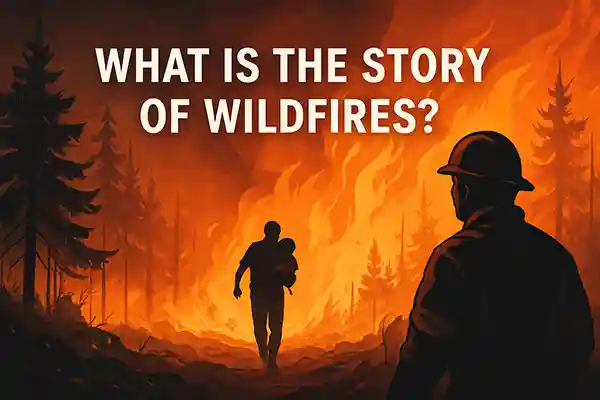
Image 3: From ancient survival to modern catastrophe – the story of wildfires is humanity’s story too.
Click Here to Watch Keynote Speeches and Interviews of World Leaders at WGF YouTube…
Why Are Spain and Portugal Burning More Fiercely in 2025?
This year’s fires are not just ‘bad luck’ – they are part of a larger climate shift. Rising global temperatures are creating hotter, drier summers across Europe, setting the stage for fires to ignite and spread rapidly. Scientists warn that Europe, the world’s fastest-warming continent, is experiencing climate extremes earlier and more frequently. The Iberian Peninsula, with its Mediterranean climate and vast forests, has become especially vulnerable. 2025’s fire season is already twice as severe as last year’s – and the peak of summer isn’t over yet.
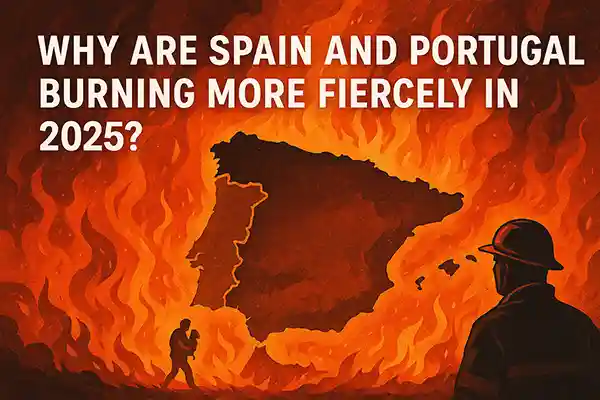
Image 4: Why the Iberian Peninsula is burning more fiercely than ever before.
Click Here to Watch WGF News on World Leaders at WGF TV…
Which Regions Are Worst Affected by the Fires?
The devastation stretches across borders, but some hotspots stand out:
- Spain:
- Castile and León: Worst hit, with deaths, injuries, and mass evacuations
- Galicia: 12 fires burning, with one blaze alone consuming 17,500 hectares
- Cáceres: An uncontrolled fire destroyed 11,000 hectares
- Tres Cantos (near Madrid): Claimed the life of a local resident
- Portugal:
- Trancoso (central region): Burned 7,500 acres, with 1,200 firefighters mobilized
- Vila Real (north): Fires have raged for 10 days straight
Combined, Spain and Portugal have lost nearly 560,000 hectares, a historic high.
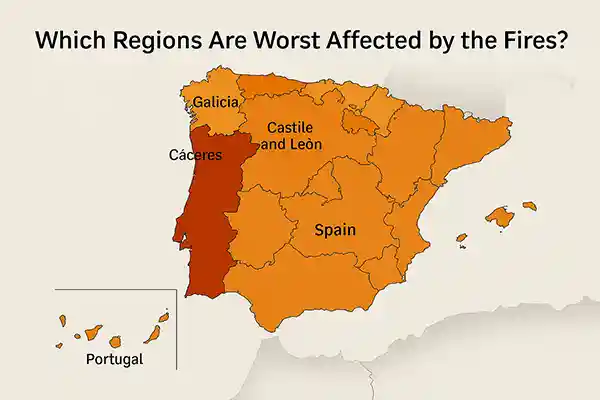
Image 5: Entire regions in Spain and Portugal stand scarred – Galicia, Castile and León, Cáceres, and beyond.
Click Here to Read What Is A Ceasefire Agreement…
How Are Authorities and Communities Responding?
Governments and citizens are fighting back with resilience. Spain’s Civil Guard has launched investigations into illegal burns, arresting dozens suspected of arson. Troops and volunteer brigades are risking their lives daily, while local communities are opening shelters for evacuees. Prime Minister Pedro Sánchez has called for a national climate change pact, though political opposition has accused his government of poor planning. Meanwhile, everyday citizens are showing extraordinary solidarity – from villagers planting replacement trees to international aid workers joining local crews on the fireline.
Image 6: From exhausted firefighters to resilient villagers – the fight against fire is also a fight for survival.
Click Here to Read What Is De-Dollarisation…
What Role Does Climate Change Play in These Fires?
Climate change is not a background factor – it is the central driver. According to Spain’s meteorological agency, the heatwave fueling these fires is directly linked to human-induced global warming. Droughts are lengthening, vegetation is drying, and fire seasons are stretching well beyond summer months. Without decisive action, experts warn that southern Europe will face annual wildfire ‘megaseasons’, with escalating costs in lives, land, and livelihoods.
Image 7: Climate change isn’t a backdrop – it’s the central fuel behind these escalating infernos.
Click Here to Read What Is the Hiroshima Atomic Bombing’s Legacy – 80 Years Later…
So, What Is a Wildfire?
A wildfire is an uncontrolled fire that rapidly spreads through forests, grasslands, or rural landscapes. Unlike small, manageable fires, wildfires feed on dry vegetation, strong winds, and high temperatures – making them powerful and often unpredictable. They can ignite naturally through lightning strikes, but in many cases, human activity (like unattended campfires, power line sparks, or illegal burns) plays a role.
Wildfires are both destructive and paradoxically natural. In some ecosystems, they clear dead vegetation, fertilize soil, and allow new growth. But in today’s world, intensified by climate change, urban sprawl, and deforestation, wildfires are increasingly catastrophic – destroying homes, lives, and livelihoods at a scale unseen before.
Image 8: A wildfire is nature’s fury – but in 2025, it’s also humanity’s warning.
Click Here to Read What Is the Trump–Putin Alaska Summit About…
What Is Climate Change?
Climate change refers to long-term shifts in weather patterns, largely caused by human activity. Burning fossil fuels, deforestation, and industrial pollution have increased greenhouse gases in the atmosphere, trapping more heat and altering global systems. This doesn’t just mean warmer days – it means more extreme events: from rising seas to stronger hurricanes, and of course, more destructive wildfires.
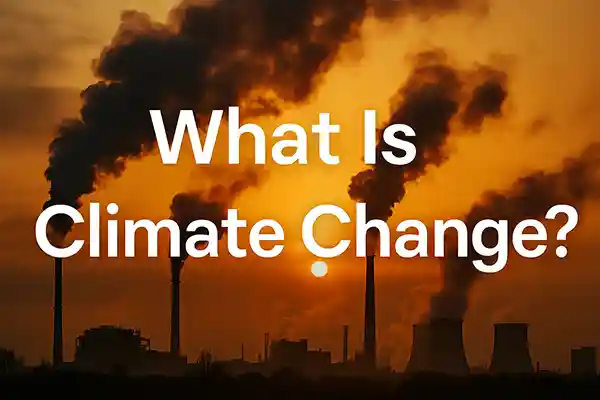
Image 9: Climate change is rewriting the rules of weather, fire, and survival.
Click Here to Read What Is the Russian Volcano Eruption After 500 Years…
What Is Global Warming?
Global warming is the increase in Earth’s average surface temperature due to higher concentrations of greenhouse gases. While climate change covers a broad range of shifts (storms, rainfall, ice melt), global warming focuses on rising temperatures. Since the Industrial Revolution, Earth has warmed by about 1.2°C, and if trends continue, summers like Europe’s fiery 2025 could become the norm worldwide.
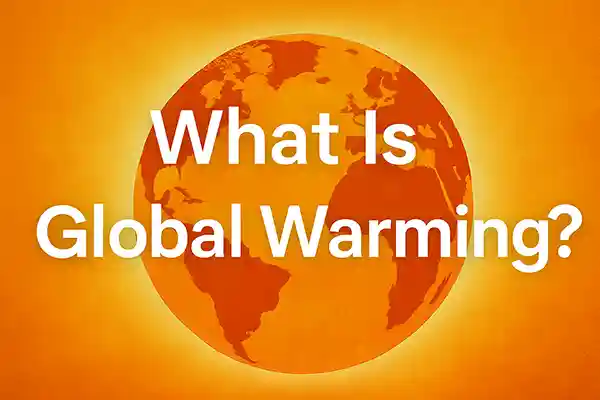
Image 10: Global warming is not just statistics – it’s the rising heat behind every new blaze.
Click Here to Read What Is Coral Bleaching…
WGF Take – Serious Action Must Be Taken to Avoid Burning of Dreams and Ambitions
The Spain–Portugal wildfires of 2025 are not merely seasonal disasters – they are red warning lights flashing across Europe’s horizon. Each lost life, each charred village, is a stark reminder that the climate crisis is no longer tomorrow’s problem but today’s reality. Political debates over responsibility miss the larger truth: fire is becoming Europe’s new summer normal.
But the story runs deeper. Wildfires are not only consuming forests – they are burning away futures. Every destroyed home, every forced evacuation, every lost harvest is a blow to local economies and personal ambitions. Farmers lose decades of investment overnight; cultural heritage sites like the Camino de Santiago are scarred; tourism, a lifeline for rural Spain and Portugal, faces lasting damage.
This is why we say: the Iberian Peninsula is not just showing us the future – it is living the nightmare that could spread across continents. From California to Australia, Siberia to the Amazon, wildfires are uniting the world in flames. Unless decisive action is taken, the ‘season of fire’ will turn into a permanent condition of life under global warming.
At WGF, we believe the question is no longer whether climate change is real, but whether governments, industries, and societies will act boldly enough to adapt, mitigate, and transform. Fire prevention, sustainable land use, and renewable energy transitions are not optional – they are survival strategies.
The Spain–Portugal crisis must be seen as a turning point. Either leaders invest in prevention and climate resilience now, or entire generations will watch their dreams and ambitions burn alongside their homes.
Follow World Growth Forums on the following for more updates…